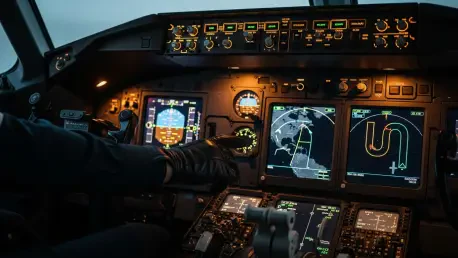

The routine tranquility of a transatlantic journey from Newark to the Balearic Islands was shattered when a digital signal transformed a commercial aircraft into a high-stakes security scene. United Airlines Flight 236, carrying 190 passengers and 12 crew members, had recently departed Newark Liberty International Airport for Palma de Mallorca, cruising steadily toward its European destination. However, the atmosphere shifted abruptly when several individuals on board noticed an alarming network name appearing on their personal electronic devices. Within the confines of the pressurized cabin, a Bluetooth hotspot broadcasted the word “bomb,” causing immediate distress among travelers who could clearly see the label on their smartphone screens. This was not a software error, but a deliberate piece of text visible to anyone scanning for wireless connections. As the realization of the threat spread through the aisles, the flight crew was forced to pivot from hospitality to emergency management, initiating a series of protocols designed to protect the aircraft and its passengers.
Crisis Management: The Appearance of a Malicious Signal
The cabin environment became increasingly frantic as flight attendants moved quickly to identify the source of the malicious broadcast while simultaneously reassuring frightened passengers. Using the public address system, the crew issued repeated instructions for all travelers to disable their electronics and turn off any active Bluetooth or Wi-Fi signals immediately. Despite these urgent and clear directives, the problematic network ID remained active, haunting the digital menus of devices throughout the plane and signaling a potential defiance of authority. This persistent visibility created a psychological ripple effect, as the lack of an immediate resolution led many to fear the worst about the aircraft’s safety. The crew’s inability to pinpoint the exact device responsible meant they had to treat the situation as a credible threat under existing aviation safety mandates. The technical simplicity of renaming a mobile device collided with the rigid requirements of international flight security, leaving the pilot with a deteriorating situation.
With the Boeing 767 already three and a half hours into its flight and positioned over the vast expanse of the Atlantic Ocean, the cockpit crew faced a pivotal decision regarding the mission’s continuation. The pilot issued a “one-minute warning” over the intercom, a rare and sobering announcement that signaled the gravity of the situation to everyone on board before officially deciding to abort the crossing. Safety protocols required that any unidentified threat be addressed on the ground rather than during a long-haul flight over water where emergency options are limited. Consequently, the aircraft executed a massive U-turn, heading back toward the New Jersey coastline and Newark Liberty International Airport under the watchful eye of air traffic control. This reversal was not merely a detour but a complex maneuver that required venting fuel and coordinating with ground authorities for an emergency arrival. The atmosphere in the cabin remained thick with uncertainty as the plane raced back toward the United States, with passengers left wondering if a physical danger truly lurked within their midst.
Grounded Reality: Identifying the Source at Newark
Upon touchdown at Newark, the aircraft was met by a formidable presence of law enforcement, including the Port Authority Police Department and specialized counter-terrorism task forces. The subsequent investigation revealed a surprising and frustrating truth: the source of the “bomb” signal was a smartwatch belonging to a 16-year-old passenger traveling on the flight. This discovery underscored a significant vulnerability in the digital age, where the ease of modifying device names can lead to massive real-world consequences without the need for any actual weaponry. The teenager had renamed the device as a misguided attempt at humor, failing to realize that such a choice would be interpreted as a direct threat in a high-security environment. Because the individual did not come forward during the flight when the crew requested that all electronics be disabled, the situation escalated into a full-scale emergency response. This delay in identification forced the airline and law enforcement to treat the flight as a potential crime scene until the source was verified.
Following the identification of the device, the 190 passengers were required to deplane and undergo a secondary, rigorous security screening conducted by the Transportation Security Administration. This measure was necessary to ensure that the “bomb” label was not a diversion for a secondary, more tangible threat hidden among the luggage or personal belongings of the travelers. Simultaneously, specialized teams performed a comprehensive “full sweep” of the aircraft, inspecting the cabin, overhead bins, and the cargo hold for any signs of tampering or suspicious items. This exhaustive process took several hours, during which time the passengers were held in a secure area of the airport, their vacation plans effectively halted by a few lines of code on a teenager’s wrist. The mobilization of these resources represents a significant expenditure of public and private funds, highlighting the heavy burden placed on the aviation infrastructure. Every seat was checked, every bag was re-scanned, and the entire vessel was cleared to restore the necessary safety margins.
Operational Aftermath: The Impact on Crews and Costs
The diversion triggered a secondary crisis for United Airlines in the form of a major logistical and operational failure that extended far beyond the initial security scare. Under federal regulations, flight crews are strictly limited in the number of hours they can remain on duty to prevent fatigue-related accidents, and the Newark diversion pushed the original team over these limits. Since the pilots and flight attendants had already logged hours of flight time and additional hours during the ground investigation, they were legally unable to operate the rescheduled flight. This necessitated the sourcing of an entirely new crew on short notice, which is a difficult task in a tightly scheduled global aviation network. The resulting 15-hour delay meant that the airline had to provide accommodations and meals for nearly 200 people, while also dealing with the ripple effects of a missing aircraft in their European schedule. The financial impact was substantial, involving extra fuel consumption for the turnaround, landing fees at Newark, and the cost of re-staffing.
Despite the chaos and financial damage caused by the incident, the legal outcome for the 16-year-old was surprisingly lenient according to the findings of the local authorities. Investigators determined that while the act of naming a Bluetooth device “bomb” was incredibly negligent and displayed a lack of judgment, it did not meet the legal threshold for felony criminal charges. Prosecution for such offenses typically requires proof of a specific criminal intent to cause harm or a credible threat of violence, which was absent in this case of digital “vandalism.” Consequently, the teenager was released without being arrested, though the incident remained on his record as a significant security violation. This outcome left many of the displaced passengers feeling frustrated, as they had endured a day of fear and a massive disruption to their travel plans without seeing any clear legal accountability. The decision highlighted the gap between the rigid security responses of the aviation industry and the more nuanced application of criminal law.
Strategic Lessons: The Intersection of Connectivity and Safety
The diversion of Flight 236 serves as a definitive case study in the intersection of personal technology and the zero-tolerance landscape of modern air travel security. It reveals that in an era where passengers are constantly connected, a perceived threat can spread through a cabin faster than official communication from the cockpit or the airline. This visibility places additional pressure on flight crews, who must manage passenger anxiety while simultaneously following strict safety protocols that may seem excessive to those unaware of the full context. The incident demonstrates that the naming of a device is no longer a private choice but a public broadcast that carries significant weight in sensitive environments like airports and airplanes. Moving forward, the aviation industry may need to implement more sophisticated tools for detecting and locating specific electronic signals to prevent such widespread disruptions. Enhancing the ability to triangulate a signal’s origin within the cabin could allow crews to address issues before they escalate.
As the industry looked back at the fallout, the lessons learned from this incident pointed toward an immediate need for clearer passenger education regarding the gravity of digital behavior while in transit. Airlines and security agencies determined that updating pre-flight safety briefings was essential to include specific warnings about the naming of electronic devices and the severe consequences of digital hoaxes. For travelers, the takeaway became undeniable: the convenience of modern connectivity carried a heavy responsibility to maintain a high standard of conduct within the shared space of a commercial aircraft. While Flight 236 did eventually reach its destination in Spain the following day, the true cost of the event was measured in lost time, heightened fear, and the massive mobilization of emergency resources. The industry recognized the need to balance the necessity of rigorous security with the need for practical solutions to technological pranks. This event remained a reminder that a few misplaced characters were just as disruptive as a mechanical failure.