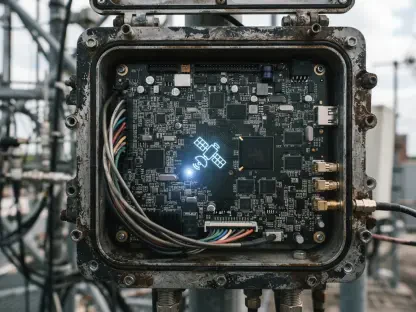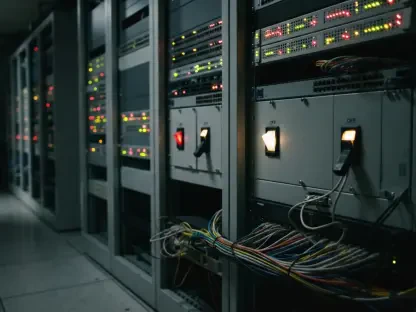

The quiet hum of a smart refrigerator or the glowing light of a mesh Wi-Fi router no longer signifies simple convenience; instead, these objects have become the front lines of a global cyber conflict that exploits the very foundations of residential internet connectivity. Across the globe, millions of unsuspecting homeowners are hosting sophisticated malware that allows shadowy organizations to funnel illicit traffic through their private IP addresses, effectively turning living rooms into staging grounds for digital warfare. This shift toward residential proxies represents a fundamental change in how cyberattacks are orchestrated, as the anonymity provided by a “clean” home address is far more valuable to a modern hacker than any data center server could ever be. By blending in with legitimate streaming services, video calls, and online shopping sessions, these malicious operations bypass the stringent blocklists and security firewalls that once protected the internet’s most sensitive targets. This industrialization of consumer-grade connections has created an ecosystem where the very devices meant to improve our lives are being used to dismantle the security of the broader digital economy.
The Evolution of Global Threat Landscapes
Tracking the Fragmentation: The Kimwolf Infrastructure
The high-profile takedown of the massive Kimwolf botnet in early 2026 was initially hailed as a decisive victory for international law enforcement, yet it quickly revealed the resilient and adaptive nature of modern cyber-infrastructure. Rather than collapsing entirely, the central command structures dissolved into dozens of smaller, autonomous botnet families that proved to be significantly more nimble and difficult to track than their predecessor. This process of digital metastasization allowed various criminal factions to seize portions of the existing infected device pool, creating a fragmented landscape where multiple threat actors now compete for dominance. These new, smaller clusters operate with specialized focus, often leasing their access to other groups for specific tasks like localized data harvesting or targeted corporate espionage, making the overall threat more decentralized and persistent.
Because these fragmented units operate independently, the traditional “whack-a-mole” strategy employed by security researchers has become increasingly ineffective against such a distributed adversary. When one small cluster is identified and neutralized, the remaining nodes often redistribute their workloads or shift their command-and-control signals to new, unmonitored domains within minutes. This constant state of flux means that security teams can no longer rely on static lists of compromised IPs; instead, they must analyze behavioral patterns across hundreds of thousands of residential connections to identify the subtle signs of botnet activity. The competition between criminal groups for control over these compromised devices has also led to more aggressive exploitation techniques, as attackers rush to patch the very vulnerabilities they used to gain entry, essentially “locking the door” behind them to prevent rival groups from hijacking their newly acquired residential assets.
Scaling to New Heights: Historic Levels of Network Disruption
The current volume of global botnet activity has completely redefined the scale of network disruption, shattering previous records for traffic intensity and persistence as millions of active residential endpoints are utilized simultaneously. With the transition from data-center-based attacks to residential-proxy-driven campaigns, malicious actors can now generate massive traffic flows reaching tens of Terabits per second without triggering the standard alarms associated with suspicious server behavior. This immense surge in capacity allows even a moderately organized criminal group to overwhelm robust global infrastructures, as the combined power of millions of compromised household devices acting in unison creates a tidal wave of requests that looks, for all intents and purposes, like a legitimate surge in consumer demand.
This massive scale is not just a matter of raw volume but also of geographic diversity and technical complexity, as attackers can now distribute their traffic across every continent and service provider in real-time. This prevents traditional geo-blocking or rate-limiting strategies from being effective, as the traffic originates from hundreds of thousands of unique, reputable home internet accounts rather than a single malicious source. The sheer aggregate power of these household devices has turned small-scale vulnerabilities in IoT firmware into a systemic risk for the entire internet backbone. As more bandwidth is consumed by these hidden botnet operations, legitimate users often experience degraded performance and increased latency, unaware that their high-speed home connections are being harnessed to fuel some of the most destructive and expansive DDoS campaigns in history.
Vulnerabilities and Market Incentives
Methods of Entry: Device Compromise and Hardware Exploitation
Malicious actors have developed two primary pathways to infiltrate home networks without the knowledge of the homeowner, focusing on software development kits and compromised supply chains to build their proxy networks. Many unsuspecting developers are offered significant payments to integrate specialized SDKs into popular mobile applications, which then run a background proxy service whenever the app is open or the device is charging. These apps, ranging from simple utilities to mobile games, turn the smartphone into a gateway for botnet traffic, often bypassing app store security checks by keeping the malicious behavior dormant until a remote signal is received. This silent exploitation allows botnet operators to recruit millions of legitimate users who essentially volunteer their bandwidth in exchange for “free” software that hides a darker purpose.
In addition to software-based infiltration, the proliferation of low-cost electronics and streaming devices has introduced a significant hardware-level vulnerability into the modern household. Many budget-friendly devices, such as smart plugs, cameras, and streaming boxes, arrive from the factory with pre-installed backdoors or hardcoded credentials that are easily exploited by botnet operators. Because these devices are rarely updated by consumers and often lack robust security interfaces, they remain permanent fixtures in the botnet ecosystem once they are connected to the internet. This industrialization of compromise means that an attacker does not need to trick a user into clicking a link; they simply scan the internet for the tell-tale signatures of these vulnerable devices and automatically enroll them into a growing network of residential proxies that are sold to the highest bidder on the dark web.
Technical Exploits: The Industrialization of Shell Access
A particularly dangerous technical exploit has recently dominated the cybercrime landscape, involving the misuse of the Android Debug Bridge to gain deep, administrative control over household devices. By exploiting unauthenticated ports on smart TVs, tablets, and even some kitchen appliances, attackers can route their requests directly back to an exit node, effectively turning the hardware into a fully controllable terminal for criminal activity. This level of access allows the botnet operator to do more than just route traffic; they can execute custom scripts, install additional malware, or use the device as a jumping-off point to scan the rest of the local home network for more valuable targets, such as laptops or network-attached storage units.
Even as international law enforcement has successfully arrested several key players involved in the commercialization of this exploit, the technique itself has become a standardized tool for various criminal syndicates. The industrialization of shell access means that kits are now sold to less-skilled attackers, allowing them to automate the process of finding and hijacking vulnerable IoT devices with minimal technical knowledge. This persistence is largely due to the massive backlog of unpatched devices that remain connected to the internet, as consumers rarely view their television or smart lightbulb as a security risk that requires regular maintenance. Consequently, these devices continue to serve as the backbone for proxy-driven attacks, providing a steady supply of administrative access that is repurposed for everything from credential stuffing to large-scale data exfiltration.
The Economic Boom: Fueling the Residential Proxy Market
The explosive demand for high-quality residential IP addresses is largely driven by the rapid growth of the artificial intelligence sector, which requires massive datasets to train increasingly complex models. AI companies and data analytics firms frequently use residential proxies to scrape websites that would otherwise block the heavy, repetitive traffic coming from recognizable data center ranges. Because residential IPs are indistinguishable from normal human visitors, they allow these companies to bypass anti-scraping measures and collect data at a scale and speed that would be impossible through legitimate channels. This legitimate demand for “anonymized” scraping has unintentionally created a lucrative secondary market where criminal actors can flip stolen residential access for a significant profit.
This economic reality has made a single U.S.-based home IP address more valuable to a criminal operator than the actual monthly subscription fee the consumer pays to their internet service provider. In the underground marketplace, access to a “clean” residential node is a premium commodity, with prices fluctuating based on the reputation of the ISP and the speed of the home connection. This financial incentive drives continuous innovation in botnet technology, as operators strive to maximize the “uptime” and reliability of their compromised devices to attract higher-paying clients. The market has become so sophisticated that some botnet services even offer service-level agreements and specialized routing options, mirroring the business models of legitimate tech corporations while fueling a global cycle of cybercrime and data theft.
Modern Infrastructure and Strategic Defense
High-Speed Pipes: Symmetric Fiber and the Global Shift
The global push for symmetric gigabit home internet, while a boon for remote workers and gamers, has unintentionally provided botnet operators with powerful high-speed “pipes” for launching attacks. Historically, home connections were limited by slow upload speeds, which capped the amount of traffic a single compromised device could contribute to a DDoS campaign. However, with the widespread adoption of fiber-to-the-home technology, a single household can now blast data at speeds equivalent to a small business server, significantly increasing the lethality of each infected node. This shift in infrastructure has transformed the typical residential home from a passive consumer of content into a potent source of high-volume traffic that can be weaponized in seconds.
As security measures and regulatory oversight improve in established markets, botnet operators have demonstrated a remarkable ability to shift their command-and-control centers to regions with less stringent network monitoring. This geographic agility makes the threat a moving target for international law enforcement and security researchers, as the source of an attack can migrate from one continent to another in response to localized crackdowns. By strategically moving their operational hubs to jurisdictions with limited cyber-defense capabilities, criminal groups can continue to manage their global networks of residential proxies with relative impunity. This creates a challenging environment for defenders, who must coordinate across international borders and varying legal frameworks to address a problem that treats the entire global internet as a single, unified playground.
Active Defense: Transitioning from Passive Transit
In response to the escalating threat posed by residential botnets, internet service providers are undergoing a fundamental transformation from passive carriers of data to active defenders of network integrity. Modern ISPs are increasingly implementing sophisticated filtering technologies at the border router level, allowing them to identify and intercept malicious traffic patterns before they ever leave the local network. By using machine learning algorithms to distinguish between a legitimate high-definition stream and a botnet-generated traffic spike, providers can neutralize the threat at its source without impacting the user experience for the vast majority of their customers. This proactive stance is a necessary evolution, as the sheer volume of botnet traffic now threatens to congest the very backbone of the internet if left unchecked.
This shift toward active defense also includes a more collaborative approach between ISPs and the broader cybersecurity community, where threat intelligence is shared in real-time to block known malicious nodes. By reclaiming bandwidth that was previously hijacked by botnet operators, providers can improve overall network performance and reduce the operational costs associated with managing massive surges in junk traffic. This strategy not only protects the global internet infrastructure but also helps shield the provider’s reputation, as customers are less likely to be blacklisted by major websites if their IP addresses are prevented from participating in automated attacks. The move toward active network defense represents a critical step in devaluing the residential proxy market by making it increasingly difficult for bad actors to utilize compromised devices effectively.
Cutting the Cord: Neutralizing Botnets through Filtering
One of the most efficient strategies for neutralizing the impact of large-scale residential botnets is the implementation of aggressive command-and-control filtering. When an internet service provider identifies the specific signals used to coordinate a botnet, they can drop those packets at the gateway, effectively “starving” the infected devices of instructions from their remote masters. Even if a smart appliance or mobile phone remains technically infected with malware, it becomes a dormant and harmless entity if it cannot receive the commands necessary to participate in a coordinated attack. This method of surgical intervention allows security teams to mitigate the threat of a million-device botnet without needing to physically access or manually patch every single compromised piece of hardware in the field.
Industry leaders recognized the necessity of these changes and moved to implement more rigorous hardware standards that prevented unauthenticated access to sensitive debug ports. By standardizing the response to command-and-control signals and encouraging the adoption of secure-by-design principles in the IoT manufacturing sector, the global community worked toward a more resilient digital environment. Future considerations focused on the development of automated self-healing networks that could detect and quarantine suspicious devices the moment they were connected to a home router. These technical advancements, combined with increased international cooperation between law enforcement and service providers, laid the groundwork for reclaiming the residential internet from the hands of criminal syndicates and ensuring that the devices in our homes remained tools for progress rather than weapons for disruption.