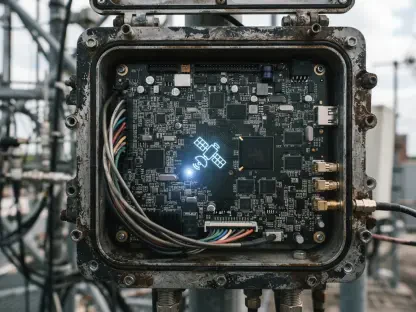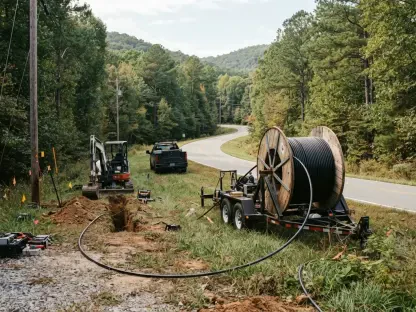

The convergence of advanced artificial intelligence and industrial networking has fundamentally altered the defensive landscape for global manufacturing plants and utility providers as they face increasingly sophisticated cyber threats. During recent industrial sessions, a paradigm shift became evident, moving away from reactive security toward a deeply integrated network fabric capable of autonomous protection. This transformation addresses a critical gap in Operational Technology, where legacy systems often lack the inherent intelligence to withstand automated attacks. By embedding security directly into the hardware infrastructure, operators are now able to maintain continuous production while shielding sensitive assets from breaches. This vision focuses on simplifying protection so that security becomes a natural byproduct of the network itself rather than an add-on. The integration of real-time monitoring ensures that modern industrial environments remain resilient against an evolving threat landscape that no longer relies on human-speed intervention.
Confronting the High-Speed AI Threat
Advanced AI models such as Mythos Preview have fundamentally rewritten the timeline of cyber warfare by drastically reducing the time required to weaponize software vulnerabilities in industrial environments. Where human actors previously spent days or weeks researching potential entry points, AI-driven scripts now identify and exploit weaknesses with a degree of precision and speed that is difficult to counter through traditional means. This shift implies that the window for human-led defensive responses has effectively closed for many high-stake scenarios. Defensive mechanisms must now possess the capability to recognize anomalous patterns and initiate protective measures within seconds of an initial probe. As these AI models become more accessible to malicious actors, the necessity for a persistent and automated defensive posture becomes an undeniable requirement for any facility operating critical infrastructure. The goal is to establish a system where the network anticipates the intent of an intrusion rather than merely recording its occurrence.
The disparity between offensive speed and defensive remediation has grown to a point where traditional vulnerability management schedules are becoming obsolete in the current threat climate. Industry data indicates that while enterprise security teams might take nearly three weeks to fully test and deploy a patch across a complex network, AI-facilitated exploits can compromise a system in less than a day. This acceleration creates a dangerous gap where systems remain exposed even when a solution is technically available. To bridge this divide, modern security architectures are prioritizing automated mitigation over manual patching for immediate threat containment. By utilizing intelligent network layers that can block specific traffic patterns associated with known exploit techniques, organizations can effectively buy time for their maintenance teams. This approach ensures that the plant floor remains operational even during the critical period between the discovery of a flaw and the application of a permanent fix, neutralizing the advantage that rapid AI exploitation would otherwise hold.
Moving From Visibility to Intelligent Grouping
Establishing a robust security posture begins with a comprehensive and granular understanding of every asset connected to the industrial control system. In many older facilities, the presence of legacy equipment and unmanaged switches often creates blind spots that act as gateways for potential cyber incursions. Modern security platforms address this challenge by performing deep packet inspection across the entire network to create a dynamic inventory of devices, from programmable logic controllers to specialized sensors. This visibility phase is more than just a list of hardware; it involves identifying the specific protocols, firmware versions, and communication patterns inherent to each device. By capturing this data at the network edge, the system can build a digital blueprint of the entire production environment. Without this foundational clarity, any attempt at enforcement would be disorganized and potentially disruptive to the intricate timing required for physical manufacturing processes, making visibility the indispensable first step.
Transforming raw asset data into a manageable security framework requires the use of intelligent grouping mechanisms that align with global industry standards such as IEC 62443. Once visibility is established, the network uses automated analysis to categorize thousands of individual assets into logical zones based on their function and risk profile. This process replaces the tedious manual effort of sorting devices, which is often prone to human error and cannot scale to meet the demands of modern smart factories. By grouping assets, security professionals can define broad policies that apply to entire classes of equipment while still maintaining the ability to drill down into specific anomalies. This structured map serves as a roadmap for defensive action, allowing teams to visualize how data flows between different sectors of the plant. Such organization is critical for implementing a defense-in-depth strategy, as it ensures that a breach in one zone does not automatically lead to a compromise of the entire facility’s operations or safety protocols.
Implementing Safe Policy and Fabric Integration
One of the most significant challenges in securing industrial environments is the creation of access rules that are strict enough to block threats but flexible enough to permit essential traffic. To solve this complexity, the latest security solutions employ auto-policy recommendations that utilize historical communication data to suggest the most appropriate rules for each asset group. Instead of requiring security engineers to write thousands of lines of code from scratch, the system analyzes the baseline behavior of the network to identify which interactions are legitimate and which are outliers. This data-driven approach significantly reduces the time required to harden a network and ensures that the resulting policies are grounded in actual operational needs. By offloading these security functions to specialized hardware like the IE3500 and IE9300 series industrial switches, the network handles policy enforcement at line rate via proprietary ASICs, providing robust protection without the latency that could disrupt physical operations.
The modernization of remote access proved to be the final essential layer in this comprehensive security strategy, as it replaced outdated VPNs with integrated zero-trust entry points. These systems granted third-party vendors and operators least-privilege access to specific machinery for a limited duration, effectively neutralizing the risk of lateral movement across the plant floor. Industrial leaders who adopted this framework established a proactive defense that operated at the speed of artificial intelligence, rather than relying on human reaction times alone. By embedding security directly into the network fabric and utilizing automated simulation to verify policies, organizations successfully protected their production lines. These strategic steps provided a sustainable model for securing critical infrastructure from 2026 to 2028 and beyond. The focus shifted toward creating a self-defending network that prioritized physical safety and operational continuity above all else.