
The massive dismantling of an iconic satellite dish in the French countryside represents far more than the simple removal of obsolete metal; it marks the precise moment Europe pivots toward a new era of orbital communication. At the Bercenay-en-Othe teleport, the removal of a 32-meter giant signals a transition from the era of static geostationary behemoths to a dynamic, low-Earth orbit future. This transformation serves as the cornerstone for Telesat’s Lightspeed constellation, establishing the first gateway of its kind on European soil.
A 32-Meter Giant Makes Way for the New Space Age
While the massive 32-meter antenna at the Bercenay-en-Othe teleport once stood as a symbol of 20th-century satellite communication, its recent removal signals a profound shift in how the world stays connected. This historical ear in the French countryside is not being retired, but rather reborn as the first European gateway for Telesat’s Lightspeed constellation. The infrastructure transition from 2026 to 2028 effectively bridged the gap between legacy telecommunications and the high-speed, low-latency requirements of a rapidly evolving digital economy.
Bridging the Critical 2% Gap in Global Connectivity
In a world dominated by fiber optics and undersea cables, satellite technology often occupies a modest 2% of the global connectivity mix, yet this small fraction represents the most critical link in the chain. The partnership between Orange and Telesat addresses the hardest-to-reach segments of the market, where terrestrial infrastructure is either physically impossible or economically unfeasible to deploy. This new gateway serves as a vital insurance policy for global data, ensuring that when terrestrial networks fail due to natural disasters or technical outages, mission-critical communications remain uninterrupted through a resilient orbital backstop.
Technical Sophistication and the Architecture of Lightspeed
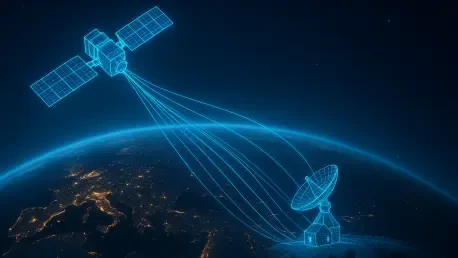
The Bercenay-en-Othe site was specifically selected for its rural location and low electromagnetic interference, providing an ideal environment for the high-precision signal processing required by Low-Earth Orbit satellites. Unlike traditional systems, Telesat’s Lightspeed network will utilize a constellation of 225 satellites interconnected via optical laser links. This sophisticated design allows data to travel across a mesh network in space, significantly reducing the number of times a signal must descend to Earth. By minimizing terrestrial touchpoints, the gateway ensures faster data transit and provides a robust alternative to the dominant American providers currently saturating the market.
Data Sovereignty: A Strategic Defense Asset
For government and defense sectors, the Lightspeed gateway offers more than just speed; it provides a layer of security that is increasingly essential in a fragmented geopolitical landscape. Industry experts highlight that the ability to keep data within a closed satellite network—bypassing untrusted foreign terrestrial nodes—is a major selling point for European nations seeking technological autonomy. By partnering with a Canadian operator and utilizing French infrastructure, Orange provides a sovereign-friendly alternative to American constellations, ensuring that sensitive information remains under the control of trusted partners.
Strategies for Integrating LEO Capabilities into Enterprise Frameworks
Organizations looking to capitalize on this new infrastructure focused on a multi-path connectivity strategy that treated LEO satellite links as a primary component of their disaster recovery and remote operations toolkits. The integration managed by Orange’s dedicated satellite unit allowed for seamless handoffs between submarine cables, terrestrial fiber, and the Lightspeed constellation. To maximize this technology, businesses identified mission-critical data routes and mapped out dead zones where LEO gateways provided necessary throughput for real-time applications. This holistic approach ensured that remote sites remained as well-connected as urban headquarters.