
Economic growth in the 21st century requires more than just physical cables; it requires the detailed project scoping and risk assessment currently funded by the EU. This realization stands at the heart of a recently signed agreement between the European Union and Nigeria, providing a €14 million grant to prepare for a massive digital expansion. While the public often focuses on the tangible act of burying fiber-optic lines, the underlying success of such a 90,000-kilometer network depends entirely on the meticulous planning and technical validation occurring today. This grant serves as the catalyst for modernizing Nigeria’s digital backbone, ensuring that every euro spent on physical construction is optimized through data-driven design and institutional readiness. By bridging the gap between raw ambition and technical feasibility, this partnership represents a major shift in how large-scale infrastructure is approached in the West African region, prioritizing the foundational soft systems that determine long-term operational viability.
Strategic Governance and Financial Oversight
Administrative Framework: Multi-Lateral Cooperation
Transparency and accountability are the dual pillars of this international venture. The European Bank for Reconstruction and Development (EBRD) acts as the primary administrator, ensuring that the €14 million grant meets the most stringent international standards for procurement and execution. This level of oversight is designed to mitigate the risks typically associated with large-scale infrastructure projects, such as financial leakage or technical misalignment. By involving the EBRD, the European Union provides a layer of institutional confidence that encourages further private sector participation. Within the Nigerian government, the Ministry of Budget and Economic Planning works in tandem with the Ministry of Communications, Innovation, and Digital Economy to manage the fund. This dual-ministry approach ensures that fiscal responsibility is balanced with high-level technical expertise, creating a checks-and-balances system that safeguards the project’s integrity from its inception.
The collaborative nature of this framework extends beyond simple fund management, reaching into the realm of strategic alignment between Nigerian national goals and European developmental standards. This multi-layered structure ensures that every technical study conducted is both globally competitive and locally relevant. Because the Ministry of Budget and Economic Planning oversees the broader fiscal implications, the project remains grounded in the nation’s overall economic strategy. Simultaneously, the Ministry of Communications focuses on the granular details of network architecture, ensuring that the technical specifications are future-proofed against rapid technological shifts. This synchronization between international lenders and local executors creates a roadmap for other African nations looking to modernize their infrastructure through transparent, multi-lateral pacts. It effectively transforms a standard grant into a sophisticated governance model that emphasizes stability.
Institutional Capacity: Knowledge Transfer
A critical component of the pact involves the aggressive development of human capital within the Nigerian digital ecosystem. Rather than relying solely on international firms for technical execution, the grant allocates significant resources to training local experts and strengthening regulatory bodies. This emphasis on institutional capacity building ensures that Nigeria develops a self-sustaining pool of talent capable of managing the complex 90,000-kilometer fiber network. Knowledge transfer programs are being established to provide Nigerian engineers and policy analysts with hands-on experience in modern network design and risk management. By fostering this internal expertise, the country reduces its long-term dependency on external consultants for routine maintenance and future expansions. This approach acknowledges that the true value of infrastructure lies not in the hardware itself, but in the people who operate and optimize it daily. Such a strategic focus ensures that the technical foundations will remain resilient.
Strengthening internal skill sets is also essential for creating a stable regulatory environment that attracts further foreign direct investment. When local regulatory bodies are equipped with deep technical knowledge, they can better oversee fair competition, manage spectrum allocation, and ensure that service providers adhere to quality-of-service standards. The current training initiatives under the EU-Nigeria pact are designed to empower these agencies, allowing them to lead the digital transformation with confidence and authority. Furthermore, this capacity building creates a ripple effect throughout the broader economy, as the trained experts often move into the private sector, bringing international best practices to local telecommunications and technology companies. This cycle of knowledge sharing is vital for building a competitive digital economy that can stand on its own merits in the global market. Ultimately, the success of the fiber backbone will be measured by the strength of the institutions that govern it.
Architectural Scale and Sectoral Synergy
Building the National Backbone: A 90,000-Kilometer Vision
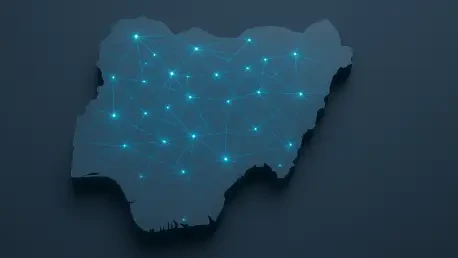
The scale of the proposed 90,000-kilometer fiber-optic network is intended to serve as the central nervous system for Nigeria’s modern economy. Fiber-optic technology, which remains the global gold standard for data transmission, offers the high speed and low latency required for sophisticated digital services. By creating this nationwide backbone, the government aims to solve the problem of fragmented connectivity that currently limits digital access in many regions. This backbone will connect major urban centers and extend deep into rural areas, providing a reliable path for data that was previously restricted by terrestrial limitations or expensive satellite links. The deployment is expected to significantly reduce the operational costs for internet service providers, who can then pass those savings on to consumers. As broadband becomes more affordable and widespread, the barrier to entry for digital participation drops, allowing a larger segment of the population to engage in the global digital marketplace.
Establishing this extensive infrastructure also paves the way for advanced technological integrations like cloud computing and secure financial ecosystems. A reliable national backbone is the prerequisite for data centers to function effectively and for banks to process transactions with instantaneous security. Without the high-capacity fiber lines currently being scoped, the growth of the Nigerian fintech sector would eventually hit a ceiling imposed by physical bandwidth constraints. The 90,000-kilometer project addresses this by ensuring that the underlying architecture can handle the massive data volumes generated by modern business operations. Moreover, the network is designed to be inclusive, reaching underserved communities that have historically been left behind in the digital age. By integrating these regions into the national network, the government fosters a more equitable economic landscape where geography no longer dictates a citizen’s access to information or opportunity.
Future Considerations: The Path to Digital Sovereignty
The strategic partnership between the European Union and Nigeria established a necessary precedent for modern infrastructure development. By focusing on the preparatory technicalities, the initiative addressed the root causes of previous engineering delays and financial inefficiencies. Moving forward, stakeholders should prioritize the swift integration of these findings into national procurement policies to maintain the momentum toward physical deployment. Policymakers must also focus on creating a harmonized regulatory environment that simplifies the right-of-way permits required for laying fiber across state lines. Furthermore, the private sector was encouraged to begin developing business models that leverage the upcoming high-capacity network, particularly in the fields of agricultural technology and decentralized energy management. This proactive planning ensured that once the physical cables were laid, the nation possessed both the technical expertise and the commercial framework to utilize them effectively.
The long-term viability of this digital transformation relied on the successful transition from these theoretical studies to the construction of last-mile connectivity. It was essential for the government to maintain a dialogue with local communities to ensure that the infrastructure rollout met specific regional needs and stimulated local economies. By identifying potential delivery risks during the current grant-funded phase, Nigeria prepared itself to handle the logistical complexities of a cross-country engineering project. The resulting infrastructure was intended to not only boost connectivity but also to serve as a platform for home-grown digital solutions that could be exported across the African continent. Ultimately, the meticulous groundwork laid during this initial phase proved to be the determining factor in whether the 90,000-kilometer goal translated into tangible economic prosperity. Continued oversight and public-private synergy remained the best tools for ensuring that the digital backbone remained a sustainable asset.