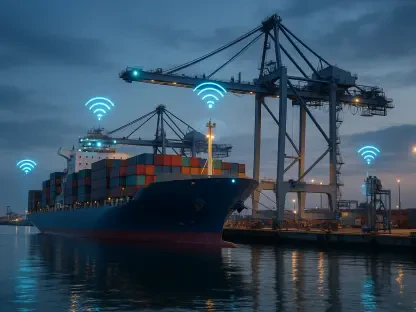

The corporate landscape is currently witnessing a fundamental transformation where digital connectivity has successfully transitioned from a hidden back-end utility to a prominent front-end strategic asset. This shift, primarily spearheaded by the widespread adoption of private 5G networks, represents a structural reimagining of how modern organizations design, manage, and leverage their digital infrastructure to maintain a competitive edge. Rather than viewing connectivity as a mere support function, enterprises in 2026 recognize it as a critical lever for operational excellence. By moving away from shared public infrastructure toward a model of private ownership, businesses have gained direct governance over their data flows, performance metrics, and security protocols. This level of control has become indispensable as business operations grow increasingly dependent on real-time data processing and high-performance connectivity that public networks simply cannot guarantee under heavy industrial loads.
Drivers of Adoption and Performance Advantages
The Catalysts for Network Evolution
The acceleration of private 5G adoption is driven by several converging factors, with proven return on investment leading the charge for many global organizations. Large-scale deployments in sectors like global manufacturing and food processing have moved beyond the experimental stages into full production-grade operations. These implementations have demonstrated tangible value by supporting connected workers, advanced robotics, and sophisticated real-time analytics. Furthermore, the maturing device ecosystem has finally removed the significant barriers to entry that existed in previous years. Industrial-grade sensors, specialized handheld devices, and ruggedized modules are now widely available and fully compatible with the latest cellular standards. This availability ensures that companies can scale their digital initiatives without the hardware bottlenecks that once plagued early adopters. The result is a robust infrastructure that supports a high density of connections while maintaining the reliability required for mission-critical tasks.
The urgency to adopt private 5G is largely fueled by the massive migration of Artificial Intelligence applications to the network edge, where immediate processing is required for safety and efficiency. Edge AI allows for predictive maintenance, real-time safety monitoring, and dynamic adjustments to complex production lines without the latency associated with cloud-based processing. To function effectively, these sophisticated AI applications require a network capable of handling massive volumes of data with sub-millisecond latency, a requirement that private 5G is uniquely engineered to meet. By processing data locally on a private network, enterprises can reduce the bandwidth costs associated with backhauling information to distant data centers while simultaneously improving the speed of their automated responses. This convergence of high-speed connectivity and localized intelligence has turned the network into an active participant in business logic rather than a passive pipe for transporting data between remote points.
Comparative Advantages Over Traditional Wi-Fi
A recurring theme in modern network strategy is the comparison between private 5G and traditional Wi-Fi, particularly in demanding industrial or large-scale campus environments. While Wi-Fi remains a useful tool for office settings and general guest access, it often struggles to provide interference-free performance and seamless mobility in massive warehouses or outdoor shipping ports. Private 5G utilizes licensed or prioritized spectrum, which effectively eliminates the variable performance and signal degradation common in shared wireless environments. Furthermore, the technology offers advanced features like network slicing, which allows an enterprise to logically partition their wireless capacity. This ensures that critical operational technology, such as autonomous guided vehicles, receives dedicated bandwidth that is never throttled by less important administrative traffic. This level of deterministic performance is a key differentiator that allows 5G to support applications that Wi-Fi simply cannot handle reliably.
Beyond technical performance, the economic argument for private 5G has strengthened significantly as organizations realize the total cost of ownership benefits over time. For instance, the deployment at Roularta Media Group highlighted a fascinating efficiency metric: the private 5G network required only about 25% of the radio hardware that a comparable Wi-Fi installation would have needed to cover the same area. This drastic reduction in hardware count not only lowers the initial capital expenditure but also significantly simplifies the long-term maintenance and power requirements of the infrastructure. With fewer access points to manage, troubleshoot, and upgrade, IT departments can reallocate their resources toward higher-value digital transformation projects. Additionally, the superior range and penetration of 5G signals reduce the need for complex cabling and extensive site preparation, making it a more versatile solution for retrofitting older industrial facilities that were never designed for modern high-speed wireless connectivity.
Implementation Strategies and Future Security
Streamlining Deployment and Safeguarding Data
Despite the clear operational benefits, the perceived complexity of building and managing a private cellular network has historically acted as a deterrent for many non-technical enterprises. Many corporate leaders feared that adopting 5G would require hiring specialized telecommunications engineers and managing complex spectrum licenses, which falls outside their core competencies. However, the rise of the Network-as-a-Service model has effectively addressed this gap by allowing companies to outsource the heavy lifting to experienced service providers. Through these partnerships, enterprises can access the latest 5G technology via a subscription-based model that covers everything from spectrum acquisition to hardware maintenance and security updates. This shift allows Chief Information Officers to focus entirely on business outcomes and application performance rather than getting bogged down in the technical minutiae of signal propagation and core network management. It essentially turns a complex engineering challenge into a manageable operational expense.
The most successful transitions to private 5G are those led by specific, high-value use cases rather than a desire to implement new technology for its own sake. In Brownsville, Texas, the implementation of a private 5G network transformed urban management by enabling highly synchronized traffic systems and enhancing public safety through real-time video analytics and sensor fusion. This deployment proved that a dedicated network could handle the intense data requirements of a modern city while maintaining the reliability needed for emergency services. Similarly, in the manufacturing sector, private 5G acts as the essential glue for AI-driven robotics and remote monitoring systems that require constant, low-latency communication. IT leaders are increasingly encouraged to evaluate their network investments based on the tangible operational impact they enable, such as a measurable reduction in factory downtime, improved worker safety metrics, or enhanced environmental monitoring, rather than focusing solely on traditional network throughput statistics.
Security as a Foundation
Security is a primary differentiator for private 5G, as these networks were designed with a “secure by design” philosophy that allows for the total isolation of sensitive internal data. Unlike public networks that may expose data to various external vulnerabilities, a private network allows an enterprise to enforce consistent security frameworks across every connected device, from the smallest sensor to the largest industrial robot. This architectural isolation made it possible for security teams to detect anomalies and potential threats in real time without the noise of public internet traffic. By maintaining full control over the network core, organizations ensured that their intellectual property and operational data remained within their own digital perimeter. This level of protection became a prerequisite for industries dealing with sensitive proprietary processes or strict regulatory compliance requirements, providing a level of confidence that older wireless standards struggled to match in an increasingly hostile cyber threat environment.
Moving forward into the 2026 to 2031 window, IT leaders prioritized actionable steps to solidify their network foundations through rigorous infrastructure audits and pilot programs. They recognized that the transition required identifying high-impact use cases, such as automated quality control or remote expert assistance, to secure internal buy-in. Partnerships with established managed service providers helped bridge the skills gap, while a focus on interoperability ensured that new 5G systems integrated seamlessly with existing legacy IT environments. Organizations that took these proactive measures established a scalable platform for future innovation, moving away from reactive troubleshooting toward a proactive, data-driven operational model. These leaders effectively leveraged private 5G not just as a communication tool, but as the essential nervous system for the modern intelligent enterprise. This approach provided the agility needed to pivot quickly in response to market changes and maintained a resilient posture against the challenges of a global, real-time economy.