
Enhanced Reduced Capability technology addresses a critical industry void by extending the battery life of industrial sensors and asset trackers to a full decade on 5G networks. This technical milestone signifies a major shift for e& UAE, which is now moving beyond its legacy role as a standard service provider to emerge as a pioneer of sovereign intelligence. By weaving agentic artificial intelligence directly into its foundational business products, the company is creating an environment where infrastructure and intelligence are no longer separate entities. This evolution is particularly relevant as organizations seek more than just high-speed internet; they require integrated solutions that can handle data-heavy tasks autonomously. The deployment of these technologies across the United Arab Emirates highlights a commitment to building a resilient digital economy that prioritizes efficiency and long-term sustainability. As global markets transition toward smarter operations, this blend of 5G-Advanced and AI ensures that enterprises have the tools necessary to compete at the highest levels.
Redefining Business Connectivity Through Native Intelligence
The Shift to Agentic AI and Autonomous Workflows
The integration of agentic AI into Business Mobile and Business Pro Internet lines represents a significant departure from the traditional model of fragmented service procurement. Previously, companies had to source artificial intelligence tools, cybersecurity protocols, and internet connectivity from various distinct vendors, leading to integration challenges and higher overhead. By providing an intelligent layer built directly into the infrastructure, e& UAE has lowered the entry barrier for small and medium-sized enterprises. This native capability allows businesses to automate complex operational tasks from the very first day of their contract, effectively democratizing access to high-end technology. The transition from reactive tools to proactive agentic systems means that connectivity is now bundled with the power to act on data. This shift ensures that even smaller firms can maintain a competitive edge without needing a massive in-house technical department to manage disparate software licenses and complex cloud configurations.
Enhancing Operational Efficiency With Native Automation
Unlike traditional generative AI models that primarily provide text-based responses to specific prompts, agentic systems possess the unique autonomy required to organize information and execute multi-step sequences. These advanced systems are capable of managing internal company schedules, handling intricate customer service inquiries, and retrieving specific data across multiple platforms without continuous human oversight. By making these sophisticated capabilities a native feature of the connectivity package, the operator is transforming automation into a foundational utility rather than an expensive add-on. This autonomy allows employees to focus on high-value strategic initiatives while the AI handles the mundane logistical details that often slow down business growth. The move toward autonomous workflows is not just about speed; it is about creating a more intelligent and responsive business environment. As these systems learn and adapt to specific organizational needs, they provide a level of customization that was previously unattainable.
Securing the Future With Sovereign Infrastructure
Sovereign AI Compute and Data Residency Requirements
To support the high demands of these agentic applications, e& UAE has introduced Sovereign AI Compute, a localized infrastructure strategy that utilizes UAE-based high-performance GPUs. This development is specifically designed to meet the rigorous requirements of the government, finance, and healthcare sectors, where data residency remains a non-negotiable regulatory priority. By ensuring that data processing occurs within national borders, the operator provides a highly secure environment that encourages even the most conservative industries to adopt artificial intelligence. The presence of local compute power mitigates risks associated with international data transfers and potential exposure to foreign jurisdictions. This localization is a cornerstone of the broader strategy to ensure that the nation’s digital future remains under its own control. Furthermore, providing local GPU resources reduces latency for real-time AI applications, which is critical for healthcare diagnostics and financial systems that require instant analysis.
Scalable Growth Paths for Large Scale Enterprises
This localized compute model offers a clear and scalable growth path for large-scale enterprises as they progress from initial AI experimentation to full-scale production environments. Because the entire infrastructure is built on national-scale connectivity, businesses can maintain operational continuity while training custom models or managing highly distributed sites. This architecture ensures that the high-performance demands of modern AI do not come at the cost of security or regulatory compliance. Moreover, it allows for a more collaborative ecosystem where public and private entities can share insights within a protected digital perimeter. The focus on sovereign infrastructure also addresses the global shortage of high-end computing power by providing a guaranteed local supply for domestic innovators. By centralizing these resources, the operator enables a more efficient allocation of processing power, ensuring that mission-critical applications receive the bandwidth and compute priority they require to function effectively.
Advancing the Industrial Internet of Things
The eRedCap Breakthrough in Live Commercial Networks
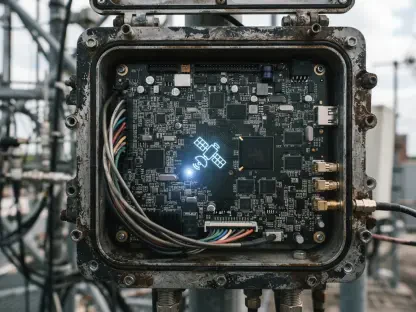
At the hardware level, e& UAE has achieved a global first by successfully testing eRedCap technology on a live commercial 5G network. This technology was specifically designed to bridge the gap for Internet of Things devices, such as smart meters and industrial sensors, which prioritize long-term battery life over high-speed data transmission. By optimizing power consumption and reducing the complexity of the internal radio components, eRedCap can extend the operational life of a single device to over a decade. This makes it a far more sustainable and cost-effective alternative to legacy 4G systems or earlier iterations of narrow-band IoT. The ability to deploy millions of low-power sensors across a unified 5G architecture allows for a more granular level of industrial monitoring and environmental management. This breakthrough is essential for the development of truly smart cities, where infrastructure needs to be self-monitoring and maintenance-free for years at a time to remain economically viable for the municipality.
Future Steps for an Integrated Intelligence Network
The implementation of these integrated systems demonstrated a clear shift in how national digital strategies were executed. Industry leaders recognized that the convergence of 5G-Advanced and agentic AI was the necessary catalyst for scaling autonomous operations across logistics and manufacturing. To capitalize on this progress, organizations were encouraged to audit their existing legacy sensors and evaluate the potential for eRedCap migration to ensure long-term network compatibility. Experts recommended that businesses prioritize the adoption of sovereign cloud solutions to future-proof their operations against shifting global data regulations. The synergy between localized compute power and autonomous AI agents provided a blueprint for other nations seeking to balance innovation with data security. As the ecosystem matured, the focus shifted toward refining the interoperability between different agentic systems to create a seamless digital fabric. Looking ahead, stakeholders focused on expanding these capabilities into untapped sectors.