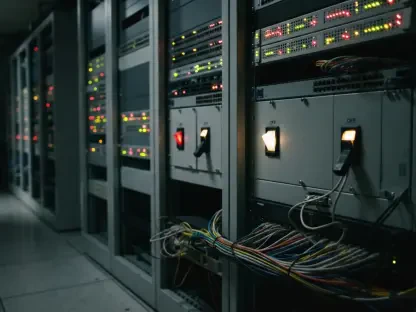

The traditional telecommunications blueprint, once defined by static infrastructure and reactive maintenance cycles, is undergoing a profound metamorphosis into a highly dynamic, self-evolving system. Communication Service Providers are now discarding the fragmented, manual workflows that previously hindered their ability to compete with hyperscale cloud providers and agile digital startups. By integrating advanced artificial intelligence into the very foundation of their operations, CSPs are finally aligning their technical capabilities with the lightning-fast requirements of a hyper-connected economy. This change is not merely a technical upgrade; it represents a strategic pivot toward a business structure where data-driven insights dictate every action. This transformation allows providers to move from being simple connectivity vendors to becoming integrated intelligence partners. By weaving automation into the fabric of their business, these companies can finally match their operational pace with the speed of market demand.
Scaling Intelligence across the Enterprise Ecosystem
For many years, the industry focused its automation efforts strictly on the network layer, attempting to optimize signal strength or manage bandwidth in isolation. However, the current evolution demands that autonomy extends far beyond these technical silos to encompass Business Support Systems and Operational Support Systems. By creating a unified intelligence layer that bridges these traditionally separate domains, service providers can ensure that a change in the network immediately reflects in the billing and customer service systems. This holistic approach removes the friction that occurs when sales teams offer services that the current network architecture cannot support, or when technical failures go unrecorded in customer accounts. The goal is to create a seamless digital thread that connects every aspect of the organization, ensuring that the business operates as a single, cohesive entity rather than a collection of disconnected departments. This enterprise-wide visibility is essential for maintaining agility.
The move toward broader autonomy also involves the integration of edge computing and decentralized data processing, which allows for localized decision-making without the latency of a central hub. As CSPs deploy more specialized services like private 5G networks for industrial manufacturing or low-latency slicing for healthcare, the need for localized, autonomous management becomes critical. These specialized environments require the network to adapt instantly to local conditions, such as sudden surges in device connectivity or changing security requirements. By pushing autonomous capabilities to the edge, providers can offer higher levels of reliability and security that were previously impossible to maintain manually. This expansion of intelligence creates a robust framework where the network can self-configure and self-protect in response to local environmental triggers. Consequently, the enterprise becomes more resilient, capable of maintaining high performance even in the face of unpredictable traffic patterns or external disruptions.
Bridging the Gap between Business Intent and Technical Execution
At the heart of this new operating model is the concept of intent-driven operations, which simplifies the interaction between business leadership and technical infrastructure. Instead of engineers manually configuring individual routers or switches to meet a client’s needs, the business side defines a high-level goal, such as ensuring ninety-nine percent uptime for a specific hospital network. The autonomous system then translates this commercial intent into the specific technical parameters required to achieve that outcome across the entire stack. This shift allows the business to focus on value creation rather than the minutiae of network configuration, effectively making the underlying technology invisible to the end-user. By utilizing sophisticated policy engines, the autonomous telco ensures that every technical action is inherently aligned with the overarching financial and operational objectives of the company. This alignment reduces the risk of human error and significantly accelerates the time-to-market for new, complex service offerings.
Complementing this intent-driven framework are closed-loop control systems that continuously monitor the network’s health and performance against the defined business goals. These systems do more than just alert technicians when something goes wrong; they are empowered to take corrective action automatically without waiting for human intervention. For instance, if the system detects a potential bottleneck in a specific geographic region, it can reroute traffic or provision additional resources in real-time to prevent any degradation of service. This proactive remediation ensures that service level agreements are consistently met, protecting the provider from financial penalties and maintaining customer trust. The intelligence within these loops learns from each interaction, refining its response strategies over time to become more efficient and precise. By bridging the gap between identification and resolution, CSPs can achieve a level of operational stability that was once considered a theoretical ideal.
Transforming Customer Engagement through Data Unification
One of the most significant challenges facing modern service providers has been the fragmentation of customer data across dozens of legacy platforms and regional databases. This lack of a unified view often leads to frustrating customer experiences where representatives are unaware of a user’s history or ongoing technical issues. The autonomous telco model addresses this by establishing a single source of truth that consolidates every customer interaction, from billing inquiries to network performance metrics. When data flows freely between departments, AI-driven tools can provide frontline employees with real-time insights and personalized recommendations for every caller. This eliminates the need for customers to repeat their information and allows for a more empathetic, efficient service experience. Furthermore, by breaking down these data silos, providers can identify patterns of churn before they occur, allowing for proactive outreach and tailored retention strategies.
Efficiency in the autonomous telco is not just about reducing headcount; it is about empowering the workforce to focus on high-value tasks that require human creativity and judgment. By automating the routine, repetitive workflows that traditionally required manual data entry or basic troubleshooting, employees are freed from the drudgery of administrative tasks. This shift leads to higher job satisfaction and allows the organization to redirect its human capital toward innovation and complex problem-solving. For example, instead of manually processing service orders, specialized teams can work on designing the next generation of digital services or improving the overall customer journey architecture. The reduction in operational costs achieved through automation can then be reinvested into research and development, further accelerating the provider’s competitive advantage. This cycle of efficiency and innovation ensures that the CSP remains at the forefront of the digital economy.
Operationalizing AI as a Core Predictive Engine
Artificial intelligence has moved beyond the realm of experimental pilot projects to become the central engine that drives every operational decision within the telco. Modern AI models are now capable of ingesting and analyzing massive streams of real-time telemetry data to identify subtle anomalies that would be invisible to human operators. This transition from reactive to predictive operations means that potential failures are often identified and mitigated before they ever impact the customer experience. By embedding AI directly into the live workflows of the business, CSPs can automate the next best action for any given scenario, whether it involves technical maintenance or a commercial upsell opportunity. This deep integration ensures that the organization is always operating at peak efficiency, with every asset being utilized to its fullest potential. The predictive nature of these systems also allows for more accurate capacity planning, ensuring infrastructure investments are targeted.
The true power of AI in the autonomous model lies in its ability to manage the complexity of multi-cloud environments and hybrid network architectures seamlessly. As service providers increasingly rely on a mix of on-premises hardware and public cloud resources, the task of maintaining consistent performance across these diverse environments becomes immensely difficult. AI-driven orchestration tools can manage these resources dynamically, moving workloads to the most cost-effective or highest-performing environment based on real-time demand and cost fluctuations. This level of sophisticated resource management allows CSPs to offer a more flexible and resilient service portfolio than their competitors who still rely on manual orchestration. Moreover, the AI system can automatically adjust security protocols in response to emerging threats, providing a level of cyber-resilience that is essential in today’s landscape. By making intelligence a core component of the operational fabric, providers can navigate the ecosystem with precision.
Implementing Resilient and Scalable Autonomous Frameworks
While the benefits of the autonomous telco are clear, the path to implementation was often obstructed by legacy architectures and inconsistent data formats. Many operators grappled with decades of accumulated technical debt, featuring systems that were never designed to communicate with one another or support real-time automation. To overcome these hurdles, forward-thinking CSPs adopted a phased approach that prioritized high-impact use cases while simultaneously modernizing their underlying data infrastructure. This strategy involved creating a unified data fabric that could ingest information from various sources and translate it into a standardized format for AI processing. By focusing on specific areas like automated billing or service assurance first, providers demonstrated tangible value and built the internal momentum needed for a full-scale transformation. This pragmatic methodology allowed organizations to learn and adapt as they progressed, reducing the risk of failures.
To maintain long-term flexibility, many service providers aligned their modernization efforts with industry standards such as the TM Forum Open Digital Architecture. This framework provided a common language and set of guidelines that allowed different software components to work together seamlessly, regardless of the vendor who created them. By embracing open standards, CSPs built a modular and future-proof operating model that easily incorporated new technologies as they emerged. Furthermore, the implementation of trust by design principles ensured that these autonomous systems remained transparent and governed by human oversight at all times. This involved creating clear audit trails for every automated decision and ensuring that AI models were free from bias or errors that could lead to unintended consequences. This balanced approach combined technical standardization with robust governance, allowing providers to build the trust necessary for systems to take on increasingly complex tasks.