

Telecommunications infrastructure requires massive sunk costs that do not scale down even when an operator serves a smaller portion of the population. This fundamental economic reality is currently at the heart of a significant policy debate within the European Commission as it moves to modernize
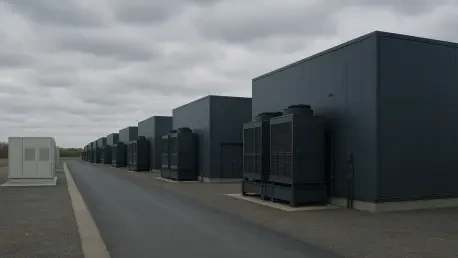
The rapid expansion of artificial intelligence and cloud computing has transformed unassuming warehouses into the backbones of the global economy, yet the fiscal honeymoon between local governments and tech giants is beginning to wane. The massive investment required for computer chips and server

Mid-sized enterprises are currently facing a critical network and security gap as platform sprawl and talent shortages collide with the escalating complexity of AI-driven cyber threats. Navigating this landscape requires a shift away from fragmented point solutions that often fail to communicate

The global market for Internet of Things technology in retail is projected to climb from $39.91 billion in 2025 to a staggering $138.39 billion by the end of 2030. This monumental shift reflects a deeper movement where physical brick-and-mortar locations are no longer isolated from the digital

The Intersection of Silicon Architecture and Next-Generation Connectivity The invisible tug-of-war for wireless dominance is currently being fought not just across airwaves, but within the microscopic architecture of the silicon chips powering modern base stations. As the telecommunications

The pursuit of near-instantaneous connectivity recently took a giant leap forward as engineers transformed a quiet suburban neighborhood into a high-tech proving ground for the next generation of wireless technology. This shift represents a critical move from the pristine, echo-free chambers of

The catastrophic failure of conventional networking systems during high-impact seismic events highlights a critical need for localized, hardware-based communication solutions that do not rely on central servers. While the global community has made strides in satellite-linked mobile services, these

Modern tracking infrastructure must account for a ledger of orbiting objects that has doubled in size since the 2020 activation of more sensitive S-band radar arrays. The current orbital environment is no longer just a vacuum occupied by a few dozen government satellites; it has evolved into a

The metamorphosis of a legacy telecommunications titan requires more than just a strategic change in branding; it demands a ruthless shedding of the very business units that once defined its market dominance but now act as anchors. Nokia is currently navigating this exact transition, embarking on

KT is proactively addressing the risks associated with third-party software by auditing every external interface that connects to its core internal infrastructure. This strategic initiative comes at a time when traditional boundary-based defenses no longer suffice against sophisticated adversaries.


