
The industrial pulse of Southeast Asia is shifting from traditional labor-intensive manufacturing toward a high-octane digital economy where the primary currency is no longer just capital, but the seamless integration of raw electric power and advanced silicon intelligence. This evolution has found its latest catalyst in a landmark expansion by SK Group, a South Korean conglomerate that is rewriting the playbook for international technological investment. By April 2026, the group solidified its position as a central architect of the Vietnamese digital landscape, marking a departure from the conventional model of simple hardware exports. Instead of merely selling components, the group has committed to building a massive, integrated foundation that links the energy grid directly to the minds of machines.
A New Blueprint for Regional Digital Dominance
The fusion of massive energy production and high-performance computing is no longer a theoretical concept; it is becoming the backbone of Vietnam’s industrial future. SK Group finalized a series of high-stakes agreements that integrate artificial intelligence directly into the national energy infrastructure, representing a pivotal moment for regional tech sovereignty. This initiative marks the first global deployment of what industry insiders call an “AI full-stack” ecosystem. In this model, every component—from the specialized semiconductors to the power plants that feed the servers—is designed to function as a single, cohesive unit. This holistic approach ensures that the digital transformation is not just a surface-level upgrade but a fundamental restructuring of the nation’s economic capabilities.
By establishing this presence, the conglomerate provides a solution to the growing demand for technological autonomy in Southeast Asia. The strategy involves more than just localized data centers; it builds an environment where local industries can scale using tools that were previously reserved for more developed markets. This move positions the region as a primary contender in the global race for AI dominance, moving beyond the role of a service provider to become a hub for high-value technological creation. The integration of these systems signals a shift toward a world where data sovereignty and energy security are handled as two sides of the same coin.
Why the Synergy of Power and Data Defines the Next Economic Era
As global markets grapple with the staggering electricity requirements of modern AI workloads, the traditional model of building isolated data centers is becoming obsolete. The partnership between South Korea and Vietnam addresses this critical bottleneck by focusing on “power-aware” infrastructure. With both nations targeting a bilateral trade goal of $150 billion by 2030, the need for reliable, large-scale energy to fuel digital expansion has become a strategic necessity. By establishing a presence in Nghe An, SK Group is moving beyond traditional tech hubs like Hanoi to capitalize on emerging manufacturing regions. These locations offer superior logistical advantages, including direct access to essential port facilities, which are vital for the physical hardware supply chain.
This synergy between power generation and data processing creates a buffer against the volatility of global energy markets. When an AI data center is co-located with its source of power, efficiency increases exponentially while transmission losses and grid instability are minimized. Furthermore, this model allows for a more sustainable scaling of technology, as energy production can be tuned specifically to the needs of high-performance computing clusters. This strategy has effectively turned the relationship between the utility sector and the tech industry on its head, proving that the digital economy can only grow as fast as the power grid that supports it.
From LNG Terminals to AI Centers: The Nghe An Hub and Beyond
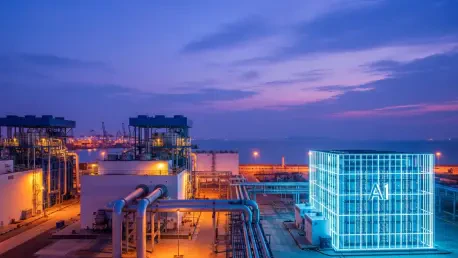
The centerpiece of this expansion is the Quynh Lap LNG Power project, a massive energy undertaking situated in the Nghe An province. This project features a 1,500 MW gas-fired combined cycle power plant and a dedicated LNG terminal, which will provide the stable, dedicated energy supply required to run a co-located AI Data Center (AIDC). Construction is set to begin in 2027, with a target completion date of 2030. This facility represents a physical manifestation of the full-stack strategy, where the infrastructure is built from the ground up to support the specific thermal and electrical demands of modern artificial intelligence.
Simultaneously, SK Group is deepening its ties with Vietnam’s National Innovation Center (NIC), building on a prior $30 million investment. This partnership is designed to help shape the country’s regulatory framework and policy environment, ensuring that the physical infrastructure is supported by a robust institutional foundation. By participating in policy development, the conglomerate is helping to create a stable legal landscape for future tech investments. This dual-track approach—building the physical plants while simultaneously fostering the intellectual and regulatory ecosystem—ensures that the project has the longevity to withstand economic shifts.
Perspectives from the Vanguard: Redefining Infrastructure as a Strategic Asset
Industry leaders, including SK Group Chairman Chey Tae-won and SKT CEO Jung Jai-hun, have emphasized that AI data centers are no longer just peripheral utilities but are now the core infrastructure required for national economic growth. Expert analysis of this “collaboration model” suggests that the integration of energy and data represents a significant shift in how multinational corporations approach emerging markets. By functioning as a “full-stack provider,” SK Group leverages its internal expertise in semiconductors, telecommunications, and energy production to offer a turnkey solution that local competitors cannot easily replicate. This strategy has turned Vietnam into a proving ground for a new type of integrated economic development.
The move also reflects a broader change in corporate philosophy regarding the longevity of international investments. Rather than seeking quick wins through equipment sales, the goal is to embed the company within the very fabric of the host nation’s industrial strategy. This level of integration creates a symbiotic relationship where the success of the technology provider is inextricably linked to the economic success of the country. This model is being watched closely by other nations in the region, as it provides a roadmap for modernizing national infrastructure in a way that is both technologically advanced and economically resilient.
The Full-Stack Strategy: A Roadmap for Scaling National Tech Ecosystems
The implementation of this massive infrastructure project follows a specific three-tiered framework that can serve as a guide for similar international expansions. First, the energy solution layer involves building large-scale power facilities, such as the LNG plant, to ensure high-performance computing is not hindered by grid instability. Second, the hardware and infrastructure layer focuses on the physical AIDC and specialized semiconductor applications designed for local industrial needs. Finally, the software and services layer utilizes proprietary AI models and digital transformation tools to drive efficiency in both public and private sectors.
This structured approach allowed a company to embed itself into the entire value chain of a developing economy, ensuring long-term operational stability and market leadership. The project demonstrated that the path toward a digital future was paved with concrete and copper as much as it was with code and data. To maintain this progress, the next steps involved the continuous training of a local workforce capable of managing these complex systems. Future considerations turned toward the expansion of renewable energy sources to supplement the LNG facilities, ensuring that the technological growth remained environmentally sustainable. The strategy effectively bridged the gap between raw natural resources and high-level digital intelligence, setting a precedent for global industrial modernization.