
This strategic move ensures the company can provide the essential hardware required for the massive growth of artificial intelligence and hyperscale data centers. As the global thirst for bandwidth reaches unprecedented levels, the announcement of a $1.2 billion capital injection represents a pivotal moment for the American telecommunications landscape. This massive commitment from Prysmian targets the domestic production of high-density optical fibers and advanced cabling solutions across several key states. By anchoring its manufacturing operations within the United States, the organization positions itself to meet the rigorous requirements of the Build America, Buy America Act while drastically shortening supply chains for local internet service providers. This expansion does more than just increase physical output; it establishes a technological foundation capable of supporting the next generation of networks and the complex, data-heavy workloads inherent to modern machine learning environments. The investment focuses on scaling up facilities in the Carolinas to produce specialized fibers.
Bolstering Domestic Production to Meet Growing Connectivity Needs
The deployment of these funds directly addresses the critical bottleneck currently facing the American digital economy, where demand for fiber optics often outpaces the existing domestic supply. By establishing new production lines dedicated to high-count fiber cables, the company facilitates the rapid expansion of metropolitan area networks and long-haul transport routes. These advanced cables are designed to fit more fibers into smaller conduits, a necessity in crowded urban environments where traditional digging and trenching are expensive and disruptive. This approach allows municipal planners and private developers to maximize their underground assets without needing to expand physical infrastructure repeatedly. Moreover, the transition to local manufacturing mitigates the risks associated with volatile international shipping and geopolitical fluctuations that have previously hindered large-scale utility projects. This localized strategy ensures that the vital components for the nation’s digital backbone are readily available to support the aggressive timelines of federal broadband initiatives.
Beyond the immediate technical benefits, this billion-dollar investment serves as a significant economic catalyst for regional communities, creating thousands of specialized jobs in high-tech manufacturing and engineering. The expansion of these facilities requires a workforce skilled in advanced materials science and automated production systems, necessitating new partnerships with local technical colleges and universities to develop specialized training programs. This focus on human capital ensures that the manufacturing boom is sustainable over the long term, fostering a sophisticated ecosystem of innovation that extends beyond just the production floor. By revitalizing traditional industrial hubs with cutting-edge technology, the project demonstrates how traditional manufacturing can be successfully adapted for the digital age. This synergy between industrial capacity and technological advancement creates a resilient framework for national growth, providing the physical layer that allows software and hardware innovations to flourish while using locally sourced materials.
Strategic Infrastructure: Implementing Advanced Optical Solutions
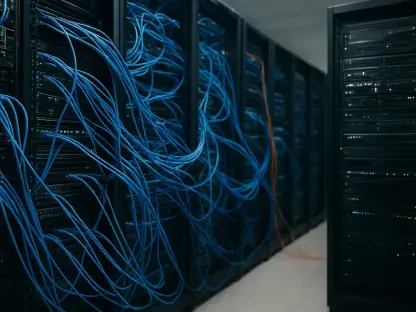
The technical focus of this investment extends into the development of bend-insensitive fibers and ultra-low-loss glass, which are essential for the high-density requirements of modern data centers. These centers now require massive amounts of connectivity within small footprints to manage the high-speed data transfer required by generative AI and real-time analytics. Traditional fiber optics often struggle with signal degradation when tightly coiled or managed in restricted spaces, but the new production methods address these limitations through molecular-level engineering of the glass core. By producing these advanced materials domestically, the company provides American data center operators with a competitive advantage, allowing for more efficient cooling and higher data throughput. This innovation is particularly relevant as organizations move toward edge computing, where processing power is decentralized and located closer to the end user. High-performance fiber ensures that these distributed nodes can communicate with the central cloud without latency issues.
The success of this $1.2 billion investment demonstrated that large-scale industrial commitments were vital for bridging the digital divide and supporting the burgeoning artificial intelligence economy. By focusing on high-density solutions and sustainable production, the initiative set a new standard for how infrastructure providers should approach regional growth. Future considerations for the industry then focused on the continued integration of renewable energy into manufacturing processes to further enhance the sustainability of fiber production. Decision-makers were encouraged to look toward these localized models as a way to ensure that critical digital infrastructure remained both robust and environmentally responsible. It was found that those who adopted advanced cabling technologies early were best positioned to capitalize on the increasing demands of hyperscale cloud providers. To maintain this momentum, continued collaboration between the private sector and public agencies was necessary to ensure that the workforce was prepared for the next wave of optical innovation.