
A critical gap persists in the energy sector because the scientific community has historically prioritized oil production over the complex physics of emission detection. This historical focus on resource extraction and reservoir modeling was instrumental in building the global energy infrastructure, yet it left a significant blind spot regarding the long-term environmental consequences of that same infrastructure. As the global shift toward decarbonization accelerates in 2026, the petroleum engineering discipline is undergoing a fundamental transformation. Modern engineers are no longer defined solely by their ability to maximize output; they are increasingly tasked with applying their specialized knowledge of fluid mechanics and gas behavior to mitigate the environmental footprint of aging oil and gas assets. This transition is not merely a professional shift but a technical necessity in regions where legacy oil fields now lie beneath expanding urban landscapes. The skills once used to move hydrocarbons are being repurposed to contain them, ensuring that the transition to a net-zero future is grounded in rigorous scientific stewardship rather than outdated assumptions about well integrity.
The Growing Crisis: Managing Abandoned Infrastructure
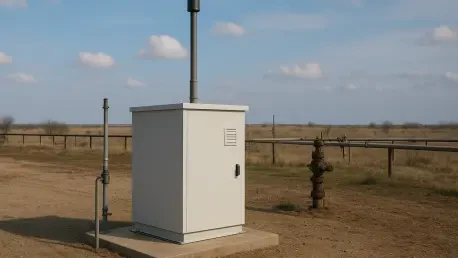
One of the most pressing environmental challenges currently facing the energy sector involves the management of legacy wells, which include unplugged, abandoned, or idle sites that are no longer productive but remain potential conduits for gas migration. These wells represent a significant climate risk because methane, the primary component of natural gas, is a greenhouse gas with a global warming potential far higher than that of carbon dioxide over a short time horizon. In densely populated metropolitan areas like Los Angeles or parts of Kern County, the problem is compounded by the proximity of residential housing and critical public infrastructure to these historical fields. This physical overlap creates a dual threat: an invisible contribution to atmospheric warming and a localized public safety hazard where gas accumulations could lead to dangerous incidents. Despite these risks, many of these wells remain unmonitored or are subject to only infrequent manual inspections, leaving a massive gap in our understanding of the total emission landscape.
The difficulty in managing these aging assets is largely due to the intermittent nature of methane emissions, which do not always flow at a constant or predictable rate. Current regulatory frameworks often rely on periodic inspections that occur only once every few years, a schedule that is highly likely to miss transient leak events. This leads to a prevalence of false negatives, where a well is deemed secure simply because it was not leaking at the exact moment a technician arrived with a handheld sensor. This intermittency creates a hurdle for both regulatory compliance and the burgeoning carbon credit market, where establishing a reliable and verified baseline of emissions is a prerequisite for financial viability. Without continuous, high-fidelity monitoring, the industry struggles to differentiate between a well that is truly stable and one that leaks sporadically under specific environmental conditions, making it nearly impossible to prioritize remediation efforts effectively across thousands of potential sites.
Technical Obstacles: The Physics of Methane Detection
Detecting methane in an open field environment is notoriously difficult because of the gas’s low density and its extreme sensitivity to atmospheric conditions. Wind is perhaps the most significant adversary in the field of emission monitoring, as it causes rapid dilution and dispersion of methane plumes. This dilution often reduces gas concentrations to levels below the detection threshold of traditional remote sensors, making it nearly impossible to obtain an accurate reading from a distance. Furthermore, gas does not always travel in a linear path from the source; atmospheric turbulence can scatter molecules in unpredictable directions, leading to inconsistent data that frustrates long-term analysis. Without the ability to account for these micro-climatic variations, operators are left with a fragmented and unreliable picture of well integrity, which prevents the development of actionable remediation plans that address the root cause of the leakage.
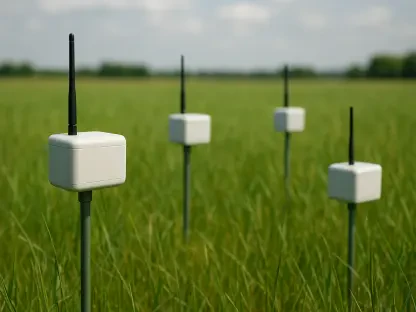
Beyond the challenges posed by wind, fluctuations in atmospheric pressure can trigger a “pumping” effect in unplugged wells, causing them to emit gas only during specific barometric cycles. This physical phenomenon means that a well might appear dormant during periods of high pressure but become a significant emitter when the pressure drops. To overcome these variables, researchers are now deploying static flux chambers and Internet of Things (IoT) enabled sensors that remain on-site for extended periods. By capturing a continuous stream of environmental data—including temperature, pressure, and humidity—engineers can finally begin to understand the specific physical triggers behind these leak events. This shift from snapshot measurements to continuous data streams allows for the development of predictive models that correlate gas migration with external environmental cycles, moving the industry toward a more scientific and less reactive approach to well monitoring.
Harnessing Artificial Intelligence: Pattern Recognition and Forecasting
The sheer volume of data generated by continuous IoT sensor networks is far too vast for manual human analysis, necessitating the integration of artificial intelligence and machine learning. These technologies serve as the primary engine for sophisticated pattern recognition, allowing researchers to filter through massive datasets to distinguish between true methane signals and environmental noise. Machine learning algorithms are particularly effective at identifying subtle trends that might be invisible to the naked eye, such as a slow increase in emission frequency that correlates with seasonal soil temperature changes. By automating the data processing pipeline, AI enables real-time leak detection that is both more accurate and significantly faster than traditional methods, providing operators with the timely information needed to address integrity issues before they escalate into major environmental or safety hazards.
Advanced AI techniques, including time-series forecasting and liquid time-constant networks, are now being utilized to predict future leak patterns based on historical performance. These specialized neural networks are designed to handle the irregular time intervals often found in environmental data, making them ideal for modeling the erratic behavior of legacy wells. AI tools also assist in the optimization of monitoring networks by helping engineers determine the most effective placement for sensors, ensuring maximum coverage of a field at the lowest possible cost. However, there is an ongoing emphasis on the need for “explainable AI” within the engineering community. Experts argue that while these models can process data with incredible speed, they must remain grounded in the fundamental principles of fluid mechanics and reservoir engineering. Relying on automated conclusions without a physical understanding of the underlying processes could lead to flawed safety assessments in critical infrastructure management.
Economic Incentives: Shifting the Regulatory Landscape
Transitioning to a model of continuous methane monitoring is as much an economic challenge as it is a technical one, particularly given the high costs historically associated with commercial sensing equipment. The financial burden of monitoring and plugging thousands of abandoned wells often falls on state agencies or small operators with limited budgets, leading to a reactive “whack-a-mole” approach to maintenance. By leveraging low-cost IoT sensors and AI-driven data analysis, the industry is moving toward a dynamic, risk-based prioritization system. This approach allows regulators to identify “super-emitters”—the small percentage of wells responsible for the vast majority of total emissions—and target them for immediate remediation. This ensures that limited environmental funding is spent where it will have the greatest impact, maximizing the reduction of greenhouse gases for every dollar invested in the field.
Accurate, continuous data also serves as the fundamental bedrock of the voluntary carbon credit market, which has seen increased scrutiny regarding the validity of offsets. If an operator can provide high-fidelity proof that a specific volume of methane has been successfully mitigated, they can transform an environmental liability into a legitimate source of revenue. This financial incentive encourages proactive stewardship by providing a path for companies to monetize their emission reduction efforts. Furthermore, high-resolution data provides the transparency needed to satisfy investors and government regulators who are increasingly demanding verifiable evidence of decarbonization progress. By aligning environmental goals with economic incentives, the industry can accelerate the pace of methane abatement while maintaining the financial health of the companies responsible for managing these legacy assets during the energy transition.
Redefining Asset Life Cycles: The Move Toward Stewardship
There is a growing consensus that the industry must redefine what it means for an oil or gas well to reach the “end” of its life. Historically, the plugging and abandonment process was viewed as a final, one-time mechanical event that permanently closed the chapter on an asset’s history. However, contemporary research suggests that this stage should instead be viewed as the beginning of a long-term phase of environmental stewardship. Legacy wells will remain in the ground for centuries, and their physical integrity must be monitored indefinitely to prevent them from becoming “forgotten” hazards. This change in perspective requires a move away from the traditional “plug and forget” mentality toward a more holistic management strategy that treats decommissioned wells as permanent features of the landscape that require ongoing oversight to ensure the safety of the surrounding environment and communities.
To facilitate this long-term oversight, future abandonment strategies are incorporating the installation of edge devices—specialized sensors embedded near the wellhead during the final plugging process. These devices are designed to operate with minimal power and transmit health and safety data for decades, effectively turning a dead well into a monitored piece of environmental infrastructure. This proactive approach ensures that even “orphaned” wells, which have no clear owner, can be tracked through state-funded sensor networks. By integrating monitoring technology into the very fabric of the abandonment process, the industry can maintain a continuous connection to its historical assets. This level of transparency is essential for building public trust, particularly in urban areas where the legacy of the oil era is a constant presence in the lives of residents who deserve assurance that their neighborhoods are safe from underground gas migration.
The Next Frontier: Edge Computing and the Modern Engineer
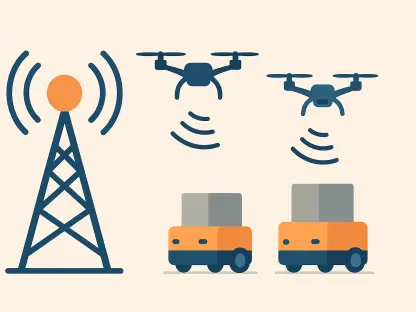
The future of environmental monitoring is increasingly tied to the development of edge computing, where sensors process data locally at the well site rather than transmitting raw data to a central cloud server. This innovation significantly reduces the power required for communication and lowers the cost of data transmission, which has historically been a major barrier for monitoring remote or isolated wells. By only transmitting critical alerts or summarized reports, edge-enabled devices can operate for years on a single battery or a small solar panel, making large-scale deployment economically feasible across vast oil fields. Overcoming the communication gap between these remote sites and central management centers remains a top priority for researchers who are working to ensure that no well remains unmonitored simply because of its geographic location or lack of local infrastructure.
For the next generation of petroleum engineers, these developments underscored a significant shift in the required skillset for professional success. The industry demonstrated that a degree in petroleum engineering remained a versatile foundation, but one that must now be augmented with expertise in data science, sensor technology, and environmental policy. Successful engineers in 2026 proved that they could bridge the gap between traditional mechanical engineering and modern computational tools to solve the most complex climate issues of the era. By combining the rigor of fluid mechanics with the power of AI and IoT, the sector established a path to address its historical legacy with unprecedented precision. This evolution in the profession ensured that the transition to a net-zero energy system was not just a goal, but a scientifically verifiable reality that fulfilled a moral obligation to protect the environment for future generations.