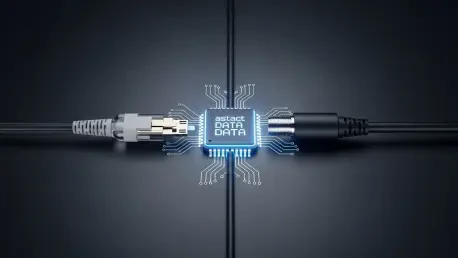

The digital infrastructure that powers modern society has long been split into two distinct tiers: the elite speed of glass-based fiber optics and the resilient but aging legacy of copper-based coaxial cable. For years, the hierarchy of the internet was undisputed, with fiber serving as the gold standard of reliability while cable remained the aging incumbent struggling to keep pace with modern data demands. However, a fundamental shift is occurring in how networks are managed, suggesting that the physical medium—whether coax or glass—is no longer the primary bottleneck for high-speed connectivity.
As service providers face intense pressure to deliver symmetrical multi-gigabit speeds, the industry is moving away from heavy, power-hungry field hardware toward software-defined environments. This transition begs the question of whether clever virtualization can finally make a cable connection indistinguishable from fiber. By prioritizing the code over the physical wire, operators are attempting to rewrite the rules of telecommunications, ensuring that legacy infrastructure remains viable in an increasingly competitive landscape.
The Performance Paradox: Is Your Connection Defined by the Cable or the Code?
For the average consumer, the distinction between a fiber-optic line and a coaxial cable usually comes down to the advertised upload and download speeds. Yet, as virtualization takes hold, this physical distinction is becoming less relevant to the actual user experience. Modern network management allows providers to bypass the traditional limitations of hardware by using sophisticated software to optimize data flow. This paradigm shift suggests that the “brain” of the network, rather than the “body” of the wires, now dictates the quality of the connection.
When the logic of the network resides in the cloud rather than in physical boxes bolted to telephone poles, the speed of innovation increases exponentially. Software updates can be pushed out in minutes to improve performance across an entire city, a process that previously required thousands of manual hardware replacements. This agility allows cable providers to mimic the high-performance characteristics of fiber, effectively masking the age of the underlying copper infrastructure while delivering the low-latency performance required for modern applications.
Why the Reliability Gap Became a Competitive Battlefield
The primary struggle for cable operators has never just been about raw throughput; it has focused on the persistent “reliability gap.” Traditional Hybrid Fiber/Coax (HFC) networks rely on a long chain of active electronic components in the field, each susceptible to power surges, weather damage, and hardware failure. In contrast, Fiber-to-the-Premises (FTTP) uses a passive architecture that is inherently more stable. This structural disadvantage has forced cable providers to rethink their legacy footprints, especially as fiber-first competitors lure customers away with the promise of rock-solid connectivity.
To survive this competitive onslaught, cable companies are seeking ways to harden their existing assets. The reliability of a network is often measured by its uptime and its resistance to external interference. By integrating more fiber deeper into the HFC network and reducing the number of active components, operators are narrowing the stability gap. This strategy turns the network into a hybrid beast—one that maintains the cost-efficiency of coax while adopting the structural advantages of a passive fiber network.
Moving the Brains to the Cloud: The Shift to vCMTS and DAA
To level the playing field, operators are implementing a Distributed Access Architecture (DAA) coupled with a virtual Cable Modem Termination System (vCMTS). By moving the “brains” of the network from bulky physical headends into cloud-based software, companies can eliminate up to 50% of their physical infrastructure. This transition allows functions that once required massive racks of hardware to be handled entirely by code. The result is a leaner, more resilient network that brings the fiber backbone significantly closer to the customer’s home.
The deployment of platforms like the Harmonic cOS provides a unified operational framework that manages data traffic with unprecedented efficiency. This shift to a software-centric model means that the network can self-heal and reconfigure itself in real-time. When a physical node experiences high traffic or a localized fault, the virtual system can redistribute resources instantly. This level of responsiveness was impossible with legacy hardware, representing a significant leap toward the operational standards once exclusive to pure fiber networks.
The Tale of Two Networks: Tailoring Technology to Regional Demands
Modern network strategy is rarely a one-size-fits-all solution, as geographic and economic realities dictate different approaches. In densely populated, highly competitive markets, the strategy often involves aggressive fiber overbuilds to offer symmetrical speeds up to 8 Gbit/s. However, in rural or less competitive areas, virtualization provides a more cost-effective lifeline. By upgrading existing HFC lines with DOCSIS 3.1+ and virtualized nodes, providers can offer multi-gigabit speeds and improved uptime without the disruptive and expensive process of digging up every street.
This dual-track approach allows operators to be surgical with their capital expenditures. While fiber remains the ultimate goal for new builds, the virtualized cable network serves as a powerful bridge for existing customers. By focusing on software-driven optimization, a provider can ensure that a customer in a rural town receives a service experience comparable to a subscriber in a major metropolitan hub. This flexibility ensures that no part of a service area is left behind during the transition to higher standards.
Making the Difference De Minimis: Perspectives from the C-Suite
Industry leaders argue that the ultimate goal of virtualization is to make the performance difference between fiber and cable “de minimis,” or negligible. By using a single software platform to manage both fiber and cable connections, operators can provide a consistent user experience across their entire footprint. When the management software is unified, the underlying physical wire becomes secondary to the reliability and speed delivered to the end-user. This common operational thread simplifies the workflow for engineers and ensures a standardized level of service.
This unified approach also streamlines the customer journey, as the technical complexities of the connection are hidden behind a high-performing interface. Whether a home is connected via a glass strand or a copper wire, the expectation is the same: instant connectivity and zero downtime. By focusing on the software layer, executives are betting that they can erase the historical stigma associated with cable internet, positioning their companies as high-tech service providers rather than mere utility owners.
A Framework for Strategic Optionality and Incremental Upgrades
To successfully bridge the gap, operators adopted a framework of “strategic optionality” that utilized modern DAA nodes capable of outputting both fiber and cable signals from the same physical unit. This approach allowed providers to maintain high-performing cable networks for the majority of users while offering fiber-to-the-home on an on-demand basis for power users. By focusing on OFDM channel expansion and software-driven optimization, cable assets remained competitive, reaching 1-Gig availability for nearly an entire footprint while targeting a 65% multi-gigabit reach by 2028.
Providers identified that the transition toward a more agile infrastructure required a complete reevaluation of field operations and capital allocation. They integrated automated monitoring systems that predicted hardware failures before they impacted the customer, effectively neutralizing the inherent weaknesses of coaxial systems. This strategic pivot ensured that the network evolved into a platform-agnostic service, where the quality of the software management mattered more than the physical medium. Ultimately, this movement toward total virtualization provided a sustainable path for legacy operators to compete in an era of extreme bandwidth demand.