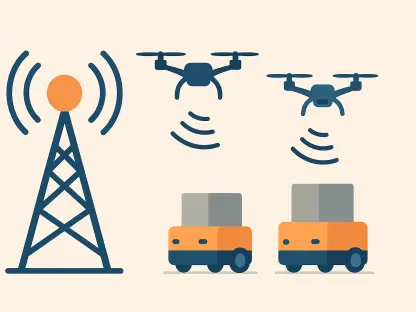

The traditional blueprint for corporate connectivity is disintegrating as enterprises realize that fixed bandwidth contracts cannot keep pace with the erratic demands of artificial intelligence. This shift has prompted the release of a cloud-like consumption model that pivots away from rigid telecommunications toward elastic resource management. As businesses prioritize agility, the ability to procure network capacity through automated platforms becomes a fundamental pillar of modern digital strategy. This analysis explores how the industry is dismantling the friction inherent in legacy infrastructure to support a new era of data-intensive workloads.
Evolutionary Shift: From Static Pipes to Elastic Resources
For a generation, the telecommunications industry relied on a “peak capacity” model that forced companies into restrictive, long-term commitments based on hypothetical usage maximums. This resulted in a landscape where organizations paid for vast amounts of idle bandwidth, creating a significant mismatch between cost and actual utility. However, the maturation of software-defined networking has finally allowed the physical network to catch up with the flexibility seen in cloud computing. This transition is not merely a technical update but a necessary response to a world where traffic patterns are no longer linear.
Navigating the New Era of Network Consumption
The Impact: AI-Driven Volatility and Traffic Spikes
The explosive proliferation of AI has introduced a level of bandwidth volatility that standard enterprise connections simply cannot handle. Training large language models involves massive data bursts that require immediate, high-performance scaling to avoid bottlenecks. Recent data indicates that over a third of enterprises now experience annual bandwidth surges exceeding 50%. By offering API-driven adjustments, the network allows systems to scale connectivity in minutes, ensuring that technical debt does not accumulate during critical periods of processing or migration.
Practical Performance: Real-World Efficiency in High-Stakes Environments
High-profile venues like Yankee Stadium demonstrate the immense value of aligning network costs with activity levels. During major events, data demands skyrocket to support broadcasting, yet these requirements vanish during the off-season. This elastic model allows finance departments to maintain predictability through term-based pricing while giving technical teams the autonomy to scale at will. Such efficiency proves that on-demand connectivity is moving beyond a niche feature to become an essential operational standard for global organizations.
Integrated Protection: Security in a Dynamic Environment
A shift toward on-demand internet capacity inevitably raises concerns regarding security and governance. To mitigate these risks, modern service architectures embed protective layers like DDoS mitigation and threat blocking directly into the fabric. This ensures that as throughput expands, the organization remains shielded from large-scale attacks without needing separate, manual intervention. Nevertheless, enterprises must implement internal guardrails to prevent “shadow IT” from causing unmanaged cost spikes, emphasizing that technical agility requires administrative maturity.
The Future Landscape: Anticipating the Autonomous Network
Looking ahead from 2026, the industry is moving toward a self-healing and self-optimizing network state. AI agents will monitor traffic patterns globally, preemptively adjusting capacity before a bottleneck impacts the end-user experience. This level of transparency will likely become the gold standard for competition, especially as core operations migrate further to the edge. Providers who offer this degree of autonomous control will be best positioned to capture the growing market of distributed, data-heavy enterprises.
Strategic Best Practices: Optimizing the On-Demand Transition
Businesses looking to capitalize on this shift should abandon the “set and forget” mentality of the past. Success in this environment requires integrating network APIs directly into existing DevOps workflows to automate bandwidth requests during software deployments. Operations teams should be re-skilled to manage “network-as-code,” treating connectivity with the same precision as cloud server resources. By setting automated threshold alerts, organizations can maximize the benefits of scalability while maintaining a highly efficient cost structure.
Establishing a Foundation for Continuous Innovation
The evolution toward on-demand internet addressed a critical gap in the enterprise tech stack by aligning connectivity with the speed of software. This transformation reflected the broader trend of turning rigid utilities into responsive, programmable services. As the digital landscape became more complex, the ability to automate and secure high-capacity traffic in real-time proved to be a decisive factor for market leaders. Ultimately, the move toward intelligent networking established a more resilient infrastructure that empowered enterprises to scale without the limitations of traditional telecommunications boundaries.