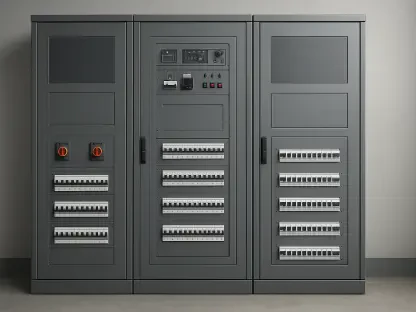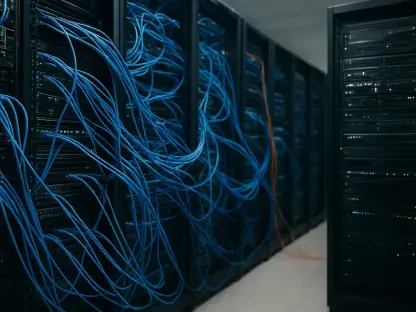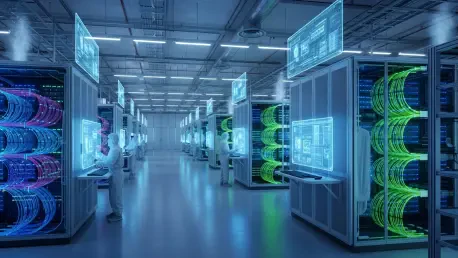

The sheer volume of capital currently being poured into artificial intelligence infrastructure across the globe suggests either the birth of a new industrial foundation or the largest misallocation of resources seen in the modern era. While tech giants like Microsoft and Google are committing hundreds of billions to build massive server farms, a growing choir of skeptics questions the long-term viability of these specialized structures. The central tension lies in whether these facilities will remain the engines of global progress or if they are destined to become cavernous, outdated shells as hardware efficiency improves and algorithmic demands shift. Unlike the fiber-optic cables of the late nineties that eventually found their purpose, these data centers are incredibly expensive to maintain and are designed for specific workloads that might not exist in their current form. If the projected demand for raw compute power fails to materialize or if small-scale models become the norm, the industry faces a reckoning.
The Peril: Rapid Hardware Obsolescence
One of the most provocative ideas circulating in the current tech debate is the suggestion that today’s advanced data centers could eventually be repurposed into indoor pickleball courts or community centers. This metaphor highlights a very real economic phenomenon known as the price-performance curve, which has historically rendered massive hardware investments obsolete within a relatively short period. As researchers develop more sophisticated AI models, they are discovering ways to achieve higher intelligence with significantly less power and smaller physical footprints. If these efficiency gains continue to accelerate between 2026 and 2028, the multi-billion-dollar facilities under construction today may soon become oversized for the tasks they were built to perform. The risk is that companies are locking themselves into long-term commitments for technology that might be surpassed by lean, decentralized computing alternatives much sooner than most analysts anticipate.
Historical cycles show that hardware typically begins its life as a large, energy-hungry monolith before being streamlined by successive waves of innovation. If algorithmic breakthroughs significantly reduce the computational load needed to run complex reasoning models, the massive power requirements that define current data center design will no longer be a competitive advantage but a costly liability. Beyond the technical shifts, these centers face increasing social and environmental pushback due to their immense electricity consumption and water usage for cooling systems. Local governments are already beginning to scrutinize these projects, and if the promised economic benefits of AI do not materialize quickly enough, the political will to support such resource-heavy infrastructure may evaporate. This makes the current construction spree a high-stakes gamble for any corporation, as they are essentially betting that the current appetite for brute-force computing will remain constant.
Private Capital: The Concentration of Market Risk
The current AI boom differs significantly from the dot-com bubble of the late 1990s primarily because of the source of the capital driving the expansion. While the previous era was fueled by public retail investors and speculative stocks, the 2026 AI race is supported largely by private equity, venture capital, and the internal cash reserves of major technology firms. This shift moves the risk away from the general stock market and places it squarely on private investment ecosystems, which can be more opaque and less liquid during a downturn. If these massive infrastructure investments fail to provide the promised returns, the fallout will hit private investment vehicles that have overextended themselves in the pursuit of dominance. This concentration of risk means that a correction would be felt most acutely by specialized funds rather than the broader public, though the secondary effects on the tech labor market and regional economies would still be substantial.
To mitigate these systemic risks, there is a growing consensus that more AI startups must transition to the public market earlier than previously planned. Cuban and other industry experts suggest that the market needs “stock as currency” to facilitate healthier industry consolidation and provide liquidity to early-stage investors. Without this transition, the industry remains vulnerable to a sharp private-sector contraction if the high expectations for AI infrastructure are not met by actual revenue growth. The current lack of initial public offerings in the sector has created a bottleneck, where private valuations remain high but exit strategies are limited. Facilitating a move toward public ownership would allow for better transparency and price discovery, which are essential for determining the true value of the digital infrastructure currently being built. This shift would also enable established companies to acquire smaller, innovative firms using equity rather than depleting their cash reserves.
Implementation Gaps: Commercial Realities of AI Use
Despite the warnings about infrastructure spending, the underlying technology of AI remains incredibly promising for a variety of specialized applications. However, there is a noticeable gap between the excitement seen in the headlines and the difficulty of implementing these tools within traditional business models. While individual developers and creative professionals are seeing massive productivity gains, integrating these tools into large-scale corporate operations has proven to be a complex and slow-moving process. Corporate environments require rigorous security, auditability, and reliability that many current AI models cannot yet guarantee at scale. This delay in implementation means that the demand for the massive data centers currently being built may not ramp up as quickly as the investors had hoped. The mismatch between the speed of construction and the speed of enterprise adoption creates a dangerous window of vulnerability for those who have over-leveraged their assets.
The healthcare sector serves as a prime example of the limitations currently facing the industry as it tries to move beyond pure computation. While artificial intelligence can process vast amounts of medical data far better than any human, it currently lacks the situational awareness and empathy required for high-stakes clinical judgment. It can synthesize research and suggest potential diagnoses based on patterns, but it cannot replace the nuanced communication or the intuitive diagnosis of physical trauma provided by a human doctor. This suggests that the greatest value of the technology lies in augmenting human expertise rather than replacing it entirely, which requires a different kind of infrastructure than what is currently being prioritized. Rather than just raw processing power, the industry needs better interfaces and localized data processing that can sit alongside professionals in the field, further questioning the utility of centralized, massive-scale facilities.
Seeking Resilience: Moving Beyond Digital Speculation
As the market begins to look past the initial construction phase of the AI era, the focus is shifting toward practical, everyday applications that offer immediate utility. Instead of betting solely on the companies building the underlying hardware, astute investors are looking for businesses that use AI to solve specific, tangible problems, such as robotic automation in the service industry. These practical applications offer a more stable path to growth because they address immediate labor shortages and efficiency needs in sectors like logistics and hospitality. By focusing on companies that provide real-world utility, investors can find value that is not purely dependent on the hype of the technology itself. This move toward “applied AI” represents a maturation of the market, where the emphasis shifts from how much data a model can process to how much value it can generate in a physical environment where labor and time are at a premium.
To build a resilient portfolio during this period of uncertainty, it is becoming increasingly important to look beyond the technology sector entirely. Diversifying into tangible assets like real estate and farmland provides a reliable hedge against the volatility of the Silicon Valley investment cycle. These physical assets offer intrinsic value that does not evaporate if the demand for cloud computing shifts or if the AI bubble undergoes a correction. By balancing digital investments with physical holdings, market participants can better navigate the unpredictable nature of the current technological revolution. This strategy acknowledges that while the digital economy is expanding, it still relies on a physical world with finite resources and fundamental needs. Investors who recognize this connection are more likely to survive the fluctuations of the tech market, as they hold assets that remain essential regardless of the prevailing trends in the data center industry.
Strategic Pathways: Actionable Steps for Transition
Successful leaders who navigated this transition prioritized operational utility over speculative infrastructure plays. They recognized that the true value of artificial intelligence moved from the centralized hardware layer to specialized applications where specific, high-value problems were solved. These organizations implemented small-scale, localized models that reduced their dependency on massive third-party data centers, effectively future-proofing their technical architecture. Diversifying into sectors like agricultural technology and automated maintenance provided a necessary buffer against the volatility inherent in the tech capital cycle. These entities also focused on building deep integration between human experts and digital tools, ensuring that the technology served as a force multiplier rather than a redundant replacement. This approach allowed them to achieve sustainable growth without being tethered to the massive energy and cooling costs of oversized facilities.
The transition away from brute-force computing required a fundamental shift in how capital was allocated toward technology. Businesses that succeeded during this period invested heavily in training their workforce to oversee automated systems rather than simply purchasing more raw compute power. They prioritized data quality and security over model size, which allowed for more efficient operations that could run on existing infrastructure. By 2026, the most effective strategies involved the use of hybrid systems that combined local processing with targeted cloud usage, avoiding the pitfalls of over-reliance on centralized mega-centers. This grounded strategy ensured that infrastructure followed actual demand rather than leading it based on the unfounded projections of the early boom. Those who adopted these practical steps found themselves better positioned to thrive as the industry matured, proving that the most valuable technology is that which remains adaptable.