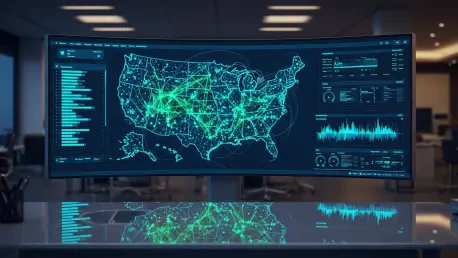

The rapid integration of artificial intelligence into the United States infrastructure has fundamentally altered how corporate networks operate within a hyper-connected global economy. As American businesses successfully transitioned away from centralized legacy models toward decentralized architectures like edge computing and the Internet of Things, the sheer complexity of maintaining these systems reached an unprecedented level. Modern organizations no longer view sophisticated Network Management Systems as optional upgrades but as the essential backbone of their entire digital operation. This shift reflects a broader national trend where data-driven insights replace manual oversight to prevent costly service interruptions. By moving beyond reactive troubleshooting, enterprises are now able to leverage real-time visibility and automated resolution protocols that stabilize hybrid cloud environments. This evolution ensures that the American technological landscape remains resilient while navigating the demands of a fully digitized marketplace that requires constant connectivity and zero downtime.
The Technological Drivers of Predictive Management
The foundational engine of this change lies in the deployment of advanced machine learning algorithms that process vast datasets to predict infrastructure failures before they occur. Unlike traditional monitoring tools that merely signaled a crash after it happened, these intelligent systems utilize anomaly detection to identify subtle performance degradations in real time. For critical industries such as financial services and high-level healthcare, the ability to preemptively address a bottleneck translates directly into saved revenue and protected lives. These systems observe traffic patterns and server health, establishing a baseline of normal activity that allows for the immediate identification of deviations. This predictive capability has turned the network from a static utility into a dynamic, self-aware asset that evolves alongside the data it carries. As these algorithms become more refined, they provide a level of granular detail that human administrators simply could not achieve manually today, especially when dealing with the massive data throughput.
Furthermore, the widespread adoption of multi-cloud strategies has necessitated a unified approach to oversight, leading to the rise of centralized management interfaces. Modern vendors are now delivering what industry professionals call a single pane of glass, which integrates data from diverse cloud providers and on-premises hardware into one coherent view. This consolidation is vital because it eliminates the data silos that previously hindered rapid response times and cross-platform visibility. Automation plays a secondary but equally critical role by managing routine maintenance tasks and minor configuration adjustments without requiring human intervention. By offloading these repetitive responsibilities to an automated system, IT departments can refocus their energy on high-level strategic initiatives and complex problem-solving. This transition toward automated governance not only reduces the likelihood of human error but also ensures that the network infrastructure can scale rapidly to meet the fluctuating demands of any enterprise environment.
Market Trajectory and Industrial Adoption
Financial indicators suggest that the American market for these advanced systems is entering a phase of sustained and exponential expansion that will last well through 2028. This growth is being fueled by the nationwide rollout of 5G infrastructure and a heightened focus on mitigating sophisticated cybersecurity threats that target core connectivity. The United States currently maintains a dominant position in this sector due to its robust digital foundation and the concentration of major tech innovators who are pushing the limits of networking capability. As millions of new devices connect to the grid, the demand for management systems that can handle such density has never been higher. Projections indicate that the market value will continue to rise as companies prioritize investment in software that can safeguard their operations against both technical glitches and malicious actors. This economic trajectory reflects a broader recognition that digital reliability is the primary currency of the modern business world.
Telecommunications leaders and heavily regulated sectors like the banking industry are currently at the forefront of this technological adoption. Companies such as AT&T and Verizon have already integrated high-density management tools to coordinate the massive influx of data generated by 5G mobile networks and urban smart systems. Similarly, financial institutions are leveraging these platforms to comply with strict federal regulations regarding data availability and security. In the healthcare sector, the transition to remote patient monitoring and telemedicine has made “always-on” connectivity a matter of public safety, necessitating rigorous monitoring that only AI-enhanced systems can provide. These industries serve as the testing ground for the most advanced features of modern management software, setting standards that smaller businesses eventually follow. The integration of high-level security protocols directly into the management layer ensures that compliance and performance are treated as twin priorities.
Industry Leaders and the Shift to Autonomous Networks
The competitive landscape in the United States is currently defined by a few key innovators who specialize in different segments of the network health and observability market. Industry giants like Cisco and IBM have focused their efforts on developing high-end platforms that utilize artificial intelligence for deep infrastructure insights and complex anomaly detection. These systems are designed for large-scale enterprises that require a comprehensive view of global operations and the ability to correlate data across thousands of nodes. In contrast, companies like SolarWinds have carved out a significant niche by offering scalable and affordable solutions tailored to small and medium-sized enterprises. These tools provide enterprise-grade visibility and reporting without the prohibitive costs or complexity often associated with top-tier corporate platforms. This diversity ensures that organizations of all sizes can access the technology needed to maintain a stable digital presence, regardless of their specific budgetary constraints or IT staff size.
Moving forward, the focus of research and development is shifting toward the creation of truly autonomous, self-healing networks that operate with minimal human oversight. These next-generation systems are being built to self-configure in response to changing traffic demands and self-protect when they detect unauthorized access attempts. By treating security as an inherent function of the network management layer, these platforms are effectively eliminating the gap between operational performance and cyber defense. This shift is particularly important as cloud-native applications become the standard for most American businesses, requiring a level of agility that traditional static systems cannot match. The move toward autonomous operations represents the final step in the transition from monitoring to management, where the system itself becomes the primary guardian of digital integrity. As these technologies mature between 2026 and 2030, they will solidify the resilience of the American digital economy, ensuring that the infrastructure remains fast and secure.
Strategic Implementation: Navigating the Future of Infrastructure
The transition toward AI-driven network management proved to be the most significant technological pivot for American enterprises during this decade. Organizations that successfully integrated these predictive systems found themselves better equipped to handle the volatility of decentralized data environments while maintaining superior uptime. It became clear that the path to operational excellence required a departure from manual, reactive strategies in favor of automated, intelligent oversight. Decision-makers learned that investing in high-level observability was not merely a technical choice but a strategic imperative that protected the long-term viability of their business models. Moving forward, the next logical step involved the total integration of security and management functions into a single, cohesive framework. Leaders focused on prioritizing vendors that offered deep visibility across hybrid cloud landscapes and invested in staff training to manage these new autonomous tools efficiently.
Moreover, the successful adoption of these systems highlighted the necessity of shifting toward a cloud-native mindset for all infrastructure investments. Companies that thrived prioritized the deployment of containerized management tools that offered the scalability required for modern data loads. It was observed that the most resilient organizations treated their network as a living ecosystem rather than a collection of static hardware components. By embracing this philosophy, IT departments achieved a higher degree of agility, allowing them to pivot quickly in response to new market opportunities or emerging technical challenges. Furthermore, the focus on self-healing capabilities reduced the total cost of ownership by minimizing the need for emergency onsite repairs and late-night troubleshooting sessions. These strategic adjustments collectively established a new benchmark for operational efficiency across the American private sector. Ultimately, the lessons learned from this transition provided a roadmap for future investments.