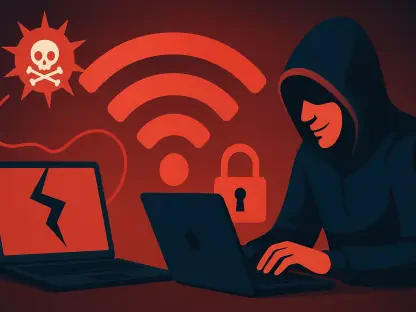

The group’s use of custom batch scripts like rdp.bat to enable Remote Desktop Protocol highlights the need for continuous monitoring of system configuration changes. This tactic is just one piece of a sophisticated operational puzzle orchestrated by the threat actor known as Storm-2570. Since appearing on the scene in early 2025, this group has rapidly evolved into a prolific ransomware-as-a-service affiliate, demonstrating a level of versatility that complicates traditional attribution efforts. Unlike many criminal organizations that stick to a single software payload, Storm-2570 operates as a true mercenary entity. They rotate through multiple ransomware families, including Qilin, DragonForce, Anubis, and BERT, effectively hiding their identity behind a revolving door of digital brands. This strategic flexibility allows them to bypass defenses that are tuned to specific malware signatures while maintaining a consistent and highly efficient attack blueprint across diverse sectors like healthcare, manufacturing, and energy. By the time a security team identifies the specific ransomware strain being deployed, the attackers have often already completed their data theft and moved deep into the network infrastructure.
Identifying the Systematic Attack Chain
A defining characteristic of the Storm-2570 operation is its reliance on legitimate administrative tools to maintain a persistent presence within a victim’s environment. Once initial access is achieved, the group prioritizes long-term stability by installing Remote Monitoring and Management (RMM) software. Tools such as MeshAgent, ScreenConnect, and NinjaRMM are frequently utilized, often renamed to blend into the standard software inventory of the targeted organization. For instance, an executable might be renamed to include the company’s own name, making it appear as a benign part of a local IT update. To ensure they always have a functional backdoor, the group also deploys advanced tunneling utilities like Cloudflare Tunnel and ngrok. These services are configured to run with high privileges, creating secure pathways that bypass traditional perimeter defenses and allow the attackers to re-enter the network even if their primary entry point is discovered and patched. This method transforms common business software into a powerful weapon for sustained exploitation.
After establishing a secure foothold, the attackers shift their focus toward internal reconnaissance and the systematic harvesting of administrative credentials. They deploy a variety of network scanners and specialized dumping tools, such as Mimikatz and pypykatz, to extract passwords from system memory. However, the most alarming part of their blueprint involves the abuse of the built-in Windows utility ntdsutil.exe. By using this legitimate administrative tool to create a full backup of the Active Directory database, the attackers can extract the NTDS.dit file. This allows them to conduct domain-wide credential cracking offline, away from the prying eyes of real-time security monitoring systems. Once they possess the keys to the identity infrastructure, they can navigate the network with the authority of a legitimate system administrator. This transition from external intruder to internal “superuser” is a critical turning point in the attack, as it grants the group total control over the organization’s most sensitive accounts and data repositories without triggering typical malware alarms.
Disrupting Lateral Movement and Exfiltration
With administrative control secured, Storm-2570 proceeds to systematically dismantle the organization’s defensive posture to facilitate lateral movement. This process involves tampering with registry settings and disabling real-time antivirus protections across various servers and workstations. A common tactic observed in recent campaigns is the creation of specific folder exclusions, such as the C:\PerfLogs directory, which provides a “blind spot” where the attackers can safely store their malicious toolkits and scripts. Once the environment is sufficiently weakened, the group moves through the network using standard administrative utilities like PsExec, Impacket, and NetExec. They frequently employ custom batch files to modify system settings on the fly, enabling services like the Remote Desktop Protocol (RDP) on machines where it was previously disabled. This methodical approach ensures that they can spread their influence across the entire enterprise with minimal resistance, effectively setting the stage for the final phases of their operation while avoiding the noise that typically accompanies more aggressive hacking techniques.
The final step before encryption is the execution of a sophisticated double extortion strategy, designed to maximize the pressure on victims to pay the ransom. Storm-2570 does not simply lock files; they steal massive quantities of sensitive data to use as leverage. Utilizing high-speed cloud transfer utilities like s5cmd and Rclone, the attackers move archives, databases, and proprietary documents into attacker-controlled Amazon S3 buckets at an impressive scale. This data exfiltration process is often carried out with such speed and efficiency that it can be completed before an organization even realizes a breach has occurred. By holding a copy of the victim’s most valuable assets, the group ensures that the threat remains potent even if the target can restore their operations from secure backups. The threat of a public data leak adds a layer of reputational risk that many organizations find impossible to ignore. This transition from simple encryption to complex data kidnapping represents the modern evolution of the ransomware industry, where the value lies not just in the access but in the confidentiality of the stolen information.
Strategic Recommendations for Proactive Defense
Defeating the Storm-2570 blueprint required a fundamental shift in how security teams approached the detection of ransomware threats during the past year. Rather than focusing solely on the final payload, successful defenders learned to prioritize the identification of behavioral patterns and the misuse of administrative tools. It became essential for organizations to implement a strict “allow-list” for all remote management software, ensuring that any unauthorized instance of MeshAgent or Splashtop triggered an immediate, high-priority investigation. Furthermore, monitoring network traffic for unusual outbound spikes directed toward cloud storage providers became a critical early warning sign. By integrating advanced network telemetry with endpoint detection, IT departments were able to intercept the data exfiltration process before the attackers could gain significant leverage. Hardening the system against unauthorized changes to registry keys and antivirus exclusions also proved vital, as it forced attackers into noisier, more detectable behaviors. These proactive measures transformed the network from a passive target into a resilient environment capable of identifying and isolating threats mid-stream.
Building a long-term defense against sophisticated affiliates involved more than just software updates; it required a complete overhaul of the identity perimeter and administrative protocols. Implementing the principle of least privilege ensured that even if a credential was compromised, its utility to an attacker like Storm-2570 was severely limited. Mandatory multi-factor authentication was enforced across every remote access point and internal management console, effectively neutralizing the value of passwords stolen via ntdsutil.exe or Mimikatz. Organizations also invested in “tamper protection” features for their security suites, preventing the attackers from disabling real-time monitoring or adding unauthorized directory exclusions. Looking forward, the focus has shifted toward continuous configuration auditing and the use of automated response playbooks that can lock down a segment of the network the moment suspicious administrative activity is detected. By moving beyond a reactive stance, security professionals successfully dismantled the repeatability of the Storm-2570 blueprint, proving that a unified defense strategy is the most effective deterrent against the ever-evolving tactics of the modern cybercriminal landscape.