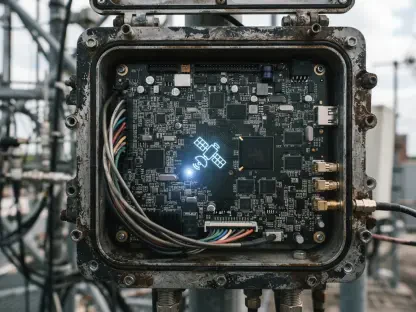

Testing drone and vehicle monitoring at the San Diego campus proves that cellular networks can function as sophisticated radar systems for urban environments. This development marks a pivotal shift in how telecommunications giants view their infrastructure, moving beyond the simple delivery of bits to the active perception of the physical world. As the industry moves deeper into 2026, the transition from current 5G Advanced capabilities toward a finalized 6G standard has become the primary focus for market leaders. Verizon has taken an aggressive stance by expanding its 6G Innovation Forum to include a broader coalition of global technology powerhouses. This expansion reflects a realization that the next generation of connectivity cannot be built in isolation by carriers alone; it requires the deep integration of cloud computing, semiconductor design, and advanced cybersecurity. By aligning with giants in these sectors, the company is attempting to dictate the architectural blueprint of the coming decade.
Integrated Sensing: The Evolution of Network Utility
Integrated Sensing and Communication, or ISAC, represents a fundamental change in network utility, shifting from traditional data transmission to environmental awareness. In partnership with Samsung and Qualcomm, Verizon has begun testing the ability of wireless signals to act as high-resolution sensors. Recent trials utilized 5G base stations and the CBRS spectrum to monitor crowd density in real-time, providing a robust solution for venue management without the privacy concerns associated with traditional camera systems. This technology works by analyzing how physical objects reflect or disrupt radio waves, allowing the network to “see” movement without optical sensors. Such advancements allow urban planners and security firms to gather critical data on foot traffic and congestion patterns while maintaining complete anonymity for individuals. This dual-use capability transforms the network into a ubiquitous sensory layer that can support city-wide automation and smarter resource allocation.
Expanding on these sensory capabilities, the use of millimeter-wave spectrum has enabled more precise tracking of physical objects such as drones and autonomous vehicles. The trials conducted at specialized campuses demonstrated that a single cellular network can provide high-speed data to a device while simultaneously tracking its trajectory and altitude with radar-like accuracy. This is particularly significant for the future of urban air mobility and autonomous logistics, where reliable tracking is a prerequisite for safety and regulatory compliance. By integrating these sensing functions directly into the communication fabric, the need for separate, redundant radar hardware is greatly reduced. This streamlined infrastructure approach not only lowers deployment costs for smart city initiatives but also ensures that the tracking data is available with minimal latency. Consequently, the network becomes the primary engine for navigating the complexities of dense, high-traffic environments where physical and digital domains overlap.
Advanced Wearables: The Path to Symmetrical Data
The surge in artificial intelligence and wearable hardware has necessitated a total rethink of network architecture, specifically regarding data flow symmetry. Current mobile networks are heavily optimized for download speeds, catering to streaming and web browsing, but AI-driven wearables like smart glasses require massive uplink capacity. These devices must constantly transmit high-definition audio and video data to the cloud for real-time processing and interpretation. Verizon’s ongoing trials with Meta smart glasses highlight this shift, focusing on how edge computing can minimize the round-trip latency required for seamless interactions. In an AI Sports Companion scenario, a user wearing these glasses can receive instantaneous statistics and game probabilities via voice command, with the network handling the heavy computational lifting. This transition toward symmetrical data flows is a cornerstone of the 6G development strategy, ensuring that the next generation of AI tools is not throttled by traditional connectivity limits.
Looking back, the strategic roadmap established by Verizon effectively positioned the company as a vital utility for the next generation of autonomous systems and digital twins. The decision to establish a dedicated 6G laboratory in Los Angeles proved to be a critical step in moving beyond theoretical research and into the practical, large-scale deployment phase. By targeting the 2028 Los Angeles Summer Olympics as a primary testing ground, the groundwork was laid for a network that could handle the immense data demands of global events and robotics. Stakeholders were encouraged to prioritize the integration of edge-native applications and the optimization of uplink-heavy traffic patterns to stay competitive in the evolving landscape. It was observed that the focus remained on harmonizing software-defined networking with physical sensing capabilities to provide a truly unified experience. The industry shifted from mere connectivity to a comprehensive environmental intelligence platform that supported both human and machine interactions with speed.