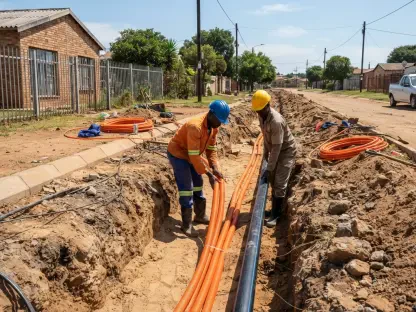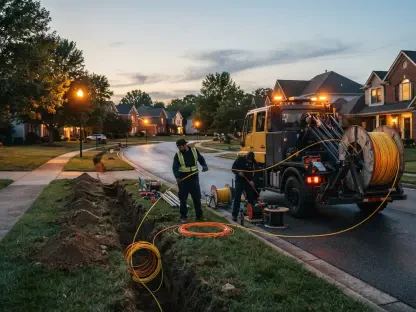

The silent disappearance of copper telephone lines across suburban neighborhoods marks the end of a century-long era, replaced by the invisible and highly efficient pathways of modern fiber and high-speed data networks. This transition signifies that traditional landlines have officially moved from a standard utility to a legacy technology, as Voice over Internet Protocol has solidified its position as the primary communication method for the modern household. Unlike the rigid infrastructure of the past, this digital approach leverages existing internet connections to transmit voice data, offering a level of versatility that analog systems simply cannot replicate. By adopting a software-driven framework, residents are no longer tethered to the limitations of physical circuits, allowing for a more dynamic and integrated communication experience that aligns with the digital nature of contemporary life. This shift is not merely about staying current with technology; it represents a fundamental change in how families manage their connectivity, blending the reliability of a dedicated home line with the advanced capabilities of the internet age.
Leading VoIP Service Providers for Modern Homes
Versatility and Hardware-Focused Options
The current market for residential communication is dominated by providers that successfully bridge the gap between traditional reliability and modern flexibility, with Vonage often serving as the primary example of this balance. As households seek more robust solutions, Vonage has refined its platform to offer an intuitive user experience that does not sacrifice depth, providing a clear path for those who might eventually need to scale their home setup into something more professional. This adaptability is particularly useful for the increasing number of individuals who manage remote projects or small ventures from their residences, as the transition to more comprehensive business-grade features is handled through the same underlying infrastructure. Furthermore, the inclusion of expansive international calling plans has redefined how families maintain global connections, removing the financial barriers that once made long-distance conversations a luxury rather than a daily occurrence. The ability to manage these settings through a centralized digital interface ensures that users remain in total control of their communication environment without needing technical expertise.
Maintaining the tactile and reliable feel of a classic telephone remains a priority for many, and providers like 1-VoIP and Ooma Telo have specialized in delivering this specific experience through sophisticated hardware integration. These services utilize Analog Telephone Adapters that allow existing high-quality handsets to function perfectly over a digital network, ensuring that the transition to modern technology does not require a complete overhaul of household equipment. This focus on hardware stability results in superior audio fidelity, often exceeding the clarity of cellular calls, which can be prone to interference and signal drops within certain residential structures. For users who still require legacy-adjacent functions, such as the ability to send and receive faxes or the desire for physical hardware that operates independently of a computer, these providers offer a stable and familiar foundation. By combining this traditional approach with modern upgrades like SMS texting from a home number, these companies have created a hybrid model that respects the history of the landline while fully embracing the advantages of digital packet transmission.
Streamlined and Low-Cost Digital Alternatives
For many individuals, the move toward digital telephony is driven by a need for simplicity and accessibility, a niche that Google Voice continues to occupy with significant influence. By offering a robust free tier for personal use, it has become the default choice for those who require a secondary line or a way to streamline their contact points across multiple devices without incurring monthly service fees. The platform is deeply integrated into the modern web ecosystem, allowing users to manage their calls, voicemails, and text messages directly from a browser or a mobile application with the same ease as checking an email. While it may not offer the deep hardware support or specialized residential features found in paid competitors, its value proposition lies in its frictionless deployment and the way it consolidates communication into a single digital identity. This makes it an ideal solution for younger residents or tech-savvy individuals who view a home phone not as a physical object on a desk, but as a flexible service that follows them across their various pieces of hardware.
At the other end of the specialized service spectrum, Voiply has carved out a reputation for providing a “set it and forget it” experience that prioritizes affordability and ease of use above all else. By removing the complex enterprise-level features that many residential users find overwhelming, the service offers an extremely low-cost entry point into the world of paid digital telephony, particularly for those who opt for long-term annual commitments. The installation process is designed to be as straightforward as possible, often requiring nothing more than plugging a pre-configured adapter into a router to activate the service immediately. This lack of complexity does not mean a lack of quality; instead, it represents a focused effort to provide a reliable, high-definition voice line that behaves exactly like a traditional phone line but at a fraction of the historical cost. For households that want the security of a dedicated line without the burden of navigating a complicated management dashboard, this streamlined approach offers the perfect balance of modern technology and user-friendly operation.
Strategic Financial and Functional Considerations
Economic Advantages and Pricing Transparency
The financial motivation to move away from traditional telecommunications is often rooted in a desire to escape the restrictive and often opaque pricing models of Internet Service Providers. Many cable and fiber companies have long utilized “Triple Play” bundles to lock consumers into multi-service contracts that include a digital phone line as a perceived value-add. However, these bundled services frequently lack the specialized features and granular control offered by independent providers, and they are notorious for significant price hikes once the initial promotional period has concluded. By decoupling the phone service from the internet provider, consumers gain the freedom to choose a specialist that focuses exclusively on voice quality and communication features. This independence allows for a much more transparent relationship, where the cost of the service is clearly defined and the features are not buried within a larger, more expensive package of television and data services.
When examining the pricing structures of independent leaders like Vonage, Voiply, or 1-VoIP, the savings compared to traditional PSTN lines are immediately apparent, with many residential plans starting well under the ten-dollar mark. This transparency extends to the various tiers of service, where users can choose exactly what they need, whether it is an unlimited domestic calling plan or a more specialized international package. It is important for consumers to remain vigilant regarding per-minute charges for calls to mobile phones in certain international regions, but even with these considerations, the total monthly expenditure is usually significantly lower than a traditional phone bill. The choice between a month-to-month plan and a multi-year commitment further empowers the consumer, allowing them to prioritize either lower monthly costs or the flexibility to change providers as better technology emerges. This competitive environment has forced providers to keep their rates low and their service quality high, resulting in a marketplace where the consumer is the primary beneficiary of the digital transition.
Advanced Digital Features and Integration
One of the most transformative aspects of modern voice services is the shift from a passive dial tone to a proactive, software-driven management system that enhances daily life. Traditional analog lines were limited by the physical capacity of the wires they used, but digital lines utilize the “intelligence” of cloud-based servers to provide features like smart call forwarding and simultaneous ringing. This allows a single incoming call to reach a home handset, a mobile app, and even a secondary office line at the same time, ensuring that critical family calls or urgent notifications are never missed. Additionally, the implementation of crowdsourced spam management has become a vital defense mechanism against the persistent problem of automated robocalls. These systems analyze incoming call data in real-time against massive databases of known telemarketers, blocking unwanted intrusions before the phone even rings, a task that was virtually impossible for the limited hardware of the analog era.
The convergence of home and mobile life is further solidified through the use of softphone applications, which allow a residential number to exist as a functional app on a smartphone or tablet. This integration means that the “home phone” is no longer confined to the home; a user can answer their residential line while traveling abroad or running errands, all while maintaining the high-definition audio quality of a digital connection. This mobility is complemented by the ability to add virtual numbers with different area codes to a single account, a feature that has become highly popular for families spread across different geographic regions. By providing a local number for distant relatives to call, the service effectively eliminates long-distance barriers and creates a more cohesive communication network for the entire family. These software-based innovations have turned the residential line into a versatile tool that adapts to the user’s lifestyle rather than forcing the user to adapt to the limitations of a physical location.
Technical Deployment and Operational Security
Hardware Implementation and Transition Processes
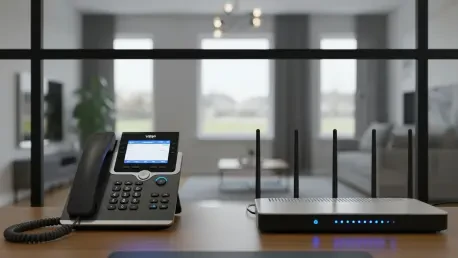
For the vast majority of households, the technical requirements for deploying a digital voice system are remarkably minimal, often involving a simple “plug-and-play” setup that can be completed in minutes. The most common method utilizes an Analog Telephone Adapter, a small device that acts as a bridge between the internet router and a standard telephone handset. By converting the analog signals from the phone into digital packets for internet transmission, these adapters allow users to keep their favorite hardware while enjoying the benefits of a modern network. For those who prefer a more integrated approach, dedicated IP phones are also widely available, connecting directly to the network via Ethernet or Wi-Fi and offering built-in support for advanced features like high-definition audio and multiple line management. This variety of hardware options ensures that every household can find a configuration that fits their specific technical comfort level and physical layout.
The administrative process of moving a long-standing phone number to a new digital provider, known as “porting,” has been streamlined to ensure a seamless transition without the loss of a household’s established identity. Most providers handle the majority of the paperwork and coordination with the previous carrier, allowing the user to maintain their existing number while the backend infrastructure is updated. This continuity is essential for families who have used the same contact information for decades and wish to avoid the inconvenience of notifying every contact of a change. While the process typically takes a few business days to finalize, the modern systems in place ensure that there is little to no downtime during the switch. Once the number is active on the new network, the user gains immediate access to the full suite of digital management tools, marking the official completion of their move into the modern telecommunications landscape.
Reliability Standards and Emergency Protocols
While the advantages of digital telephony are extensive, it is necessary to address the specific reliability considerations that differ from the old copper-wire standards. Traditional landlines were powered by the telephone company’s central office, which allowed them to function during local power outages; in contrast, a digital line is entirely dependent on the home’s internet connection and power supply. To mitigate this vulnerability, many households have adopted battery backup systems for their routers and adapters, ensuring that the phone remains active during short-term electrical disruptions. Additionally, the ubiquity of mobile devices serves as a secondary layer of protection, as most digital voice providers allow for automatic call forwarding to a cellular number if the primary internet connection is lost. This multi-layered approach to connectivity ensures that the home remains reachable even in the face of technical challenges or infrastructure issues.
The most critical aspect of operational security involves the correct registration of E911 services, which are handled differently in a digital environment than on a physical landline. Because a digital phone line is not permanently tied to a specific pair of wires in the ground, emergency responders rely on the address information provided by the user in the service provider’s database. It is a mandatory requirement for users to manually register their physical address and update it immediately if the equipment is moved to a new location. This ensures that when a 911 call is placed, the dispatch system receives the accurate location data necessary to send help to the correct residence. As long as this small but vital administrative task is managed, the digital system provides a level of emergency responsiveness that is fully equivalent to traditional services. This combination of proactive management and modern technology creates a secure and highly capable communication environment for the current era.
Strategic Planning for Modern Connectivity
The transition to a digital residential phone system was characterized by a move toward greater transparency, significantly lower monthly costs, and a dramatic increase in functional versatility. Families who made the switch successfully escaped the rising prices and stagnant feature sets of traditional telecommunications providers, opting instead for specialized services that integrated seamlessly with their digital lives. The process proved to be straightforward for most, as the use of simple adapters and the ability to port existing numbers eliminated the most common barriers to adoption. By 2026, the household phone had evolved from a simple stationary object into a dynamic service that could be managed from any location, providing a level of control that was previously reserved for enterprise-level systems.
Moving forward, the primary focus for any household maintaining a residential line should be the optimization of their home network to support high-definition voice traffic. Investing in a reliable battery backup for the internet router became a standard recommendation to ensure that communication remains uninterrupted during power fluctuations. Furthermore, users should conduct a semi-annual review of their E911 registration data to confirm that location information remains accurate, especially after a move or a change in service providers. By treating the home phone as a digital service rather than a physical utility, residents have positioned themselves to take full advantage of future innovations in voice technology, ensuring their communication infrastructure remains as modern and efficient as the devices they use every day.