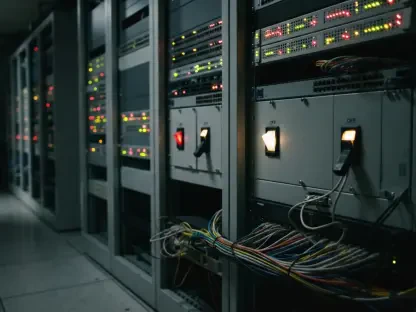

The rapid expansion of generative artificial intelligence has forced a radical rethinking of the physical structures that underpin the global digital economy, transforming the network from a passive utility into a vital performance-critical component. Nokia has officially launched its AI Networking Lab, a strategic initiative designed to accelerate the development and implementation of AI-native networking infrastructure across diverse environments. This move signals a significant evolution for the company as it transitions from its traditional focus on telecommunications toward a broader role in the enterprise technology market. The lab serves as a direct response to the massive demands that large-scale machine learning place on existing network architectures, which were not originally built to handle the unique traffic patterns of modern AI workloads. By bridging the gap between compute power and data delivery, the organization aims to solidify its position as a key architect in the high-performance computing space.
Technical Requirements: The Shift to AI-Native Design
Optimizing Data Flow and GPU Communication
Historically, data center architectures were optimized for “north-south” traffic—the movement of data between a user and a server—to support web applications and standard cloud workloads. However, generative AI relies on intense “east-west” traffic, where data is constantly swapped between thousands of GPUs within a single cluster. Nokia’s lab focuses on optimizing the network for these specific behaviors, ensuring that high-speed data transfers occur with as little friction as possible. To make these systems effective, the network must offer ultra-low latency and high bandwidth to avoid becoming a bottleneck for computational power. This shift from “cloud-ready” to “AI-native” design requires a fundamental overhaul of how packets are routed and prioritized. By focusing on the unique demands of GPU-to-GPU communication, the lab addresses the specific challenges of distributed training. This approach ensures that the network layer can finally keep pace with rapid chip advancements.
Advancing Low-Latency Optical Interconnects
Nokia is exploring technical solutions that improve the “plumbing” of the data center, such as high-performance switches and optical interconnects that maximize GPU-to-GPU efficiency. By mitigating the micro-delays that can derail complex AI training processes, the company aims to facilitate environments where large models can be trained across multiple geographic or physical locations. These advancements involve the implementation of Remote Direct Memory Access (RDMA) and specialized Ethernet fabrics that allow for data transfer without taxing the CPU. This technical focus is crucial for enterprises attempting to scale their AI capabilities from 2026 to 2028. Furthermore, the integration of intelligent congestion control mechanisms helps prevent data loss in high-density environments. These innovations ensure that the physical infrastructure supports the seamless orchestration of massive datasets. Such developments are essential for maintaining the stability of the entire AI ecosystem during peak computational periods.
Strategic Business Evolution: Expanding the Enterprise Reach
Fostering Innovation Through Collaborative Blueprints
The AI Networking Lab functions as a dedicated co-innovation space where cloud providers, enterprise customers, and infrastructure partners can collaboratively develop and test networking blueprints. This proactive approach allows stakeholders to verify performance in a sandbox environment before committing to the high capital expenditures required for full-scale deployments. By providing these standardized designs, Nokia addresses a critical pain point for enterprises: the high financial risk associated with building out next-generation AI infrastructure. These blueprints are tailored to specific use cases, such as large language model training or real-time inference at the edge. The collaborative nature of the lab ensures that hardware and software are tuned in tandem, reducing the time to market for new AI-driven services. This method of validation provides a roadmap for companies seeking to modernize their digital foundations without overextending their budgets or resources.
Modernizing the Enterprise Networking Stack
This strategic move also marks Nokia’s intentional pivot away from its identity as a purely telecom-centric company. By targeting storage networking and cloud AI infrastructure, the company is positioning itself to capture a share of the rapidly expanding market for data center modernization. This strategy acknowledges that the infrastructure required for generative AI represents a separate, strategically vital category of technology that extends far beyond the usual mobile networking and carrier deployments. The shift involves expanding partnerships with hyperscalers and specialized AI chip manufacturers to create a more cohesive hardware stack. As the boundary between traditional telecommunications and high-performance computing continues to blur, the organization is securing its relevance in the enterprise space. This transition reflects a broader industry trend where connectivity is no longer just about communication but about empowering localized compute power. The goal is to build a more resilient and versatile business model.
The Competitive Landscape: Navigating Rivalries and Trends
Navigating Industry Rivalries and Emerging Markets
The networking industry has reached a consensus that the network layer is now just as critical as the AI chips themselves. As a result, Nokia is entering a highly competitive arena against giants like NVIDIA, Cisco, and Arista, who are all aggressively investing in AI-optimized fabrics. The industry trend is moving toward intelligent, software-defined systems that can dynamically adjust to the shifting needs of AI training and inference workloads in real-time. This makes orchestration and automated management key differentiators for any company entering the space. Nokia’s approach emphasizes an open ecosystem that avoids vendor lock-in, a significant advantage for enterprises seeking flexibility. By focusing on interoperability, the organization aims to distinguish its offerings from proprietary systems that limit customer choice. This competitive strategy is vital as organizations evaluate long-term infrastructure investments from 2026 to 2028 and beyond to ensure future scalability.
Strategic Insights and Future Infrastructure Needs
The boundary between the server and the network continued to blur, making network performance the ultimate factor in system efficiency and overall productivity. Strategic investments in intelligent networking served as the essential backbone for the global compute economy, providing the necessary stability for industrial AI applications. Organizations that prioritized these infrastructures moved from experimental phases to full-scale deployment with greater ease. To maintain this momentum, stakeholders prioritized the adoption of open-source networking standards and invested in hardware that supported automated traffic management. Future considerations included the integration of energy-efficient optical switching to manage the rising power demands of massive data centers. By building a robust ecosystem of partners, the industry addressed the critical need for scalable, low-latency connectivity. These steps ensured that the physical foundations of the digital world were prepared to handle the growth of machine intelligence.