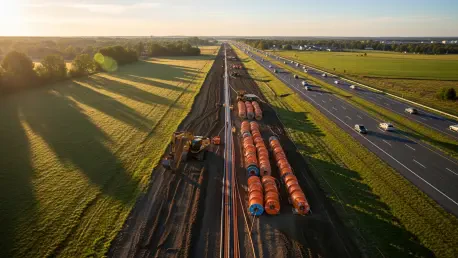

The sudden surge in demand for symmetrical gigabit connections has fundamentally altered the trajectory of the American telecommunications industry as providers race to overhaul legacy systems. Throughout the current landscape, the push for fiber-optic dominance is no longer just about providing faster internet for streaming movies or gaming; it is about establishing a robust foundation for a digital economy that requires massive upstream bandwidth. Modern households now operate as micro-offices and content creation hubs, making the old model of high download speeds paired with sluggish uploads completely obsolete. As a result, internet service providers are committing billions of dollars toward deep-fiber deployments that reach into previously underserved suburban and rural pockets. This massive infrastructure shift represents a long-term bet on the continued growth of cloud-based services and real-time data processing. By prioritizing fiber, these companies are ensuring that their networks can handle the exponential growth in traffic expected between 2026 and 2030, while simultaneously narrowing the digital divide that has persisted for decades.
Strategic Infrastructure Growth in the East
Moving into the Northeast, the competitive landscape is heating up as specialized firms like Archtop Fiber and GoNetspeed aggressively target regions that have long been ignored by the larger national carriers. In New York State, particularly throughout the areas surrounding Albany and deep into Otsego County, these providers are not just laying cables; they are building 10 Gbps-ready networks that offer unparalleled performance. These projects are often the result of sophisticated public-private partnerships where local governments provide the necessary right-of-way access to facilitate rapid construction. By focusing on smaller towns and mid-sized cities, these providers are creating regional tech corridors that attract both new businesses and remote professionals. The strategy involves a meticulously planned rollout that minimizes disruption while maximizing the potential for commercial adoption. This localized focus ensures that even the most historic communities can transition into the digital era without being held back by deteriorating copper-based lines.
Building on the progress seen in the Northeast, the state of Florida has emerged as a critical battleground for broadband superiority, characterized by a unique blend of private investment and utility cooperative models. Conexon Connect has made significant strides in finalizing a 1,600-mile network that utilizes the existing infrastructure of electric cooperatives to reach residents in more secluded areas. This collaborative approach allows for a much faster deployment than building from scratch, effectively bypassing many of the traditional hurdles associated with rural utility expansion. Simultaneously, Wire 3 is injecting substantial capital into Martin County, aiming to connect tens of thousands of homes and businesses to a high-speed fiber backbone. These investments are particularly vital for the state’s agricultural heartlands and its booming coastal real estate markets, where connectivity is increasingly viewed as an essential utility on par with water and electricity. The dual-track strategy of using both cooperative partnerships and direct private builds is proving to be the most efficient way to scale services quickly.
Expanding Access Across the West and Midwest
Across the Western and Midwestern regions, the drive toward universal fiber access is making significant headway in the vast agricultural stretches of California’s Central Valley. Race Communications has undertaken major upgrades here, recognizing that modern precision farming and regional logistics hubs require the same level of connectivity as Silicon Valley startups. These infrastructure projects provide the essential backbone for data-heavy agricultural operations that rely on real-time sensor monitoring and automated machinery. Further east in Kansas, Brightspeed is rapidly approaching the finish line on a multi-phase expansion project designed to bring tens of thousands of new locations online before the end of the year. This effort is part of a broader mandate to eliminate the digital divide that has historically hindered economic growth in the Great Plains. By installing thousands of miles of new fiber, these providers are not only improving the quality of life for residents but also creating an environment where local startups can compete on a global stage without ever leaving their hometowns.
While the physical installation of fiber remains the gold standard for long-term stability, some providers are successfully utilizing advanced wireless technologies to bridge the gap in geographically challenging states like Texas. Rise Internet is currently deploying high-speed wireless platforms that are capable of delivering gigabit speeds across dozens of rural towns, showcasing the versatility of fixed wireless as a scaling tool. This technology serves as a critical bridge, allowing for near-immediate connectivity in areas where the rocky terrain or sprawling distances make traditional trenching for fiber cost-prohibitive. By integrating these advanced wireless solutions with a centralized fiber core, providers can offer a hybrid model that ensures high-speed access for everyone, regardless of their specific location. This strategy is proving essential in maintaining the momentum of the national broadband expansion, as it allows companies to capture market share in areas that were previously deemed unreachable. The success of these deployments suggests that the future of connectivity will likely involve a diverse mix of technologies.
Corporate Strategy and Long-Term Industry Trends
The current era of expansion is also defined by a significant wave of corporate consolidation and leadership transitions aimed at streamlining operations for the next phase of growth. Strategic acquisitions have become a primary method for scaling quickly, as evidenced by Omni Fiber’s recent purchase of Citizens Fiber in Pennsylvania. This move allows the company to integrate existing regional networks into a more cohesive and efficient system, reducing overhead while expanding its service footprint. Beyond mergers, the influx of seasoned industry veterans into key executive roles is signaling a renewed focus on engineering excellence and network reliability. These leaders are bringing decades of experience in large-scale infrastructure management to the table, ensuring that the new networks being built today are designed with long-term scalability in mind. This professionalization of the management layer is crucial for navigating the complex regulatory environments and supply chain challenges that often accompany multi-state construction projects.
As the 10 Gbps standard becomes the new benchmark for excellence, broadband providers are increasingly adopting a holistic approach to their role within the communities they serve. Corporate social responsibility has moved from a peripheral concern to a core business strategy, with many companies investing heavily in local education and digital literacy programs. By providing high-speed access and technical resources to schools and community centers, these firms are cultivating a more tech-savvy workforce and building long-term brand loyalty. This strategy recognizes that the true value of a fiber network lies not just in the cables themselves, but in the economic and social activity they facilitate. Furthermore, the shift toward transparent pricing models and improved customer service reflects a broader trend of companies trying to shed the negative reputation often associated with legacy telecommunications. By positioning themselves as partners in community development rather than just utility providers, these companies are securing their place in the local economy for the foreseeable future.
The Path Forward: Sustaining National Broadband Excellence
The successful deployment of fiber infrastructure across the United States established a new baseline for digital participation and economic resilience. By prioritizing long-term scalability and community partnerships, providers moved beyond simple speed metrics to create a more equitable technological landscape. Stakeholders identified that the most effective path forward involved a combination of aggressive capital expenditure and localized engagement. Moving into the next phase of development, it became clear that maintaining these networks would require ongoing investment in cybersecurity and hardware redundancy to protect the newly connected populations. Decision-makers focused on integrating these high-capacity lines with emerging smart city technologies to maximize the return on investment for both the public and private sectors. The lessons learned from this massive expansion suggested that the key to long-term success was a focus on reliability rather than just marketing slogans. Consequently, the industry shifted its attention toward optimizing existing footprints while exploring ways to lower the cost of entry for the remaining disconnected areas.
Providers also recognized the importance of diversifying their technological portfolios to maintain uptime during extreme weather events and other localized disruptions. The industry emphasized the creation of redundant fiber rings that allowed for near-instantaneous rerouting of data traffic, thereby ensuring that critical healthcare and emergency services remained operational at all times. This shift toward a more resilient architecture served as a blueprint for global telecommunications standards, demonstrating how massive private investment could align with public safety goals. Technical teams focused on implementing standardized maintenance protocols that extended the lifespan of underground equipment, reducing the need for frequent and costly repairs. By adopting a lifecycle-management approach, the sector demonstrated that high-speed internet could be both a high-performance luxury and a stable, long-term public good. Future developments moved toward the full integration of artificial intelligence for network management, which allowed for predictive maintenance and even more efficient bandwidth allocation across the entire national grid.