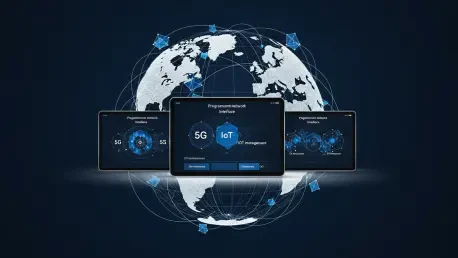

The global telecommunications industry is currently undergoing a profound metamorphosis as major industry leaders shift their focus from basic connectivity toward a sophisticated, programmable ecosystem that empowers developers. This transition marks the end of the era of the “dumb pipe” and the beginning of a landscape where network capabilities are integrated directly into digital products through standardized Application Programming Interfaces. Financial analysts suggest that this market is positioned for explosive growth, expanding from a foundational valuation of approximately two point fifteen billion dollars into a massive fifty-one billion dollar sector by the year 2035. Driven by a staggering compound annual growth rate of over thirty-seven percent, this shift represents a fundamental revaluation of communication infrastructure. By exposing core functionalities like identity verification, carriers are effectively transforming their operations into dynamic platforms that provide value far beyond traditional voice and data subscriptions, creating a robust ecosystem for global innovation.
Strategic Transitions and Intelligent Connectivity
Shifting From Infrastructure to Programmable Platforms
The widespread adoption of standalone 5G technology and cloud-native architectures has fundamentally altered the historical relationship between telecommunications operators and the enterprise sector. For decades, these companies operated primarily as providers of raw infrastructure, focusing on the delivery of packets without much concern for the specific requirements of the applications running on top. However, the current era of intelligent connectivity has enabled a shift toward programmable platforms that respond to the unique needs of every digital service. By utilizing specialized Application Programming Interfaces, operators are now able to expose deep-seated network functions that were previously hidden behind proprietary silos. This allows a software application to interact directly with the core network to verify a device’s status or request a specific quality of service level in real-time. This level of granular control effectively turns the network into a flexible resource rather than a static utility.
This transition toward a programmable model allows businesses to request specific network behaviors on demand, such as high-precision authentication or guaranteed bandwidth for mission-critical tasks. In practical terms, an enterprise can now leverage these tools to ensure that a high-definition video stream for remote mechanical diagnostics receives priority over general background data traffic. This capability is essential for modern industrial environments where latency and reliability are non-negotiable requirements for safety and operational efficiency. Furthermore, by moving into the platform-as-a-service realm, telecommunications providers are creating a more versatile environment that supports the complex needs of modern digital transformation strategies. These intelligent interfaces allow for a more symbiotic relationship between the network and the software it carries, ensuring that resources are allocated where they are most needed based on real-time application feedback and specific user requirements.
Global Cooperation: Standardizing the Network Interface
A critical component of this market expansion is the ongoing push for global industry cooperation and the establishment of standardized interfaces across various international regions. Historically, developers faced significant hurdles when attempting to integrate carrier-specific functions because each operator used different protocols and authentication methods. The emergence of interoperable standards, such as those promoted through the GSMA Open Gateway initiative, ensures that a developer can write a single piece of code that functions seamlessly across different carriers and geographical borders. This universal approach removes the friction associated with regional fragmentation, allowing innovative solutions to scale globally with unprecedented speed and efficiency. By creating a common language for network interaction, the industry is effectively lowering the barrier to entry for third-party innovators. This standardization is the bedrock upon which a truly global ecosystem of programmable communication services is currently being constructed.
The reduction in technical complexity achieved through these standardized APIs significantly shortens the development cycle for new products, particularly in high-stakes fields like healthcare and finance. In the financial services sector, for example, a bank can implement network-based identity checks that work for any customer, regardless of which mobile provider they use. This uniformity accelerates the time-to-market for digital solutions, allowing companies to pivot quickly in response to changing consumer demands or regulatory requirements. In healthcare, these interfaces facilitate the reliable delivery of telehealth services by ensuring that connection quality remains consistent across diverse network environments. As these protocols become more widely adopted, the industry is seeing a surge in cross-border collaboration between technology firms and telecom providers. This collaborative spirit is essential for fostering a competitive yet unified marketplace where the primary focus remains on enhancing the end-user experience.
Market Segmentation and Industry Growth Drivers
Dominant API Categories and the Impact of 5G
While communication and messaging APIs currently represent the largest share of the market due to their established role in customer engagement and authentication, the landscape is shifting. The most explosive growth over the next decade is expected to occur in the realm of device and Internet of Things connectivity. As industrial ecosystems expand and become more interconnected, the need for advanced tools that can manage device provisioning and traffic optimization has become a primary driver for investment. These specialized interfaces allow companies to monitor and manage thousands of connected sensors and machines from a centralized software platform without needing to manage the underlying network complexity manually. This automation is vital for scaling modern smart cities and automated logistics networks, where manual configuration is no longer feasible. The ability to programmatically control how these devices interact with the network is a fundamental requirement for the next phase of digital evolution.
The technological transition toward 5G is serving as the primary engine for these programmable services, offering capabilities that were simply impossible under older 4G and LTE architectures. While legacy networks still carry a significant amount of global traffic, the advanced features of the newest generation, such as ultra-low latency and dynamic network slicing, are essential for modern tech. These features are critical for high-bandwidth and time-sensitive applications, including autonomous vehicle systems and remote robotic surgeries that require a level of network precision and control that older technologies cannot deliver. By utilizing APIs to access these 5G capabilities, developers can ensure that their applications perform reliably even in congested urban environments or during peak usage periods. This level of technical sophistication is transforming the network into a precision instrument that can be tuned to meet the specific demands of any high-performance application, paving the way for innovations.
The Evolution of Developer and Enterprise Ecosystems
The end-user landscape for network APIs is also evolving rapidly, with large enterprises currently leading the initial charge by integrating programmable networking into their broader strategies. These massive organizations have the resources to pioneer new use cases, such as integrating location-based services into their supply chain management tools to improve transparency and efficiency. However, the software developer segment is projected to be the fastest-growing group in the coming years as the broader “API economy” matures. Individual developers and small startups are beginning to view carrier networks as programmable resources, much like they view cloud computing services from major providers. This shift in perception is democratizing access to powerful telecommunications tools, allowing smaller players to innovate and compete with established giants. As more developers gain experience with these tools, the variety of applications will expand beyond traditional sectors, creating a diverse and vibrant ecosystem of solutions.
To address the rising concerns surrounding digital safety, industry stakeholders prioritized the integration of cybersecurity and fraud prevention as foundational elements of the API ecosystem. By utilizing network-based intelligence, companies successfully verified user locations or device identities directly through carrier data, which offered a more secure alternative to traditional software methods. This approach established a new standard for digital trust across various industries dealing with sensitive information. Decision-makers recognized that the path forward required a sustained commitment to collaborative standards and transparent data practices to maintain consumer confidence. They implemented rigorous security protocols that ensured privacy while still allowing for the seamless exchange of vital verification data. Moving forward, organizations focused on expanding these capabilities into new markets, ensuring that programmable connectivity remained both accessible and secure. By fostering this environment, they laid the groundwork for a resilient infrastructure.