
International benchmarks suggest that the cost of terrestrial network builds is staggering, with some global operators even exploring satellite integration to manage the $500 billion global build-out cost. For Türk Telekom, the solution to this capital-intensive reality crystallized in late 2026 through the finalization of a landmark $1 billion long-term club loan. This massive capital injection serves as a transformative catalyst for the Turkish telecommunications landscape, prioritizing the aggressive deployment of 5G technology alongside a comprehensive expansion of high-speed fiber-optic infrastructure. As digital consumption patterns shift toward high-bandwidth applications and industrial automation, the necessity for a robust, future-proof backbone has never been more pressing. By securing such a significant facility, the company is effectively positioning itself to lead the nation’s digital transformation, ensuring that the hardware and software layers of the network can support the next decade of connectivity demands. The timing of this deal is particularly noteworthy, occurring during a phase where the global telecommunications industry is grappling with high interest rates and a volatile supply chain for critical networking components.
The Mechanics of the Financing Agreement
Strategic Structure: The Advantages of Relationship Banking
The decision to utilize a club loan format rather than a broadly syndicated offering reflects a sophisticated approach to corporate finance in the current economic climate. A club loan involves a hand-picked group of relationship banks, which typically results in a more streamlined execution process and enhanced confidentiality regarding the specific credit terms. By engaging with 14 international financial institutions, Türk Telekom has not only secured the necessary capital but has also reinforced its standing with global lenders who have a deep understanding of the Turkish market’s unique dynamics. This structure allows the company to maintain a tighter dialogue with its creditors, which is essential when managing long-term infrastructure projects that may require future adjustments or waivers. Furthermore, the collaborative nature of a club loan ensures that the terms are tailored to the specific cash flow cycles of a telecommunications giant, providing a level of flexibility that is often absent in the more rigid public bond markets or large-scale syndications.
Beyond the logistical benefits of speed and privacy, the participation of 14 distinct lenders serves as a powerful testament to the perceived stability of the Turkish telecommunications sector. In an environment where institutional investors often scrutinize emerging market exposure, the successful assembly of this banking “club” indicates that the underlying assets and projected revenue streams are viewed with high confidence. This diversification of the lender base means that no single institution carries an outsized portion of the risk, which likely facilitated the internal approval processes within the participating banks. By spreading the $1 billion commitment across a wide array of global players, including top-tier American and European institutions, Türk Telekom has effectively mitigated the impact of any single bank’s shifting risk appetite. This strategic alignment with international capital markets provides a stable foundation for the multi-year rollout of 5G and fiber, shielding the project from the localized volatility that can sometimes disrupt domestic financing sources.
Financial Nuances: Pricing and Interest Rate Dynamics
The financial architecture of this $1 billion loan is anchored by the Secured Overnight Financing Rate (SOFR) plus a fixed margin of 2.00%. As the industry standard for dollar-denominated debt, SOFR represents a floating benchmark that tethers the company’s interest obligations to the broader monetary policy of the U.S. Federal Reserve. This means that while the 2.00% margin remains constant, providing the banks with a predictable premium for the risk they have assumed, the total cost of capital for Türk Telekom will fluctuate in response to global economic shifts. For a company earning the majority of its revenue in Turkish Lira, this dollar-denominated floating rate introduces a complex layer of treasury management. The company’s financial strategists must employ sophisticated hedging instruments to protect the balance sheet against potential spikes in U.S. interest rates or unfavorable movements in the exchange rate, ensuring that the cost of servicing the debt does not erode the capital available for actual network construction.
In terms of the repayment schedule, the loan features a final maturity date in October 2031, exactly five years from the date of signing. However, the nuance lies in the reported average maturity of 4.55 years, which strongly suggests an amortizing structure. Unlike a “bullet” repayment where the entire principal is due at the end of the term, an amortizing loan requires the company to make periodic payments throughout the life of the facility. This approach is highly logical for an infrastructure project of this scale, as it aligns the debt service requirements with the anticipated growth in cash flow as new 5G and fiber subscribers are onboarded. By gradually reducing the principal balance over the five-year period, Türk Telekom effectively avoids the “refinancing cliff” that can occur when a massive debt obligation matures all at once. This disciplined repayment strategy not only improves the company’s long-term credit profile but also demonstrates a conservative and sustainable approach to managing the significant leverage required for national digital infrastructure.
Technological Strategy and Infrastructure Integration
Network Synergy: 5G Requirements and Fiber Backhaul
The deployment of 5G technology is not merely an upgrade of existing cellular towers; it represents a fundamental shift in how radio access networks are designed and managed. To achieve the ultra-low latency and massive data throughput promised by 5G, Türk Telekom must invest heavily in high-frequency radio units and advanced baseband processing systems. Because 5G signals travel shorter distances than their 4G predecessors, the network requires a significantly higher density of base stations, often referred to as “small cells.” The capital from the $1 billion loan is being channeled into the procurement of this dense hardware layer, allowing the company to blanket urban centers and industrial hubs with high-capacity coverage. This investment is crucial for supporting emerging applications such as autonomous transport, remote medical procedures, and the Internet of Things, all of which demand a level of network reliability that previous generations of mobile technology simply cannot provide.
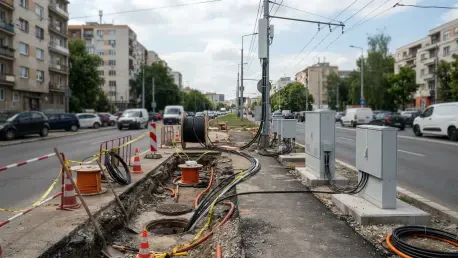
While the mobile side of the rollout often captures the headlines, the expansion of the fiber-optic network is the silent engine that makes 5G possible. In the telecommunications industry, a mobile network is only as efficient as its “backhaul”—the physical cables that connect individual cell sites to the core network. Without a robust fiber backbone, the high speeds of a 5G tower would be throttled by bottlenecks in the data transport layer. Türk Telekom is utilizing a significant portion of the loan proceeds to weave a dense web of fiber throughout the country, creating a shared infrastructure that serves both mobile towers and residential buildings. This dual-purpose strategy maximizes the return on investment for civil works, such as trenching and cabling, as the same fiber installation can support a 5G small cell and provide gigabit-speed Fiber-to-the-Home services simultaneously. This integration of fixed and mobile assets creates a synergistic ecosystem where the strength of the fiber network directly enhances the performance of the 5G service.
Supply Chain Resilience: Navigating Hardware Scarcity
One of the most pressing challenges facing the telecommunications sector in 2026 is the persistent shortage of high-end silicon and memory components. The explosive growth of Artificial Intelligence data centers has created a fierce global competition for the same chips and power systems required for 5G base stations and core networking hardware. In this environment, having access to $1 billion in ready capital is a strategic necessity rather than a luxury. By securing this funding, Türk Telekom has effectively created a “war chest” that allows it to commit to large-scale, long-term procurement contracts with global equipment vendors. In a market where supply is often prioritized for the highest-paying or most well-funded operators, this loan ensures that the company remains at the front of the queue for critical components. This proactive procurement strategy is essential for avoiding the project delays that have plagued many regional operators who lacked the immediate liquidity to lock in their hardware requirements.
Furthermore, the focus on “digital transformation” within the loan’s mandate extends beyond physical hardware into the software-defined networking (SDN) and cloud-native layers of the infrastructure. Modern 5G networks rely heavily on virtualization, where many traditional hardware functions are replaced by software running on standardized servers. This transition requires significant investment in data center upgrades and software licensing, as well as the specialized labor needed to integrate these complex systems. The $1 billion facility provides the financial flexibility to invest in these intangible but vital components of the network architecture. By modernizing both the physical and logical layers of its infrastructure, Türk Telekom is not just building a faster network; it is building a more efficient and adaptable one. This shift toward a software-centric model allows for faster service innovation and lower operational costs in the long run, positioning the company to respond more quickly to the evolving needs of its diverse customer base.
Competitive Positioning and Global Context
Market Dynamics: Domestic Rivalry and Customer Retention
In the highly competitive Turkish market, the battle for dominance between Türk Telekom, Turkcell, and Vodafone Turkey is increasingly fought on the grounds of network quality and technological leadership. High-value subscribers, particularly in the enterprise and premium consumer segments, are notoriously sensitive to network performance and are quick to churn if a competitor offers superior 5G coverage or faster fiber speeds. The $1 billion loan provides Türk Telekom with the “firepower” to outpace its rivals in terms of deployment speed and geographic reach. By being the first to offer consistent gigabit speeds in key markets, the company can establish a “first-mover advantage” that is difficult for competitors to erode. This infrastructure-led strategy is designed to reduce churn and increase the average revenue per user, as customers are generally willing to pay a premium for the reliability and speed associated with cutting-edge 5G and fiber services.
The domestic rivalry also extends to the realm of industrial applications, where the government’s push for local manufacturing and digital exports has created a surge in demand for private 5G networks and smart factory solutions. Türk Telekom’s massive investment in fiber and 5G positioning it as the preferred partner for large-scale industrial projects that require low-latency connectivity for robotics and automated logistics. This enterprise-focused approach provides a diversified revenue stream that is less sensitive to the price wars often seen in the retail mobile market. If the company can successfully leverage its new infrastructure to capture a dominant share of the burgeoning industrial 5G market, it will have secured a long-term growth engine that justifies the significant debt taken on through the club loan. The success of this strategy hinges on the company’s ability to execute its technical rollout faster and more efficiently than its peers, turning its financial advantage into a tangible competitive edge.
Risk Assessment: Currency Volatility and Operational Hurdles
While the $1 billion loan is a significant achievement, it also brings into focus the inherent risks associated with large-scale international financing in the telecommunications sector. The most prominent risk is the currency mismatch between the company’s Lira-denominated revenues and its Dollar-denominated debt obligations. In a volatile currency environment, any significant depreciation of the Lira could dramatically increase the cost of servicing the interest and principal on the loan, potentially straining the company’s operational budget. To mitigate this, Türk Telekom must maintain rigorous hedging programs and perhaps explore opportunities to increase its foreign-currency-linked revenues through international wholesale services or roaming agreements. The ability of the treasury team to manage this “FX risk” will be just as important to the project’s success as the engineers’ ability to install the fiber-optic cables.
Beyond the financial risks, the company faces significant operational hurdles related to local regulations and the physical environment. Expanding a fiber network across a country with Turkey’s geographic and urban complexity involves navigating a labyrinth of municipal permits, environmental assessments, and civil engineering challenges. Delays in obtaining the necessary “right-of-way” permissions can stall construction and lead to capital being tied up in unproductive assets. Additionally, the sheer scale of the 5G rollout requires a massive mobilization of skilled technical labor, which may be in short supply as all three major operators ramp up their network investments simultaneously. Türk Telekom must manage these operational risks through careful planning and by fostering strong relationships with local authorities and subcontractors. The success of the $1 billion investment will ultimately be determined by the company’s ability to navigate these ground-level challenges and translate financial capital into a functioning, high-performance national network.
Strategic Implementation and Future Considerations
The finalization of the $1 billion club loan was a calculated decision that prioritized long-term infrastructure health over short-term financial ease. By aligning with 14 international lenders, the organization established a robust capital base that supported the immediate procurement of 5G hardware and the expansion of the national fiber footprint. This move addressed the critical need for a high-capacity backhaul to support the increasing density of mobile data traffic, while simultaneously enhancing the fixed-line offerings for residential and business sectors. The amortizing structure of the loan provided a sustainable pathway for repayment, ensuring that the debt service was backed by the incremental revenue generated from upgraded services. Moving forward, the industry must recognize that the era of modest, incremental upgrades has ended; staying competitive now requires bold, large-scale financing rounds that can withstand global supply chain pressures and interest rate volatility.
As the network continues to evolve, the focus should shift toward optimizing the software-defined layers of the infrastructure to maximize the efficiency of the new physical assets. The integration of Artificial Intelligence for network management and the exploration of Open RAN architectures could further reduce operational costs and provide the flexibility needed to adapt to future technological shifts. For other regional operators, the Türk Telekom model serves as a blueprint for balancing aggressive capital expenditure with disciplined financial management. The key takeaway is the importance of “securing the queue” through early capital commitment, ensuring that national digital goals are not sidelined by global hardware shortages. By treating fiber and 5G as a single, unified investment target, the company ensured that its mobile services would never be limited by a weak backhaul, creating a truly seamless connectivity experience for the entire country.