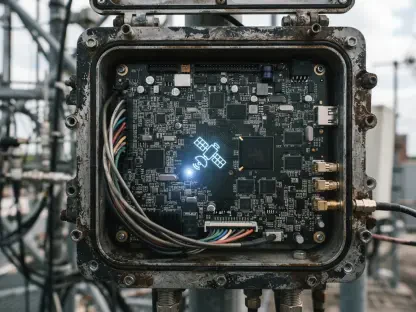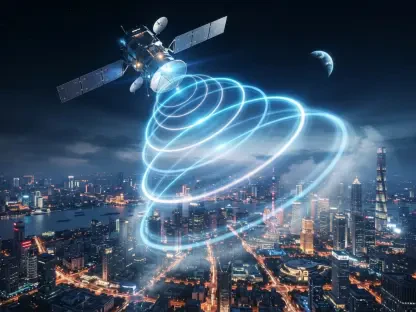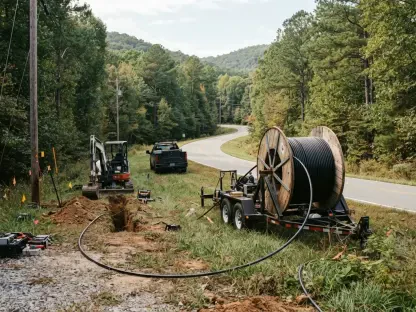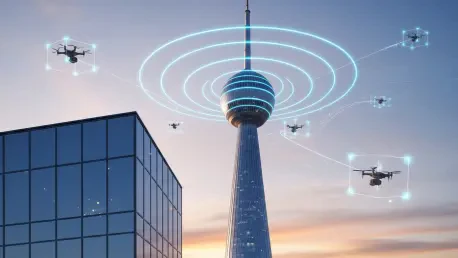

The invisible architecture of the global telecommunications grid is undergoing a profound metamorphosis as wireless towers evolve from passive conduits of data into an active, environment-aware sensory nervous system. This historic transformation is headlined by Integrated Sensing and Communications (ISAC), a technology that allows cellular infrastructure to function as a distributed radar network. Originally envisioned as a 6G milestone, the urgent need to counter asymmetric threats like low-cost drones has fast-tracked ISAC into current 5G deployments, fundamentally changing how the utility of wireless towers is perceived. This evolution examines the geopolitical catalysts, technical breakthroughs, and the commercial future of this dual-purpose technology that bridges the digital and physical worlds.
Telecommunications networks have traditionally served as the silent “pipes” through which information flows, indifferent to the physical objects moving around their base stations. However, the modern security landscape and the proliferation of autonomous systems have rendered this passivity obsolete. By integrating sensing capabilities directly into the communication hardware, the industry is creating a new layer of spatial intelligence that can track movement with centimeter-level precision. This shift is not merely a technical upgrade but a reimagining of what a network can be, moving away from simple connectivity toward a comprehensive awareness of the physical environment.
The Rapid Acceleration of Sensing Capabilities
Market Drivers and the Shift Toward Asymmetric Defense
The primary growth driver for ISAC is the rise of inexpensive drone warfare, which has rendered traditional, high-cost defense systems economically unsustainable in the face of modern tactical shifts. Global conflicts have recently demonstrated how easily a swarm of mass-produced, low-cost drones can overwhelm sophisticated air defenses. This reality has forced a radical rethink of national security strategies, moving away from centralized, expensive radar installations toward a more agile and distributed surveillance model. The urgency is palpable as governments realize that maintaining security in the 2020s requires a different economic logic than that of the previous century.
Adoption is further fueled by the staggering cost disparity in modern conflict, where three-and-a-half-million-dollar interceptor missiles are currently used to stop drones costing only a few hundred dollars. This financial imbalance is a strategic vulnerability that modern militaries can no longer ignore. By repurposing commercial 5G infrastructure, defense planners can achieve wide-area coverage at a fraction of the cost of dedicated military hardware. This transition represents a shift in the economic paradigm of defense, where the existing investments in civilian connectivity are leveraged to provide a protective shield against emerging aerial threats.
Statistical trends indicate a massive pivot by defense planners in the United States, Europe, and Asia toward sensing-as-a-service to provide cost-effective, low-altitude airspace surveillance. From 2026 to 2028, the market for integrated sensing is expected to expand rapidly as national carriers seek to monetize their infrastructure in partnership with security agencies. This trend is characterized by a move toward pervasive monitoring, where every 5G tower becomes a node in a massive, nationwide radar grid. The goal is to create a seamless canopy of detection that leaves no room for unauthorized objects to maneuver undetected, particularly in urban areas where traditional radar often fails.
Real-World Implementation and Multi-Static Deployment
Leading vendors like Ericsson are transitioning from mono-static setups to multi-static arrays, which use synchronized radio clusters to triangulate objects with high precision. In a mono-static configuration, a single radio transmits a signal and listens for its own echo, a method that is limited in accuracy and range. In contrast, a multi-static approach involves one radio transmitting while multiple surrounding radios receive the reflected signals. This collaboration between network nodes allows for much more sophisticated data collection, enabling the system to calculate the exact position, speed, and trajectory of a moving target by comparing the timing and phase of signals reaching different points.
Early-stage trials, such as those conducted at the AT&T Stadium in Texas, demonstrate how existing 5G infrastructure can detect unauthorized unmanned aerial vehicles in high-density civilian environments. These trials have shown that the network can successfully distinguish between small drones and other moving objects, even in the “cluttered” radio environment of a major sporting venue. The success of these tests proves that the high-frequency bands used by 5G are ideally suited for sensing applications, as they offer the high resolution necessary to pick up small signatures. Moreover, the density of these urban networks ensures that there are always multiple lines of sight to any given object in the sky.
Practical applications are moving beyond the laboratory, with tactical private 5G systems currently being deployed for military perimeter security and critical infrastructure protection. These private networks allow sensitive sites, such as power plants or military bases, to maintain an independent sensing bubble that operates outside the public grid. This localized deployment serves as a testing ground for the broader rollout of ISAC capabilities, providing valuable data on how environmental factors like weather and terrain affect signal reflection. As these systems mature, the lessons learned in tactical environments are being integrated into the software updates destined for public-facing commercial networks.
Strategic Perspectives from Industry Leaders
Industry experts view ISAC as the long-awaited killer app that will allow telecommunications providers to finally monetize their massive 5G capital investments. For years, carriers have struggled to find a unique service that justifies the immense cost of 5G rollout beyond just faster mobile internet. Sensing provides a tangible, high-value service that can be sold to government entities, logistics companies, and urban planners. This transition from being a utility provider to a security and intelligence provider represents a significant shift in the business model of the entire telecommunications sector, offering a new path to profitability in a saturated market.
Thought leaders from Ericsson Federal and major national carriers suggest that the move toward sensing-enabled software is a pragmatic bridge to the sensing-native architecture of 6G. While 6G is designed from the ground up to incorporate sensing into its fundamental waveform, the current strategy involves layering sensing capabilities onto existing 5G protocols. This incremental approach allows for immediate deployment and real-world feedback while the industry works toward the more integrated standards of the next decade. It ensures that the infrastructure remains relevant and adaptable, providing a continuous evolution of capability rather than waiting for a single, disruptive generational shift.
Professionals emphasize that the densification of 5G towers provides a unique geographic advantage, as these elevated nodes can see under the horizon where traditional long-range military radar often fails due to the curvature of the Earth. Military radar is typically designed to look up at high-altitude threats at great distances, leaving a gap in coverage for objects flying close to the ground. 5G towers, being much lower and more numerous, fill this gap perfectly. They provide a “look-through” capability in urban canyons and across rolling terrain, ensuring that low-flying drones cannot hide in the shadows of the physical landscape.
Navigating the Road Ahead: Implications and Evolutions
The future of ISAC hinges on the development of a drone economy, where sensing infrastructure provides the necessary air traffic control for commercial delivery services like Amazon. As the sky becomes crowded with thousands of delivery drones, the need for a reliable, low-altitude traffic management system becomes critical. Traditional aviation radar is not granular enough to manage this volume of small craft. ISAC-enabled 5G networks are uniquely positioned to provide this service, acting as the invisible rails that guide autonomous vehicles safely to their destinations while preventing collisions and ensuring adherence to local regulations.
Potential developments include the use of micro-Doppler signatures to not only track objects but to classify them, effectively distinguishing a harmless bird from a commercial drone or a potential threat. By analyzing the subtle frequency shifts caused by the rotation of a drone’s propellers, the network can identify the specific make and model of a craft. This level of detail is vital for security personnel who must decide whether an approaching object requires an intervention. This discriminatory power transforms the network from a simple motion detector into a sophisticated intelligence platform capable of nuanced situational awareness.
Significant challenges remain, particularly regarding FCC regulatory clearances, the high computational power required for real-time signal processing, and the need for cross-vendor hardware cooperation. Processing the massive amount of data generated by multi-static sensing requires a significant upgrade to edge computing capabilities. Furthermore, for a national sensing grid to be effective, hardware from different manufacturers must be able to communicate and synchronize perfectly. Regulators must also navigate the privacy concerns of a population that may be wary of a network that can “see” as well as hear, requiring clear boundaries on how sensing data is used and stored.
The broader implication is a shift in the digital-physical divide, where the airwaves themselves become a ubiquitous sensory organ for national security and urban logistics. This represents a fundamental change in our relationship with the electromagnetic spectrum. It is no longer just a medium for sending messages but a way of interacting with and perceiving the world around us. As this technology becomes standard, the distinction between a communication network and a sensing network will disappear, leading to a world where connectivity and awareness are two sides of the same coin, deeply embedded in the fabric of modern life.
Concluding Insights on the ISAC Paradigm
Integrated Sensing and Communications represented a fundamental shift from telecommunications as a service to telecommunications as environmental awareness. The industry successfully demonstrated that by repurposing existing 5G assets into a distributed radar grid, it could provide a high-tech solution to the economic and physical challenges of modern drone proliferation. This move did more than just enhance security; it created a new economic foundation for the next decade of wireless technology, proving that the infrastructure built for data could also safeguard the physical environment.
As the industry moved toward the 2028 Olympics and the eventual rollout of 6G, the integration of sensing and communication became the standard for all future wireless infrastructure. Stakeholders across the spectrum recognized that the key to a secure and efficient future lay in the ability of the network to perceive its surroundings. Engineers and policymakers began prioritizing the development of open standards that allowed for cross-vendor synchronization, ensuring that the sensing grid was as robust and reliable as the data network it resided upon.
The next steps for the industry involved the refinement of classification algorithms and the scaling of edge computing to handle the increasing density of urban air traffic. Governments and private enterprises collaborated to establish clear regulatory frameworks that balanced the need for security with the protection of individual privacy. These efforts ensured that the spatial intelligence provided by ISAC was used responsibly, fostering a drone economy that was both safe and commercially viable. Ultimately, the transition to sensing-enabled networks provided the necessary infrastructure to manage the complexities of a world where autonomous systems and human activity increasingly overlapped in the same three-dimensional space.