
The long-standing obsession with symmetrical gigabit speeds is finally yielding to a more sophisticated realization that a fast connection is essentially worthless if the underlying network lacks the fundamental ability to monitor its own physical health. For decades, the telecommunications industry has been locked in a “gigabit race,” prioritizing raw speed above all else, but a fundamental shift is occurring where the smartest network, not the fastest one, wins. As broadband evolves into a critical utility supporting remote work and artificial intelligence services, the focus is pivoting from the physical capacity of standards like DOCSIS 4.0 to the operational intelligence of the “outside plant.” This analysis examines the transition from opaque infrastructure to self-aware networks, the role of pragmatic machine learning in maintenance, and why reliability has replaced speed as the primary competitive metric.
Modern digital life demands a level of consistency that raw bandwidth alone cannot provide, especially as the internet becomes the foundation for every aspect of the household economy. While a ten-gigabit connection looks impressive on a marketing brochure, its value evaporates the moment a local node fails or a signal fluctuates during a critical remote operation. Consequently, the industry is moving away from the era of “blind transport” and entering a phase where the network itself acts as a vigilant monitor of its own performance. This evolution signifies that the next great upgrade is not a change in the medium of transmission, but an enhancement of the system’s internal consciousness.
The Shift from Capacity to Connectivity Intelligence
Statistical Trends in Network Telemetry and Operational Efficiency
Adoption rates of telemetry layers are rising as operators seek to eliminate the “opaque” nature of legacy sprawling infrastructures that have historically been difficult to manage. For over forty years, cable operators have managed vast networks with significant blind spots, where visibility often stopped at the edge of the centralized hub. Modern data indicate that the “detective work” of manual fault-finding is the primary driver of high operational costs, leading to a surge in investment for real-time monitoring tools. By embedding sensors and data collection points deeper into the field, companies are finally gaining the ability to see beyond the headend and into the literal streets where service is delivered.
Statistics show that predictive maintenance can significantly reduce “truck rolls” by pinpointing failures before they occur, effectively addressing the “needle in a haystack” problem in field operations. In the past, the resolution process for a service failure was often labor-intensive and wildly inefficient, requiring multiple technicians to hunt for faults across miles of utility poles or underground tunnels. Today, however, the integration of telemetry allows for a targeted response. Instead of dispatching a fleet of vehicles to search for a mystery disruption, operators can send a single, correctly equipped technician to a precise coordinate, saving millions in annual capital and operational expenditures.
Real-World Applications of Smart Outside-Plant Systems
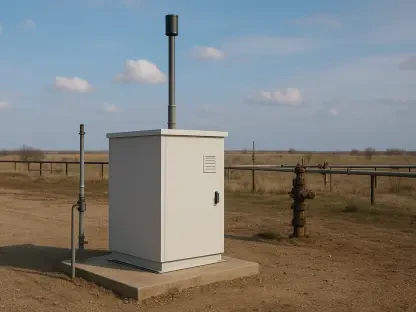
Pioneers like Applied Optoelectronics are already implementing telemetry layers to bring health data from active field devices back to central hubs. This technology transforms the network from a passive transport system into an active, self-monitoring entity that communicates its status in real-time. By moving the data-gathering capabilities to the edge of the network, operators can monitor environmental factors, power levels, and signal integrity with unprecedented granularity. This shift ensures that the physical infrastructure is no longer a silent partner in the connectivity chain but a vocal participant in service quality.
Case studies of operators transitioning from reactive “firefighting” to proactive health management demonstrate the power of automated diagnostic tools. When a system can identify a degrading component before it causes a total blackout, the relationship between the provider and the consumer changes from one of apology to one of reliability. Furthermore, “institutional memory” is being built through shared data patterns, allowing systems to recommend specific repairs based on thousands of prior documented instances. This means that when a technician arrives at a site, they are backed by a collective intelligence that has already analyzed the most likely cause of the anomaly.
Industry Insights on Pragmatic Machine Learning
Thought leaders emphasize that broadband intelligence is about “pragmatic” machine learning—identifying data signatures and correlating events—rather than the hype of large language models. In the telecommunications context, intelligence is not about creating conversational software, but about recognizing the subtle electrical or thermal patterns that precede a hardware failure. This pragmatic approach focuses on high-utility outcomes, such as linking seemingly unrelated signal drops to a specific aging amplifier. By filtering out the noise and focusing on actionable signatures, operators can maintain a clearer vision of their network’s actual state.
Experts like Todd McCrum argue that the historical model of sending multiple technicians to find a single fault is no longer sustainable in a high-demand digital economy. As labor costs rise and consumer tolerance for downtime reaches zero, the industry must rely on automated systems to handle the heavy lifting of diagnostics. The consensus suggests that while DOCSIS 4.0 provides the pipes, intelligence provides the vision, acting as a necessary “pre-check” to ensure networks can handle higher-speed tolerances. Without this intelligent foundation, the high frequencies required for next-generation speeds would likely be too sensitive for the aging, unmonitored plant infrastructure of the past.
The Road Ahead: Toward Self-Healing Infrastructure
The future of broadband lies in “self-healing” networks that observe their own internal state and inform human operators of anomalies before the consumer experiences an outage. Potential developments include the total integration of AI-driven predictive analytics that flag unusual temperature ranges or signal fluctuations as precursors to hardware failure. If a device begins to run hot or a signal starts to deviate from its baseline, the system can automatically reroute traffic or schedule a non-emergency repair. This level of autonomy turns the network into a resilient ecosystem that actively works to preserve its own integrity.
A broader implication of this trend is a shift in consumer expectations where “uptime” and “stability” become more marketable than marginal increases in symmetrical gigabit speeds. As the market reaches a point of diminishing returns for raw throughput, the guarantee of an unbreakable connection becomes the ultimate luxury. However, challenges remain in standardizing data across diverse equipment vendors to create a truly unified “collective intelligence” across the global telecommunications footprint. For the industry to reach its full potential, competing manufacturers must agree on common data protocols that allow different pieces of the network to communicate seamlessly with a centralized brain.
Final Assessment: The New Benchmark for Broadband Excellence
This analysis concluded that the most significant upgrade for modern broadband was not a new hardware standard, but a transformation in network consciousness. By moving from a passive transport system to an active, aware infrastructure, operators improved reliability while lowering long-term capital expenditures. The transition away from reactive maintenance allowed providers to focus their resources on innovation rather than simple survival. This shift represented a fundamental change in the relationship between the service provider and the physical plant, where data finally became as valuable as the bandwidth it managed.
The industry’s path forward proved that intelligence was the essential foundation that allowed the next generation of high-speed connectivity to be both viable and resilient. Operators who prioritized the integration of telemetry and pragmatic machine learning found themselves at a distinct competitive advantage, as they could offer a level of stability that their speed-only competitors could not match. By standardizing APIs and investing in edge-based sensors, the sector successfully moved toward a more sustainable operational model. Ultimately, the successful deployment of these intelligent systems ensured that the digital infrastructure of the era remained capable of supporting the increasingly complex demands of a globalized, AI-driven economy.