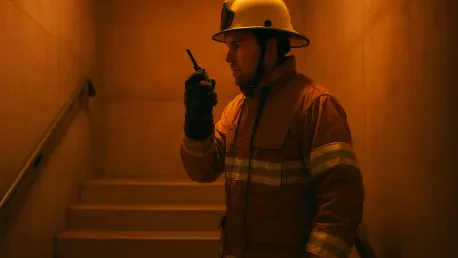

A building that passes a communication coverage test during initial construction may fail only a few years later due to nearby infrastructure developments. This reality highlights the precarious nature of wireless signals within modern architectural masterpieces, where aesthetic appeal often conflicts with life-safety requirements. While commercial structures are frequently equipped with robust Wi-Fi and cellular networks to satisfy the demands of modern tenants, these high-frequency consumer signals do not provide the penetration needed for public safety communication. First responders rely on land mobile radio systems that operate on specific frequency bands, which are easily obstructed by reinforced concrete, steel beams, and energy-efficient low-E glass. Without a dedicated Emergency Responder Communication Enhancement System, or ERCES, these vital professionals risk entering dead zones where they are completely severed from dispatchers and their team members. Ensuring a constant lifeline is not merely a technical preference but a fundamental necessity for operational safety.
Maintaining Signal Integrity in Evolving Environments
The radio frequency environment is a dynamic and shifting landscape that responds to the physical world surrounding a structure. Urban densification plays a significant role in this volatility, as the erection of a new neighboring skyscraper or a multi-story parking garage can suddenly shadow a building from its primary public safety radio tower. This environmental transformation means that a certification granted at the time of a building’s opening is not a permanent guarantee of safety. Consequently, fire codes in many jurisdictions now mandate annual testing to ensure that the internal communication network has not been compromised by external factors. These assessments check for signal strength and clarity, providing building owners with the data necessary to adjust their enhancement systems as the city grows. This continuous cycle of evaluation ensures that the infrastructure designed to protect lives remains as resilient as the responders who depend on it during the most critical moments of an emergency.
Internal renovations and structural upgrades can also have unintended consequences on signal propagation within a facility. The addition of interior partitions, the repurposing of heavy-duty mechanical rooms, or the retrofitting of windows to meet modern sustainability standards can create localized dead zones that were absent during the initial system design phase. Because no two buildings are identical, each ERCES must be engineered with a precise link budget that accounts for the specific gains and losses associated with the building materials and layout. This technical accounting allows engineers to determine the exact amount of amplification required to maintain consistent coverage throughout the premises. By viewing signal integrity as a custom engineering challenge rather than a generic utility, developers can ensure that their communication systems remain effective even as the internal functions and physical configurations of their buildings change. This adaptability is the hallmark of a truly safe and modernized urban environment.
Technical Design and Regulatory Compliance
Engineering an ERCES requires solving the complex “near-far” problem, a technical hurdle that distinguishes public safety systems from consumer wireless networks. Most cellular devices are programmed to reduce their transmission power when they are close to a tower to prevent network congestion. In contrast, public safety portable radios often transmit at a fixed, high power to ensure their signal can escape the building and reach the nearest tower. If a responder is standing directly beneath an indoor antenna, their high-power signal can overwhelm the bi-directional amplifier, creating noise that drowns out the signals of other responders located further away or even interferes with the external public safety network. Designers must expertly balance the system to handle these overwhelming local inputs while still capturing and amplifying the faint signals originating from deep basements or thick-walled stairwells. Achieving this equilibrium is essential to preventing communication failures when multiple units are operating simultaneously.
Navigating the regulatory landscape for emergency communication requires coordination between the building owner, the Authority Having Jurisdiction, and the frequency license holder. The local fire marshal or building inspector typically serves as the primary authority ensuring that a structure meets the minimum safety codes for occupancy. However, the technical performance of the system must also satisfy the requirements of the city or county radio shop, which manages the public safety radio network. An improperly configured or poorly installed ERCES can act as a source of destructive interference, potentially disabling the communication capabilities for an entire precinct if it feeds unwanted noise back into the main radio tower. This dual-approval process ensures that the localized improvements made within a building do not inadvertently degrade the broader network. Professional designers must provide comprehensive documentation and testing results to prove that their system operates in harmony with both local safety mandates.
Financial Responsibility and System Components
The financial responsibility for the installation and upkeep of an ERCES falls entirely on the property owner, representing a significant but necessary capital investment in the building life-safety infrastructure. Unlike traditional utilities that might receive public funding, these enhancement systems are viewed as a legal prerequisite for safety compliance, similar to fire sprinklers or alarm systems. However, the legislative landscape is changing, particularly through the adoption of mandates like Alyssa’s Law, which emphasizes the need for rapid and reliable emergency communication in educational facilities. In many states, this has led to the development of grant programs and dedicated funding pools designed to help schools implement robust panic alarms and communication systems. This shift demonstrates a growing societal recognition that modern safety standards must evolve to include technological solutions. By integrating these systems into the initial development budget, owners can mitigate the risks of costly retrofits and ensure their properties remain fully compliant.
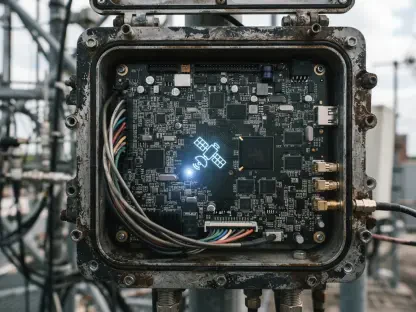
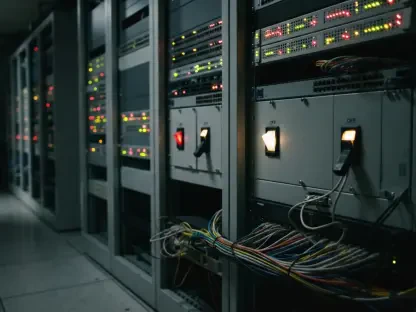
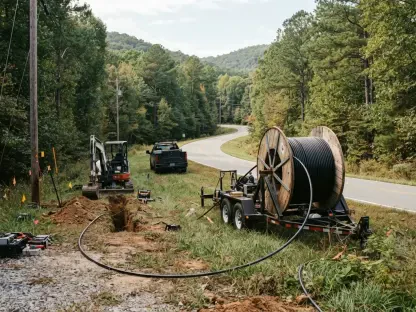
At its core, an ERCES is a sophisticated ecosystem of hardware components designed to bridge the gap between the building interior and the outside world. The heart of this system is the Bi-Directional Amplifier, which processes and strengthens signals traveling both into and out of the structure. On the exterior, a donor antenna is carefully positioned to maintain a clear line of sight with the public safety radio tower, while a network of indoor antennas is distributed strategically to provide uniform coverage. The physical integrity of the system is further protected by specialized components such as plenum-rated cabling, lightning protectors, and dedicated battery backups that ensure functionality even during power outages or fire events. Precision during the installation phase is critical, as minor errors such as a kinked cable or a poorly terminated connector can introduce passive intermodulation, which significantly degrades signal quality. When these high-quality components are installed with expert care, they create a transparent and reliable communication path.
Future Considerations: Strategic Implementation Steps
Property owners and facility managers who proactively addressed communication gaps ensured that their structures remained prepared for any emergency scenario. The most effective approach involved integrating ERCES planning early in the architectural design phase rather than treating it as a post-construction afterthought. By consulting with radio frequency specialists during the initial stages, developers avoided the expensive rework associated with drilling through cured concrete or rerouting complex HVAC systems. This forward-thinking strategy also facilitated the selection of materials that balanced energy efficiency with radio transparency, resulting in buildings that were both sustainable and safe. Furthermore, establishing a rigorous schedule for annual maintenance and testing proved to be the most reliable way to navigate the evolving urban landscape of 2026. These efforts transformed emergency communication from a compliance checkbox into a cornerstone of institutional resilience. Maintaining a vigilant stance on signal integrity ultimately provided first responders with confidence.
The evolution of public safety technology throughout 2026 demonstrated that the gap between commercial connectivity and emergency responsiveness was narrowing. Municipalities that adopted stricter enforcement of communication codes saw a measurable improvement in incident response times and personnel safety. Industry leaders who prioritized the installation of non-proprietary systems allowed for easier upgrades and long-term maintenance, ensuring that buildings did not become obsolete as radio technologies shifted. These proactive measures fostered a culture of safety where the infrastructure worked as a silent partner to the emergency services. Ultimately, the commitment to robust communication systems proved that the most valuable asset in any building was the safety of the people inside it. By investing in these enhancements, the industry recognized that no architectural achievement was worth the risk of a communication blackout during a crisis. This comprehensive approach to building design and public safety became the standard for responsible urban development.