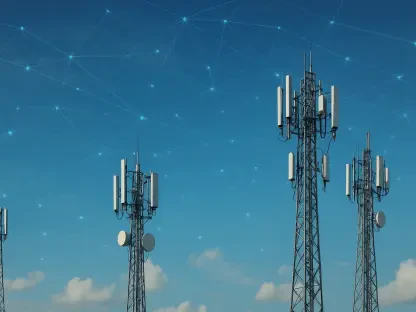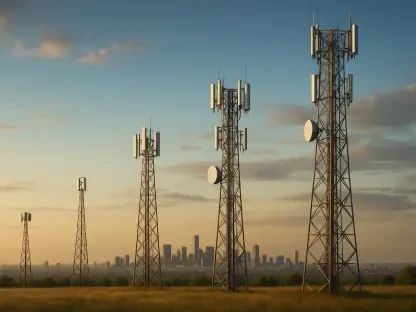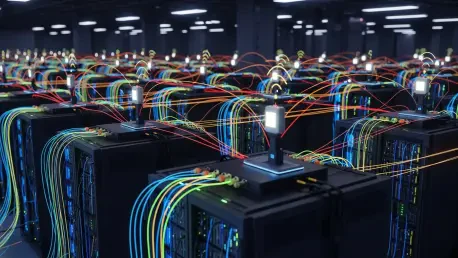

The global race to expand artificial intelligence capabilities has encountered a significant physical obstacle that traditional infrastructure simply cannot overcome fast enough. While silicon and software evolve at light speed, the terrestrial world of fiber-optic installation remains mired in bureaucratic permitting and labor-intensive excavation. Taara, a pioneer in wireless optical communications, has stepped into this void by offering a high-capacity alternative that utilizes light beams rather than buried glass. By bypassing the slow process of underground cabling, the company provides a crucial advantage for operators looking to capitalize on immediate market demand without the typical multi-year delays associated with traditional construction.
Bridging the Connectivity Gap in the Modern Data Era
The unprecedented demand for data processing, fueled by generative AI and cloud computing, has outpaced the available supply of physical network connections. Data center operators are currently facing a chronic shortage of fiber-optic cabling and a lack of skilled labor to install it, creating a bottleneck that threatens global digital growth. Taara addresses this by providing high-speed wireless links that effectively eliminate the “opportunity cost” of idle hardware. This allows facilities to come online and begin processing data in a fraction of the time required for terrestrial infrastructure.
From Stratospheric Ambitions to Grounded Infrastructure
The technology underpinning these wireless links was originally developed for Google’s Project Loon, which sought to provide internet via high-altitude balloons. Spun off in early 2025, Taara has pivoted this aerospace-grade optical communication technology toward grounded terrestrial applications to meet the infrastructure crisis. Historically, the industry relied almost exclusively on underground fiber, but the logistical nightmare of modern permitting has made this reliance a liability. By bringing balloon-tested technology to the ground, the company offers a robust solution for an industry that can no longer afford to wait for the slow process of burying cables.
The Technological and Strategic Shift Toward Wireless Optical Links
Tackling the Financial Burden: Why Speed Matters
When a data center operator invests millions in advanced compute hardware, every day that equipment sits idle due to a lack of connectivity represents a significant financial loss. Taara’s 20 Gbps wireless optical links serve as a vital “bridge” solution, allowing facilities to become operational and generate revenue while waiting for permanent fiber. These links can transmit data over distances of 20 kilometers, ensuring that the depreciation of expensive chips does not erode the facility’s profit margins. Moreover, they provide an essential redundancy layer, protecting against the catastrophic downtime often caused by physical fiber cuts.
Scaling Solutions: Addressing Mid-Market and Beyond
While hyperscale data centers require massive bandwidth, Taara has strategically entered the market by focusing on Tier 2 and Tier 3 facilities. These mid-range data centers typically operate near the 100 Gbps threshold, which can be met by stacking multiple 20 Gbps wireless units in a modular fashion. In recent pilot testing, the company successfully demonstrated cumulative speeds of 160 Gbps, proving that wireless solutions can scale with demand. This approach provides a clear roadmap for reaching terabit-per-second capacities, eventually allowing the technology to service the most demanding players in the global compute industry.
Navigating Adoption: The Path to Industry Trust
The data center market is notoriously conservative, prioritizing extreme uptime above all other metrics, which makes the introduction of wireless elements a challenge. Taara is currently navigating the “awareness to consideration” phase, working to convince engineers that light-based links are as stable as underground cables. To expand its footprint, the company is looking beyond central hubs toward enterprise and metro interconnect markets. This strategy includes developing specialized hardware for edge data centers where last-mile connectivity is a frequent struggle, ensuring that high-capacity throughput is available exactly where it is needed most.
The Road Ahead for Wireless Terabit Communication
The future of interconnectivity is moving toward a hybrid ecosystem where wireless optical links complement traditional buried networks. As terrestrial fiber becomes prohibitively expensive to install in densely populated urban environments, wireless solutions offer a flexible and rapid alternative. Innovations in beam-steering and weather-mitigation technology from 2026 and beyond are expected to make these links even more resilient in diverse climates. Experts suggest that as data demands surge, wireless optics will transition from a temporary stopgap to a permanent fixture of urban and suburban digital infrastructure.
Implementing Wireless Connectivity Strategies for Data Operators
Infrastructure professionals can mitigate growth risks by viewing wireless links as a standard component of their speed-to-market strategies. Using these links for partial facility launches allows companies to secure customers and revenue well ahead of fiber completion. Additionally, the use of wireless systems as a redundant backup significantly improves a facility’s disaster recovery profile and overall resilience. By evaluating the total cost of ownership against the escalating costs of digging and permitting, operators can ensure their compute resources are working at peak capacity from the moment they are installed.
Defining the Future of High-Speed Data Interconnectivity
The successful integration of wireless optical technology marked a turning point in how the industry handled infrastructure bottlenecks. Operators who adopted these high-speed links discovered that they could bypass the physical constraints of the earth, ensuring that hardware delivery was no longer delayed by terrestrial construction. This transition proved that decoupling connectivity from underground permits was the most effective way to sustain the momentum of the digital era. Ultimately, the ability to beam data through the air established a more flexible, resilient, and responsive global network that was no longer tethered to the slow pace of traditional excavation.