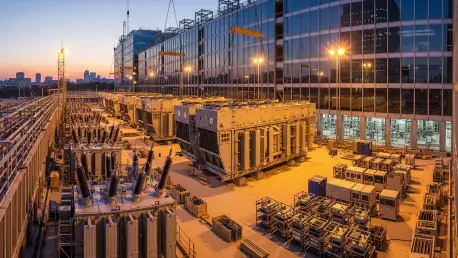

The breakneck speed of global digitalization has transformed the humble data center from a mere storage facility into a high-stakes arena where the mastery of logistics determines the line between a multi-billion-dollar success and a catastrophic failure. Modern construction has evolved far beyond traditional brick-and-mortar methodologies, as the scale of these facilities now requires a synchronization of global supply chains that was once reserved for the aerospace or automotive industries. While logistics was historically viewed as a back-end support function, it has emerged as a core strategic pillar that dictates the entire project timeline from inception to completion. The complexity of orchestrating thousands of specialized components across international borders means that a single delay in the arrival of a high-voltage transformer or a liquid cooling unit can cascade into months of lost revenue and mounting labor costs for the world’s largest cloud providers. Success in this environment is no longer just about having the capital to build.
The Economic Impact of Digital Expansion
Growth Projections: Scaling the Global Infrastructure
The sheer scale of the upcoming data center build-out is historic, with nearly 100 gigawatts of new capacity expected to be added globally by 2030. This represents a doubling of current supply, driven by a consistent annual growth rate that shows no signs of slowing down. To support this expansion, infrastructure spending is projected to reach approximately $3 trillion over the next few years, with over a trillion dollars dedicated specifically to the physical construction of new sites. This massive financial commitment reflects the critical role that digital infrastructure plays in the modern economy, as governments and corporations alike prioritize the development of sovereign data capabilities. As the demand for cloud services continues to soar, the focus has shifted from small-scale upgrades to the construction of massive hyperscale campuses that can support the needs of entire regions. These projects are characterized by their unprecedented size and the speed at which they must be completed.
Capital Allocation: Prioritizing Physical Asset Quality
Capital allocation for these massive builds has shifted toward high-precision environments where every square foot is optimized for performance and reliability. Investors are now looking at data centers not just as real estate assets, but as critical utility hubs that provide the backbone for the digital world. The transition toward larger, more centralized facilities requires a more sophisticated approach to project management and procurement, as the traditional localized construction model is no longer sufficient to handle the volume of materials needed. This paradigm shift has led to the emergence of global procurement teams that work across multiple time zones to secure the necessary equipment and labor. Furthermore, the rising cost of materials and the volatility of the global market have made it essential for developers to lock in prices and delivery schedules early in the design phase. The ability to manage these economic risks effectively is now a key differentiator for the most successful players in the sector.
Artificial Intelligence: Redefining Density and Demand
Artificial intelligence is the primary engine behind this rapid acceleration in demand, fundamentally changing how data centers are designed and operated. By 2030, AI is expected to account for half of all data center workloads, up from just a quarter today, requiring a significant overhaul of existing infrastructure. This shift necessitates facilities that can support significantly higher power densities and more advanced cooling systems than previous generations of data centers. Traditional air-cooling methods are often insufficient for the intense heat generated by high-performance GPU clusters, leading to a surge in the adoption of liquid cooling technologies. These advanced systems require specialized plumbing and more robust power distribution architectures, adding layers of complexity to the construction process. As a result, developers must work closely with hardware manufacturers to ensure that the physical site is prepared for the specific requirements of next-generation AI hardware.
Power Management: Engineering for High-Performance Workloads
The integration of AI into data center operations is also driving the demand for more sophisticated power management solutions. As power densities increase, the need for reliable and efficient backup power systems becomes even more critical. Large-scale battery storage and hydrogen fuel cells are being explored as potential alternatives to traditional diesel generators, as developers look for ways to meet their sustainability goals while maintaining high levels of uptime. This push for innovation is not just about environmental responsibility; it is also about ensuring that the facility can handle the volatile power demands of AI workloads. The construction of these sites requires a high degree of technical expertise, as engineers must balance the need for high-performance computing with the constraints of the local power grid. Consequently, the build-out is not just about quantity; it is about creating more sophisticated environments capable of handling the most demanding and intensive workloads in the world.
Navigating Supply Chain and Operational Risks
Specialized Logistics: Handling Fragile and High-Value Equipment
The equipment required for modern data centers—including massive generators and liquid cooling systems—is extremely expensive and sensitive to environmental factors. Logistics teams must manage the transport of these items across continents, ensuring they are protected from vibrations and temperature swings that could damage internal components. This requires a high level of coordination between international shipping companies, customs agents, and final-mile delivery specialists. The loss or damage of a single piece of specialized equipment can result in significant delays and financial losses, making risk mitigation a top priority. Consequently, many developers are investing in specialized packaging and real-time monitoring solutions to track the condition of their cargo throughout the entire journey. This proactive approach allows for immediate intervention if an issue is detected, reducing the likelihood of a major setback. The complexity of this process highlights the need for a truly dedicated and expert logistics partner.
International Trade: Navigating Regulatory and Customs Hurdles
International transport involves navigating a maze of regulations and logistical hurdles that can vary significantly from one country to another. Managing customs documentation and ensuring compliance with local import laws is a critical part of the logistics process, requiring a deep understanding of the global trade environment. Delays at the border can quickly escalate into major project disruptions, as the installation of key components often follows a rigid sequence. For example, the electrical infrastructure must be in place before the cooling systems can be installed, and any delay in the arrival of transformers can halt the entire project. To mitigate these risks, logistics experts are increasingly using predictive analytics to identify potential bottlenecks and develop contingency plans. By anticipating challenges before they occur, developers can maintain the momentum of the build and ensure that the facility is ready for operation on schedule. This level of coordination is essential for managing the high-stakes data center builds.
Resource Scarcity: Addressing Lead Times and Competition
The current market is defined by severe supply chain strains, with lead times for critical electrical infrastructure often stretching up to two years. Developers who do not secure their logistics and procurement slots years in advance risk being unable to finish their projects, regardless of their financial resources. This reality has forced a change in how projects are planned, with procurement now occurring long before the first shovel hits the ground. The competition for these critical components is intense, as hyperscale developers and traditional enterprises all vie for the same limited supply of transformers, switchgear, and generators. In this environment, having a strong relationship with suppliers and a robust logistics strategy is more important than ever. Companies that can demonstrate a clear plan for delivery and installation are more likely to secure the necessary equipment and maintain their construction timelines. This strategic foresight is now a fundamental and critical requirement for success in the industry.
Modular Construction: Solving Labor and Geographical Constraints
Furthermore, the tendency to build data centers in specific industrial corridors creates intense competition for local labor and transportation resources. These clusters offer advantages such as proximity to fiber networks and power infrastructure, but they also lead to a shortage of skilled workers and increased costs for local services. As multiple large-scale projects compete for the same pool of electricians, plumbers, and specialized technicians, the risk of labor shortages becomes a major concern. To address this challenge, some developers are looking toward modular construction techniques that allow for components to be pre-fabricated off-site and then assembled on-site. This approach reduces the reliance on local labor and can significantly speed up the construction process. However, it also introduces new logistical challenges, as the transport of large, pre-assembled modules requires specialized equipment and careful planning. The ability to navigate these constraints is essential for completing projects on time and budget.
Strategic Resilience: Staging Hubs and Real-Time Visibility
Successful organizations in this space prioritized the implementation of regional staging hubs to decouple the arrival of equipment from the immediate needs of the construction site. These facilities acted as a vital buffer, allowing project managers to store critical components in a controlled environment until the exact moment of installation. By adopting this approach, teams effectively mitigated the risks associated with global shipping delays and ensured that the site remained unclogged by premature deliveries. Furthermore, the integration of advanced logistics software provided real-time visibility into the entire supply chain, enabling stakeholders to make data-driven decisions when disruptions occurred. This strategy proved essential for maintaining the rigid installation sequences required for high-density AI environments. Moving forward, the industry utilized these insights to develop more flexible procurement models that accounted for market volatility while securing long-term supply for multi-phase expansions.
Future Implementation: Standardization and Advanced Deployment
Strategic planners also looked toward modularity and standardized designs to simplify the logistics of global builds. By creating a set of universal component specifications, they reduced the complexity of sourcing and allowed for greater flexibility in supplier selection. This standardization facilitated the rapid deployment of capacity across diverse geographies, as teams applied a consistent playbook to every project. Additionally, early engagement with local utilities and government bodies helped to streamline the permitting process and ensure that power and connectivity were available when the facility was ready for activation. The industry also explored the use of autonomous transport and AI-driven route optimization to further enhance the efficiency of final-mile deliveries. These actions established a blueprint for future developments, ensuring that the next wave of digital infrastructure was built on a foundation of operational resilience and strategic foresight. This comprehensive approach allowed for sustainable growth.