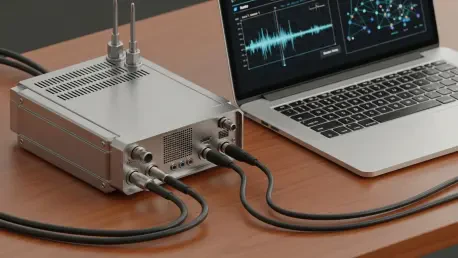

The global telecommunications landscape often overlooks isolated regions where traditional cellular networks and fiber optics fail to reach due to geographic or economic barriers. In these peripheral spaces, reliance on satellite links or aging infrastructure creates a precarious situation for emergency services and local governance alike. The official release of the Mercury digital radio modem by Rhizomatica marks a significant shift toward decentralization by providing a high-performance, open-source solution for High Frequency (HF) data transmission. Operating as a specialized protocol within the broader HERMES software suite, Mercury utilizes Orthogonal Frequency Division Multiplexing (OFDM) to establish robust peer-to-peer Automatic Repeat Request (ARQ) connections. This technology allows for reliable store-and-forward email services and file transfers over immense distances without any reliance on centralized internet backbones. By prioritizing autonomy and resilience, this project addresses the critical need for secure communication tools. The system ensures that even the most remote communities maintain the ability to exchange vital information during periods of total infrastructure failure or systemic isolation. Through the clever application of digital signal processing, the modem transforms standard amateur radio equipment into a sophisticated data terminal, bridging the digital divide in a practical and cost-effective manner.
Advanced Architecture and Adaptive Modulation
Technically, the Mercury modem is constructed using the C programming language and is distributed under the GPL-3.0 license, which guarantees that the source code remains a shared public resource for the global engineering community. A standout feature of its internal design is the sophisticated modular architecture that incorporates a dynamic gear-shifting mechanism based on a hybrid Signal-to-Noise Ratio (SNR) and delivery feedback system. This allows the modem to adjust its transmission speed and robustness in real-time, reacting instantly to the volatile atmospheric conditions that typically plague High Frequency radio bands. By integrating field-proven FreeDV digital data modes directly into its resident pool, the software avoids the performance overhead associated with constant codec re-initialization during active sessions. This streamlined approach allows for higher data throughput and lower latency, even when the ionosphere is experiencing significant disturbances. Such technical refinement ensures that the modem remains operational when traditional communication channels have long since succumbed to noise or fading. The integration of these advanced algorithms represents a leap forward in making open-source tools competitive with high-end proprietary solutions.
Beyond the core algorithmic innovations, the deployment of this modem is supported by a comprehensive distribution strategy that includes pre-built binaries for both Windows and Debian-based Linux environments. This accessibility is vital for ensuring that users with varying levels of technical expertise can implement the system using standard HF transceivers. The design facilitates a seamless interface between the radio hardware and modern computing devices through a flexible TCP interface, allowing it to function much like a traditional network modem. This architecture simplifies the integration of the modem into existing digital workflows, such as automated email servers or remote telemetry collection points. Because the system is designed to be hardware-agnostic, it effectively lowers the barrier to entry for organizations that cannot afford the high costs of specialized military or commercial grade modems. The focus on cross-platform compatibility and ease of installation ensures that the technology can be rapidly deployed in response to sudden crises or as part of long-term infrastructure projects in developing regions. By maintaining a resident pool of digital modes, the software provides a stable platform for ongoing experimentation and localized customization by radio enthusiasts.
Benchmarking Resilience and Industry Standards
A primary objective of this project is to achieve technical parity with expensive commercial alternatives that have historically dominated the professional and humanitarian sectors. Extensive testing indicates that Mercury performs at nearly the same efficiency as proprietary modems under optimal conditions, while notably outperforming them in low-SNR or high-interference environments. This resilience is a direct result of the custom ARQ protocol, which was meticulously designed to handle the bursty and unpredictable nature of long-distance radio propagation. David Rowe, the creator of Codec 2 and a prominent figure in the digital radio space, has specifically praised the integration of FreeDV waveforms with this robust error-correction framework. The ability to maintain a connection despite heavy signal fading or atmospheric noise is a critical differentiator for users operating in challenging tropical or polar environments. By matching or exceeding the capabilities of closed-source systems, the project proves that community-driven development can produce tools of the highest industrial caliber. This shift away from proprietary black-box technology allows for greater transparency and security, as users can verify the integrity of the communication protocols they rely on for sensitive data transmission.
The broader impact of establishing an open-source standard for HF digital communication extends beyond simple performance metrics to the very foundations of global telecommunications policy. By providing a high-quality alternative to proprietary systems, the project challenges the economic barriers that often prevent NGOs and small-scale community networks from accessing reliable long-range data links. Industry experts observe that the standardization of these open protocols encourages a more diverse ecosystem of hardware and software developers to build compatible tools. This collaborative environment fosters innovation that is directly responsive to the needs of the end-users rather than the profit motives of a few large corporations. Furthermore, the modem remains fully compliant with existing amateur radio regulations, ensuring that it can be legally utilized by the global ham radio community for emergency preparedness and technical experimentation. This alignment with regulatory frameworks is essential for widespread adoption, as it allows for the legal testing and refinement of the protocol on a global scale. As more operators adopt the system, the resulting network effect increases the overall resilience of the global amateur radio infrastructure, turning it into a viable secondary data network for various humanitarian applications.
Strategic Implementation for Remote Connectivity
The integration of the Mercury modem into the HERMES software suite represents a synthesis of high-level digital signal processing and a deep-seated humanitarian mission. This combination is particularly relevant for marginalized communities that have been historically underserved by commercial telecommunications providers. Rosy Schechter of the Amateur Radio Digital Communications (ARDC) has highlighted the modem’s potential to empower these populations by providing the necessary tools for self-governed and autonomous communication. By removing the need for recurring subscription fees or reliance on foreign-owned infrastructure, the modem allows local organizations to maintain control over their own data and communication networks. This sovereignty is crucial for protecting the privacy and security of community-led initiatives, especially in regions where political stability may be a concern. The modem serves as a foundational piece of technology that supports a wide range of applications, from medical coordination in remote clinics to the monitoring of environmental sensors in protected ecological zones. The democratization of such powerful communication tools ensures that the benefits of digital connectivity are shared more equitably across the globe, regardless of geographic or financial constraints.
The successful launch of the Mercury modem established a clear path forward for those seeking to deploy resilient and autonomous data networks in the most demanding environments. Organizations prioritized the integration of the source code from public repositories to build custom solutions tailored to their specific regional requirements. Developers actively participated in the support ecosystem through mailing lists and technical demonstrations, ensuring that the protocol continued to evolve alongside changing hardware capabilities. Practical implementation steps involved the selection of compatible HF transceivers and the configuration of localized gateway stations to facilitate seamless email and file transfers. These efforts moved the focus toward long-term maintenance and the training of local operators who took charge of their own communication infrastructure. By focusing on these actionable outcomes, the project moved beyond a mere technical release and became a catalyst for global community-led telecommunications development. Stakeholders considered the implications of this technology for future disaster response strategies and invested in the expansion of the HERMES suite to include even more robust data modes. The transition from experimental software to a staple tool for emergency services underscored the importance of maintaining open-source alternatives in a world increasingly reliant on digital connectivity.