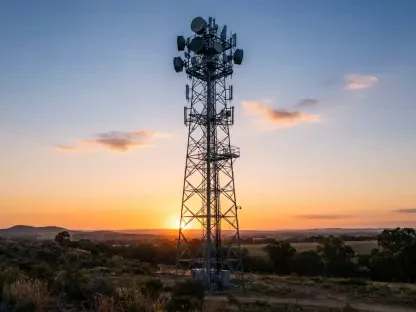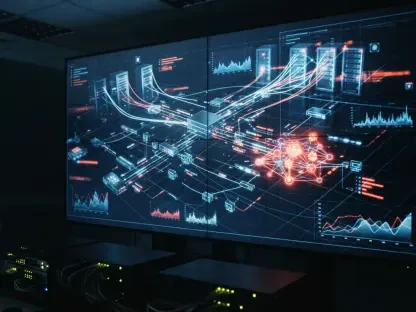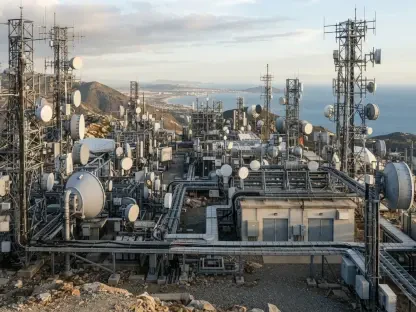

Orange is pioneering the use of AI-RAN to provide emergency responders with real-time translation services, facilitating faster communication in critical multilingual scenarios. This integration represents a seismic shift in how mobile infrastructure functions, moving away from simple data relay toward a model of distributed intelligence. By embedding high-performance computing directly into the radio access network, operators are now capable of hosting localized artificial intelligence models that respond with sub-millisecond latency. This evolution, driven by the collaboration between NVIDIA and Nokia, transforms the traditional cell tower into a micro-datacenter capable of processing heavy workloads. As 5G reaches maturity and the roadmap for 6G becomes clearer, the focus has pivoted toward creating a unified architecture where connectivity and computation exist as a single, seamless entity. The implications of this change are vast, touching everything from public safety to industrial automation and everyday consumer experiences across the globe.
Bridging Connectivity and Computing in Live Networks
Implementing Proof of Concepts: T-Mobile’s Milestone
A significant turning point in this technological shift occurred in Bellevue, Washington, where T-Mobile successfully executed the world’s first AI-RAN call on a commercial network. This achievement serves as a proof of concept for the feasibility of integrating AI-native infrastructure into existing 5G frameworks without disrupting standard operations. The call utilized the NVIDIA Aerial RAN Computer platform, powered by Nokia’s CUDA-accelerated radio access network software to manage complex data flows. By leveraging massive multiple-input multiple-output radios and a 5G Standalone core, the operator demonstrated that a single computing platform could manage both high-speed data transmission and sophisticated AI processing. This dual-purpose infrastructure allows for more efficient spectrum utilization and brings computational power closer to the end-user. Such a breakthrough indicates that cellular sites are no longer just transmitters but are evolving into vital nodes for the modern AI economy.
Global Expansion: Scaling Intelligence Across Multiple Borders
The momentum behind AI-RAN is reflected in the broad participation of nearly 20 global telecom operators that are now moving toward commercialization. Industry leaders such as BT, Deutsche Telekom, Orange, and Elisa are currently in various stages of validation and deployment across their respective territories. For example, BT is preparing for live trials in Birmingham from 2026 to 2028, while Elisa has already completed Europe’s first over-the-air field trial, successfully running voice and video analytics concurrently on a 5G spectrum. Furthermore, a significant expansion of computing infrastructure is taking place across the Middle East and Africa, where operators like e& and Silknet are scaling their networks to accommodate high-capacity workloads. This collective movement indicates an industry consensus that the future of telecommunications depends on providing intelligence at the edge. By processing data locally, these companies are effectively reducing latency and enhancing service reliability for critical tasks.
The Infrastructure and Ecosystem Fueling Intelligent Networks
Hardware Innovations: Powering Distributed Radio Sites
To support these intensive computational requirements, new hardware configurations like the MGX 2U and MGX 4U servers have been introduced to the market. These systems are specifically optimized for centralized radio network sites and are powered by the RTX PRO 6000 Blackwell Server Edition GPUs to handle massive data throughput. These servers provide the computational muscle necessary to run generative models while simultaneously managing the physical layer of the radio network. On the software side, the integration of open AI models like Nemotron into network management suites represents a critical development in automation. Nokia and Cisco are incorporating these models to automate routine network operations, identify technical faults, and optimize performance autonomously without human intervention. This shift toward autonomous networks reduces operational overhead and allows for predictive maintenance, ensuring higher uptime and a superior quality of service for the growing number of connected devices.
Industry Transformations: From Robotics to Public Safety
The synthesis of AI and telecom infrastructure is fostering a variety of innovative applications that were previously impossible on legacy systems. Deutsche Telekom is currently leveraging its Industrial AI Cloud to host models that coordinate complex robotic tasks, using the network edge for real-time fine-tuning and the central infrastructure for large-scale training. This allows factory robots to adjust their movements instantaneously based on environmental data processed just meters away. Meanwhile, companies like Tata Consultancy Services and NTT DATA are developing sophisticated AI agents to validate site installations and detect early signs of network degradation. These agents can predict hardware failures before they occur, significantly lowering operational costs and improving fault resolution times for service providers. By moving intelligence to the edge, the industry is creating a more resilient foundation for autonomous systems, ensuring that the network becomes an active participant in the digital transformation of global commerce.
Strategic Recommendations for an AI-Driven Future
The collaboration between global technology leaders and telecom giants established a foundation where the network ceased to be a passive pipe for data. By merging existing assets like fiber and spectrum with GPU-accelerated computing, the industry created a unified platform for the next generation of services. Organizations recognized that staying competitive required a transition from traditional hardware toward software-defined, AI-native architectures. The successful trials completed by early adopters provided a blueprint for how to scale these solutions across diverse geographic regions and regulatory environments. Moving forward, stakeholders should prioritize the standardization of AI-RAN interfaces to ensure interoperability between different vendors and hardware providers. Investing in specialized talent capable of managing both radio frequency engineering and machine learning will be essential for maximizing the value of these investments. As the world moved toward a more automated reality, the telecommunications sector successfully repositioned itself as the backbone.