
The seamless integration of international military technology into domestic law enforcement has established a sophisticated pipeline connecting foreign conflict zones directly to American residential neighborhoods. This intricate feedback loop relies heavily on federal funding to develop and refine advanced artificial intelligence systems in high-intensity regions such as Gaza and the West Bank before these tools are transitioned into civilian policing applications. Northern Nevada has emerged as the indispensable physical cornerstone of this network, providing the massive industrial scale and computational infrastructure required to maintain a global system of automated surveillance and control. As these technologies migrate from the battlefield to the local precinct, the distinction between military engagement and domestic public safety continues to blur, creating a precedent where experimental warfare tactics become standardized procedures for monitoring local populations. This operation reflects a significant shift in how data is utilized to manage behavior on a worldwide scale.
Technology Transfer: The Mechanics of Combat-Tested Systems
The transition of high-tech monitoring tools from foreign territories to local police departments represents a calculated strategy of combat-proven refinement. In contemporary conflict zones, AI-driven systems are deployed to monitor large populations, track movement patterns, and identify specific targets with unprecedented speed, serving as a real-world laboratory for surveillance optimization. Once these algorithms have been battle-tested and their effectiveness demonstrated abroad, they are repackaged and sold to domestic law enforcement agencies under the guise of modernized public safety. This cycle effectively transforms foreign military strategies into standard operating procedures within the United States, ensuring that innovations meant for the theater of war eventually find their way to American streets. This process not only accelerates the militarization of local police but also bypasses traditional developmental hurdles by utilizing international crises as the primary testing ground for domestic tools.
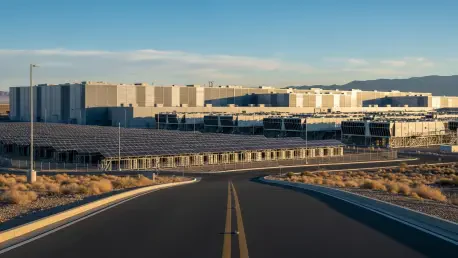
Building on this foundation, the vast industrial landscape of Northern Nevada, particularly within the corridor spanning Reno and Sparks, provides the necessary physical infrastructure for this influx of data and algorithmic complexity. The Great Basin has seen a rapid proliferation of hyperscale data centers that offer the immense computational power and storage capacity essential for these AI systems to operate in real-time. These sprawling facilities act as the central nervous system for the global surveillance pipeline, processing millions of data points every second to facilitate tracking and identification. Without the availability of this specific geographical region’s land and energy resources, the complex algorithms required for pervasive monitoring would lack the necessary physical framework to function at such a massive scale. Consequently, the local environment of Nevada has been co-opted into a global apparatus, where regional infrastructure becomes a critical component in a network of international surveillance that extends far beyond the borders of the state.
Domestic Integration: Algorithmic Targeting and Public Control
A concerning shift toward military-grade artificial intelligence in policing is most evident in the adoption of automated systems designed for rapid target identification. In foreign conflicts, systems like Lavender and The Gospel have been utilized to generate target lists with minimal human intervention, prioritizing processing speed over the nuanced judgment typically required in high-stakes environments. This methodology creates a high risk of error and results in significant collateral consequences, yet the fundamental logic of these systems is increasingly mirrored in domestic law enforcement software. When the responsibility for identifying potential threats or criminal suspects is delegated to a black-box algorithm, the potential for systemic bias and irreversible mistakes expands significantly. The transition toward data-driven decision-making often ignores the ethical complexities of human life, treating individuals as data points to be categorized and acted upon according to the dictates of a pre-programmed predictive model.
Within the United States, this trend manifests through the widespread implementation of smart camera networks and automated license plate readers that create a persistent digital dragnet. Companies such as Flock Safety and Axon have successfully marketed these devices as essential tools for neighborhood safety, while simultaneously building vast, interconnected databases that are accessible to thousands of police departments across the country. This domestic application of surveillance technology mirrors the tactical “kill chains” used in military operations, where the goal is to identify, track, and intercept targets through a continuous loop of data collection. The front line of technological warfare has moved into the infrastructure of American suburbs, where daily activities are monitored by systems originally designed for high-intensity combat. This integration represents a fundamental change in the relationship between the state and the citizen, as the tools of foreign occupation are repurposed to manage and monitor domestic life under the banner of security.
Resource Management: Environmental Impacts and Strategic Oversight
Beyond the immediate concerns regarding civil liberties and data privacy, the physical presence of massive data centers imposes a substantial burden on local communities and the natural environment. In the arid climate of the Great Basin, the construction and operation of these facilities consume vast amounts of land and require millions of gallons of water for cooling, threatening delicate groundwater supplies that are vital to the region. Residents often find themselves dealing with the noise pollution and environmental degradation associated with these industrial sites while receiving very few long-term economic benefits or job opportunities in return. The extraction of local resources to support a global infrastructure of control highlights a troubling prioritization of technological expansion over the ecological health and freedom of the local community. As Nevada continues to host the hardware of the surveillance pipeline, the environmental costs serve as a stark reminder of the material reality behind the digital systems that monitor the modern world.
The implementation of comprehensive oversight frameworks and the prioritization of community-led data governance became essential steps in mitigating the risks posed by this global surveillance network. Legislative bodies began to mandate that all AI-driven policing tools undergo rigorous civil rights audits and public impact assessments before being funded or deployed on American streets. This shift in policy ensured that the experimental methodologies used in international conflict zones were no longer imported into domestic law enforcement without significant scrutiny and constitutional verification. Furthermore, regional planners in the Great Basin initiated stricter environmental protections, requiring data center operators to transition to closed-loop cooling systems and provide substantial investments in local infrastructure. These measures provided a pathway for the community to reclaim its resources and assert its right to privacy in an increasingly automated world. By fostering transparency and demanding accountability from both private corporations and government agencies, the foundation for a more ethical and sustainable technological future was finally established.