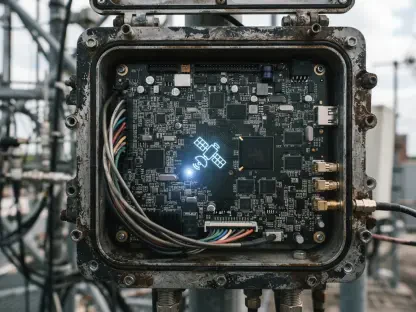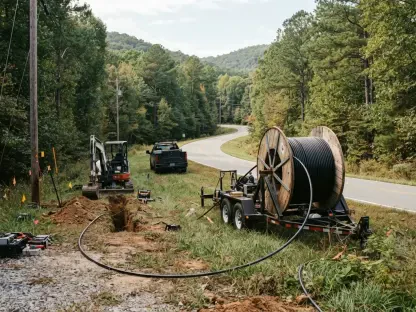

The proliferation of interconnected devices across industrial landscapes has shifted from a visionary concept to a fundamental operational requirement for global enterprises seeking real-time data visibility. As organizations transition from pilot programs to massive deployments involving hundreds of thousands of sensors, the friction of fragmented proprietary systems often becomes a significant barrier to entry. This is where standardized low-power wide-area networks provide the necessary framework to ensure that disparate hardware can communicate across vast distances without requiring excessive infrastructure investment. By focusing on open standards, the industry has addressed the critical need for a common language that allows a water meter in a basement and a moisture sensor in a remote field to use the same underlying gateway. The ability to manage these assets at scale relies heavily on the maturation of the ecosystem, which has now reached a point where plug-and-play functionality is no longer a marketing slogan but a technical reality for system integrators.
Streamlining Global Connectivity and Interoperability
Unified Communication Protocols: Breaking Down Silos
The core strength of the LoRaWAN protocol lies in its specialized architectural layers that prioritize low power consumption while maintaining long-range transmission capabilities. Unlike traditional cellular or Wi-Fi networks that often struggle with high overhead and significant energy demands, this standard utilizes a star-of-stars topology where gateways act as transparent bridges between end-devices and a central network server. This structural choice reduces complexity at the edge, allowing devices to remain in a sleep state for extended periods and wake up only when scheduled or triggered by specific environmental events. Consequently, the overhead of managing millions of unique identifiers is handled efficiently within the backend, ensuring that data packets from a specific vibration sensor on a factory floor are routed correctly and securely. Furthermore, the protocol’s flexibility in handling various frequency bands allows for international operations, making it a preferred choice for logistics companies that must track high-value assets across borders.
Certification Standards: Guaranteeing Hardware Reliability
Certification programs managed by the LoRa Alliance have played a pivotal role in eliminating the guesswork that previously plagued large-scale hardware procurement processes. When a device carries the certification mark, it signifies that the hardware has undergone rigorous testing to ensure compliance with the latest technical specifications, thereby preventing network instability caused by non-standard behavior. This level of rigor is essential for utility companies that deploy sensors with a projected lifespan of fifteen to twenty years, as they cannot afford the risk of hardware obsolescence or compatibility issues. In the 2026 landscape, the availability of a diverse marketplace of certified sensors and gateways from multiple vendors fosters healthy competition, driving down unit costs while pushing the boundaries of what these devices can achieve. This ecosystem diversity ensures that no single company holds a monopoly over the technology, providing end-users with the peace of mind that their long-term infrastructure investments are protected by a collaborative, industry-wide commitment to interoperability.
Security Frameworks and Future-Proofing Assets
End-to-End Encryption: Securing Data at the Edge
Security remains a paramount concern for any enterprise-grade deployment, and the LoRa Alliance has integrated robust cryptographic safeguards directly into the protocol to mitigate potential vulnerabilities at every layer. Every device joining a network must undergo a secure join procedure that involves mutual authentication between the device and the network server, utilizing unique AES-128 keys that are never transmitted over the air. This architecture ensures that even if a single device is physically tampered with, the security of the broader network remains intact, preventing cascading failures across the system. Additionally, the inclusion of firmware updates over the air, commonly known as FUOTA, allows operators to patch vulnerabilities or add new features to their entire fleet of devices simultaneously. This capability is vital from 2026 to 2028, where cyber threats are constantly evolving, as it allows organizations to maintain a high security posture without needing to visit each site manually. Such integrated security measures provide the trust necessary for government and healthcare sectors to adopt these technologies.
Strategic Implementation: From Pilots to Massive Scale
Industry leaders eventually recognized that the path to successful digital transformation required moving away from proprietary “black box” solutions toward standardized, open-source frameworks. This transition proved essential for those who sought to maximize their return on investment while minimizing the technical debt associated with fragmented infrastructure. Stakeholders realized that prioritizing certified hardware and standardized protocols allowed them to scale their operations with confidence, leading to a significant reduction in operational risks. As a result, the focus shifted toward implementing holistic data management strategies that treated connectivity as a utility rather than a hurdle. To move forward, organizations began auditing their existing IoT assets to identify gaps in interoperability and security, ensuring that all future procurements adhered to the rigorous LoRaWAN specifications. These steps successfully bridged the gap between experimental pilots and robust, enterprise-wide deployments that delivered measurable efficiency gains and enhanced operational resilience across multiple sectors.