
The rapid migration of critical infrastructure to the cloud has transformed broadband from a discretionary convenience into an indispensable bridge for modern survival, leaving those without high-speed connections fundamentally excluded from the global economy and basic social services. In the current landscape, the ability to apply for a job, access medical records, or participate in primary education is tethered to a stable internet connection. While much of the global population still relies on a traditional consumer-based model where private corporations dictate access based on profitability, a significant shift is occurring in how nations perceive this technology. High-speed internet is increasingly being categorized alongside essential utilities like electricity and running water, rather than being treated as a luxury item for the affluent. This transition reflects a broader understanding that in a digitized society, the lack of connectivity is not merely an inconvenience but a systemic barrier to exercising fundamental human rights.
Pioneers of Digital Rights in Northern Europe
Finland’s Legislative Mandate: A Legal Right to Connectivity
Finland established its position as a global pioneer by becoming the first nation to codify broadband access as a legal right for every citizen. Initially, the government mandated a modest connection speed, but as digital demands accelerated, the requirement was significantly increased to ensure that all residents could access modern multimedia services and complex government portals. This legislative framework operates on the principle that the state must guarantee a minimum level of service, similar to the universal service obligations historically applied to the postal system or landline telephony. By removing the ambiguity surrounding digital access, Finland has forced telecommunications providers to prioritize coverage over immediate short-term profits. This shift has not only boosted the country’s productivity but has also ensured that the digital transition does not leave vulnerable populations behind.
Building upon this legal foundation, the Finnish approach successfully addressed the persistent challenge of rural connectivity through aggressive infrastructure investment and public-private partnerships. While many nations struggle with the “last mile” problem, where the cost of laying fiber to remote areas is prohibitively expensive for private firms, the Finnish mandate required providers to find viable solutions. This led to a diverse mix of technologies, including 5G fixed wireless access and extensive fiber-to-the-home networks, which now blanket the northernmost reaches of the country. Consequently, the geographical divide that once limited economic opportunities in rural areas has been virtually eliminated, allowing for a robust decentralized economy. Telecommuting and digital entrepreneurship are now viable in every corner of the nation, reinforcing the idea that connectivity is a communal resource.
Estonia’s Framework: Building a Digital Democracy
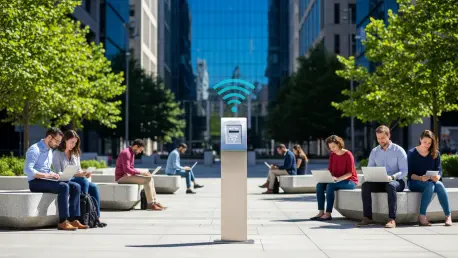
Estonia’s approach is centered on its identity as a “digital republic,” where internet access is viewed as a cornerstone of democratic participation. Rather than focusing solely on home-based legal rights, the government has deployed a vast network of free public Wi-Fi hotspots in parks, cafes, and government buildings. This commitment to accessibility supports a constitutional guarantee of free expression and has placed Estonia at the top of global rankings for internet freedom and digital government services. By ensuring that every citizen has the tools to interact with the state digitally, Estonia has minimized bureaucratic friction and fostered a high degree of civic engagement. The infrastructure is built on a decentralized data exchange layer, which requires constant connectivity to function, making the right to access the network a prerequisite for exercising basic citizenship duties.
This focus on public accessibility ensures that no individual is penalized for their financial status or lack of private hardware. The government has prioritized the creation of “public access points” where citizens can use state-provided computers and high-speed connections to manage everything from voting to filing taxes. This model recognizes that the right to information is meaningless without the physical means to access it. Moreover, the Estonian education system has integrated digital literacy into the core curriculum, ensuring that the population can safely and effectively navigate the online world. By treating the internet as a public good, Estonia has created a resilient society where digital inclusion is the norm rather than the exception. This comprehensive strategy demonstrates that a digital democracy requires both robust infrastructure and a legal commitment to universal entry.
Innovative Connectivity Models in the Global South
Pacific Island Ambitions: The Case of Niue
The Pacific island of Niue represents one of the most ambitious attempts at nationwide free internet, claiming to be the first country to offer free Wi-Fi to all residents and visitors through an innovative satellite-based mesh network. This initiative was designed to bypass the physical challenges of laying expensive undersea cables across a rugged volcanic landscape that is frequently prone to severe tropical weather. While the project has faced reliability issues and maintenance hurdles due to its remote location, it remains a landmark example of how small, isolated nations can reimagine the internet as a shared public utility. By centralizing the costs of connectivity at the state level, Niue has provided its population with a vital link to the global market, enabling tourism and remote work that would otherwise be impossible. This model proves that even limited resources can be used to bridge the digital gap.
Despite these environmental and financial obstacles, the government of Niue has continued to upgrade its infrastructure by incorporating low-earth orbit satellite constellations to improve speeds and reduce latency. This technological leap has allowed the island to overcome the limitations of traditional geostationary satellites, providing a more stable connection for essential services like telehealth and emergency management. The resilience shown in maintaining a free public network highlights the political will necessary to prioritize connectivity as a social necessity. Lessons from Niue emphasize that for small island developing states, the internet is not just a tool for entertainment but a lifeline for economic survival and disaster preparedness. The persistent commitment to this vision serves as an inspiration for other developing nations looking for alternative ways to provide universal access in difficult terrains.
Judicial Support: The Costa Rican Approach to Social Equity
Costa Rica has utilized its judicial system to protect the right to connectivity, with its Supreme Court ruling that internet access is on the same level as fundamental rights to information and communication. This landmark decision shifted the responsibility to the state to ensure that technological advancements do not create new forms of social exclusion. The country’s strategy focuses on social equity by using public investment to bring Wi-Fi to communities that private providers often ignore, such as remote public plazas, community centers, and schools. This legal backbone ensures that expanding the network remains a permanent priority for the state, regardless of shifting political climates. By framing connectivity as a judicial right, Costa Rica has created a powerful mechanism for citizens to demand access and accountability from their government and service providers.
The global transition toward universal internet access demonstrated that connectivity was no longer a luxury but a fundamental requirement for societal participation. Governments that successfully integrated these rights into their legal systems provided a clear blueprint for future digital inclusion. Moving forward, the focus shifted toward maintaining resilient infrastructure and ensuring that no individual was left behind in an increasingly complex digital landscape. Policymakers and industry leaders recognized that sustainable development required a departure from purely profit-driven models. By treating broadband as a public utility, nations fostered environments where innovation and social equity could coexist. The next steps involved expanding these frameworks to international standards, ensuring that digital rights were protected across all borders. This approach ultimately secured a future where every citizen had the necessary tools to navigate the modern world effectively.