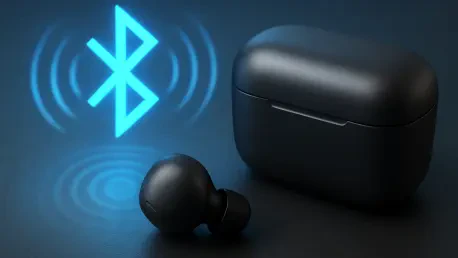

Decoupling the audio stream from the legacy radio allows for smaller hardware form factors without sacrificing the playback longevity of wireless gear. This fundamental shift marks a departure from the established norms that have governed wireless sound since the early days of the millennium. For over two decades, the industry relied on the Advanced Audio Distribution Profile, a framework that served its purpose during the initial boom of wireless connectivity but eventually became a bottleneck for innovation. As mobile devices became thinner and more powerful, the power-hungry nature of Bluetooth Classic became increasingly problematic, forcing engineers to choose between bulky batteries and disappointing playback durations. The transition to Bluetooth Low Energy (LE) Audio represents a comprehensive architectural overhaul designed from the ground up to address these modern constraints while introducing features that were once considered technically impossible.
By integrating the Low Complexity Communications Codec (LC3) and moving away from traditional peer-to-peer connection models, the industry has established a more resilient foundation that supports high-fidelity audio without the excessive energy overhead of previous generations. This evolution is not merely a software patch but a standard-wide reset that aligns wireless technology with the sophisticated requirements of the current consumer electronics market, where efficiency is just as valuable as audio clarity. As this technology becomes the baseline for new devices, it eliminates the “one-size-fits-all” approach of the past, which often forced a compromise between audio quality and battery life. Today, the Bluetooth Special Interest Group has introduced a more flexible ecosystem that addresses the stringent power requirements of tiny, battery-operated devices like earbuds and hearing aids, ensuring that wireless communication can finally keep pace with the rapid evolution of modern hardware.
Overhauling Sound Quality and Power Efficiency
Advancements in Codec Technology: The LC3 Revolution
The implementation of the Low Complexity Communications Codec, better known as LC3, serves as the cornerstone of the Bluetooth LE Audio ecosystem. For years, the Subband Codec (SBC) acted as the default standard, but its aging algorithms often struggled to maintain high-quality audio without consuming significant bandwidth. LC3 changes this dynamic by utilizing more sophisticated compression techniques that allow for superior sound reproduction even at drastically reduced bitrates. In practical terms, this means that a transmission at 160kbps using LC3 can actually outperform an SBC stream operating at 345kbps. This leap in data management efficiency provides manufacturers with more headroom to optimize their products, ensuring that users do not have to settle for muddy or compressed audio profiles.
Beyond simple bitrate improvements, the flexibility of the LC3 codec allows for a more dynamic response to environmental interference and signal congestion. In high-traffic areas where wireless signals often collide, traditional codecs frequently suffer from dropouts or audible artifacts as the system struggles to maintain a heavy data stream. LC3 is designed to be more resilient under these conditions, maintaining a stable connection by adjusting its throughput without a perceptible loss in sound quality. This robustness is essential for the modern user who moves between diverse environments, from quiet home offices to crowded public transportation hubs. As a result, the transition to LE Audio has effectively neutralized many common complaints associated with wireless sound, providing a consistent and professional listening experience for all.
Reducing Energy Consumption: Extending Playback Longevity
The “Low Energy” designation is the defining characteristic of this new standard, specifically targeting the “battery anxiety” that has long plagued wireless audio users. Bluetooth Classic required a constant, high-voltage connection to maintain an audio stream, which was particularly taxing for true wireless stereo (TWS) earbuds with limited internal space. By utilizing a radio architecture designed from the ground up for efficiency, LE Audio allows devices to remain in an active state for significantly shorter periods. This technical advancement extends playback time by as much as fifty percent in some hardware configurations, enabling manufacturers to design smaller and more ergonomic form factors that do not require frequent recharging throughout the day.
This newfound efficiency also has a profound impact on the thermal management of wearable electronics. High energy consumption in legacy Bluetooth chips often led to heat buildup, which could degrade battery health over time and limit the peak performance of the device. With the lower power draw of the LE Audio framework, components run cooler, which contributes to the overall longevity of the hardware itself. For consumers, this translates to a product that remains reliable over years of use, rather than months. By solving the power equation, the industry has paved the way for a new generation of ultra-compact wearables that can handle sophisticated processing tasks—such as active noise cancellation and spatial audio—without exhausting their power reserves prematurely.
Expanding Connectivity and Public Integration
Native Multi-Stream Audio: A New Connection Paradigm
One of the most significant structural changes in this technology is the evolution from one-to-one connections to native multi-stream support. Under the old paradigm, a smartphone could only send a single stereo stream to a “master” earbud, which then had to re-transmit the signal to the “slave” unit. This process was notoriously inefficient, as it doubled the work for the primary earbud and often led to synchronization issues or uneven battery drain between the left and right sides. LE Audio removes this bottleneck by allowing the source device to send independent, perfectly synchronized audio streams to multiple receivers simultaneously. This ensures that both earbuds receive their specific data directly from the phone, improving stability and connection reliability.
This multi-stream capability also opens the door for shared listening experiences that were previously cumbersome or required specialized hardware splitters. Two people wearing different sets of LE Audio-compatible headphones can now connect to a single tablet or smartphone to enjoy a movie together, with each receiving an independent, high-quality stream. This shift also simplifies the handoff process when switching between different devices, such as moving from a laptop during a video call to a smartphone for a walk. By streamlining the connection topology, the Bluetooth Special Interest Group has created a more intuitive user experience that reflects how people actually interact with their various electronic devices in a modern, multi-tasking environment.
Auracast: The Transformation of Public Spaces
The move toward one-to-many “isochronous” streams has paved the way for Auracast, a new broadcast audio standard that is set to change how individuals interact with their surroundings. Auracast allows a single source—such as a television in a sports bar, a flight information screen at an airport, or a lecturer’s microphone in a university hall—to broadcast audio to an unlimited number of nearby receivers. This innovation turns personal audio into a communal tool, enabling users to “tune in” to public screens without needing a physical connection or a complicated pairing process. It effectively provides a private audio channel for public media, solving the problem of noisy environments where hearing the screen is often impossible.
The potential for Auracast extends far beyond simple entertainment, as it offers a robust platform for emergency notifications and localized information services. In a busy transit hub, an Auracast broadcast could provide real-time gate change announcements directly to a traveler’s earbuds, ensuring they never miss critical information due to background noise or poor public address systems. This level of integration turns every public display into a potential information source, vastly increasing the utility of wireless headphones. As more venues adopt this standard from 2026 to 2028, the world will likely see a decline in the reliance on loud, disruptive speakers in favor of more focused and personal audio delivery systems that respect the acoustic environment of public spaces.
Enhancing User Experience and Accessibility
Eliminating Latency: The End of Audio Lag
Latency, the frustrating delay between a visual action and its corresponding sound, has long been the primary weakness of wireless audio systems. Legacy systems typically suffered from delays of 150ms to 300ms, which could ruin the experience of high-speed gaming or professional video editing where timing is critical. LE Audio addresses this by lowering the theoretical minimum latency to a staggering 7.5ms. Even in real-world applications where some overhead is necessary, the improvement is three-to-six-fold compared to Bluetooth Classic. This ensures that the sound of a footstep in a competitive shooter or a drum hit in a music production suite is heard almost exactly when it occurs on screen.
This dramatic reduction in lag is not only beneficial for gamers and creators but also improves the general media consumption experience. Lip-sync errors, which can be highly distracting even to casual viewers, are effectively eliminated under the LE Audio framework. Furthermore, the protocol’s improved handling of data packets reduces the likelihood of “stuttering” during high-bitrate playback, even when the processor is under heavy load. By making wireless audio as responsive as a wired connection, the technology has removed the final barrier preventing professional-grade performance in a wireless form factor. This leap in responsiveness ensures that as virtual and augmented reality applications continue to grow, the accompanying audio will remain perfectly anchored to the digital world.
Standardized Accessibility: Empowering Hearing Instruments
Historically, hearing aid users had to rely on fragmented, proprietary technologies to stream audio from their phones or televisions, leading to inconsistent compatibility and high costs. Bluetooth LE Audio provides a standardized, high-performance platform specifically designed to support hearing instruments natively within the mobile ecosystem. Because the system supports highly synchronized multi-stream transmissions, it provides a seamless stereo experience that mimics natural hearing more closely than older, mono-heavy wireless solutions. This standardization means that a hearing aid purchased from one manufacturer will work flawlessly with a smartphone from another, without the need for specialized “Made for iPhone” or similar proprietary bridges.
The inclusion of Auracast within the accessibility framework marks a major step forward for global inclusivity. Those with hearing loss can now tune into public broadcasts directly through their medical devices, bypassing the need for expensive loop systems in theaters or houses of worship. This direct-to-device streaming ensures that the audio is clear, processed for the user’s specific hearing profile, and free from the reverberation and ambient noise that often makes public spaces challenging for those with hearing impairments. By embedding these features into the core Bluetooth standard, the industry has ensured that accessibility is no longer an afterthought but a fundamental component of the wireless experience, providing millions of people with a more connected and independent life.
The Future of the Wireless Ecosystem
Reaching Hardware Limits: The Necessity of Change
The shift toward the Low Energy standard stemmed from a realization that Bluetooth Classic was a 20th-century solution that could no longer support 21st-century expectations. The hardware limitations of original Bluetooth radios made it functionally impossible to achieve the extreme efficiency required for modern, ultra-compact electronics that users wear for sixteen hours a day. Similarly, the software limitations of the A2DP profile prevented the development of the broadcast and multi-stream capabilities that define the current era of mobile computing. Developers found themselves hitting a “performance ceiling” where they could no longer improve audio quality or latency without compromising the stability of the connection or the battery life of the device.
Consequently, LE Audio is not just a minor patch or a incremental update; it is a comprehensive replacement that resets the technical clock on wireless capabilities. By moving away from the “connected state” requirements of the legacy system, engineers were able to implement a more “burst-like” data transmission model that saves energy without losing data integrity. This architectural change was necessary to support the growing complexity of the Internet of Things (IoT) where hundreds of devices may be competing for the same radio frequency. The legacy system simply lacked the intelligence to manage such a crowded spectrum efficiently. LE Audio’s more sophisticated channel management ensures that wireless audio remains clear and uninterrupted, even in an increasingly congested digital landscape.
Standardization: The Path Toward Global Adoption
The transition to this unified standard has reached a tipping point, supported by the largest players in the technology industry, including major operating system developers and hardware manufacturers. From 2026 to 2029, the industry expects a total turnover of the device ecosystem, as legacy-only hardware is phased out in favor of dual-mode or LE-only devices. This consensus-driven movement ensures that the five primary failures of the legacy system—audio quality, power use, connection topology, latency, and accessibility—are addressed in a way that is consistent across all brands and platforms. A unified ecosystem benefits the consumer by ensuring that their peripherals will work with any source device they choose to buy in the future.
As this ubiquity is achieved, the focus will likely shift from basic connectivity to the creative application of these new tools. Developers are already exploring how Auracast can be used for “silent” tour guides in museums or multi-language broadcasts in international conference centers. The robust foundation provided by LE Audio allows for a level of innovation that was previously stifled by the technical constraints of older Bluetooth versions. By creating a standard that is both powerful and efficient, the technology industry has ensured that wireless connections will remain a vital and capable part of our daily lives for the next several decades. This evolution represents the final step in making wireless audio truly indistinguishable from the reliability and quality of a wired connection.
Strategic Integration for a Connected World
The industry successfully navigated the transition to Bluetooth LE Audio by prioritizing long-term interoperability over short-term proprietary gains. Manufacturers integrated these standards into new product cycles, ensuring that consumers had immediate access to more efficient and capable hardware that addressed the shortcomings of the previous era. By adopting the LC3 codec and the Auracast broadcast standard, developers created a more inclusive environment where audio was no longer confined to a single user but could be shared across entire public spaces seamlessly. This shift moved the market toward a more sustainable and high-performance future, where battery life and audio quality were no longer viewed as mutually exclusive features.
Organizations that embraced these changes early on established a competitive advantage by offering superior user experiences in gaming, professional media, and medical accessibility. The focus remained on the full deprecation of legacy systems to ensure that the global wireless infrastructure could fully realize the benefits of a unified, low-energy standard. Future hardware development will likely focus on even deeper integration of these protocols into smart home systems and wearable medical devices, further blurring the lines between personal and public audio. As the ecosystem matured, the standard provided a reliable platform for the next generation of spatial computing and augmented reality, proving that a well-designed protocol could adapt to the needs of a rapidly changing technological landscape.