
Vladislav Zaimov is a seasoned figure in the telecommunications landscape, known for his deep technical grasp of enterprise networks and his rigorous approach to risk management in vulnerable infrastructures. As we move through 2026, the boundaries between different communication technologies are dissolving, forcing a total reimagining of how regional carriers operate and survive. Zaimov’s insights bridge the gap between traditional engineering and the new economic realities of broadband and artificial intelligence. This conversation explores the strategic pivot toward multi-layered connectivity, the integration of satellite services to achieve coverage parity, and the untapped potential of utilizing rural power and land assets to host the next generation of modular AI infrastructure.
How are regional carriers redefining their business models by blending fiber and fixed wireless to reach deeper into rural landscapes?
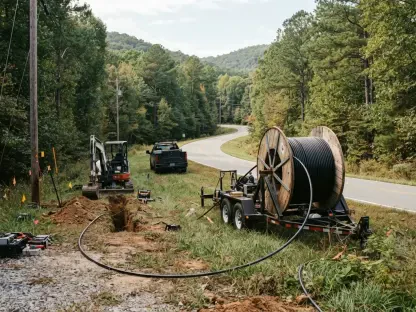
The concept of a “pure play” mobile carrier is rapidly becoming a relic of the past as we navigate the current technological landscape. Regional operators are now strategically leveraging infrastructure they already possess, such as fiber lines that were originally laid solely to backhaul tower traffic to the core network. By extending this fiber directly to residential doorsteps or utilizing existing mobile radios for fixed wireless access, they are effectively bridging the digital divide with surgical precision. It is a transformation that feels both practical and necessary; you can almost sense the excitement in the industry as the business case becomes less about technology silos and more about the simple, vital mission of reaching the customer. This multi-pronged approach allows carriers to monetize their footprints more aggressively than ever before, ensuring that even the most remote households can feel the pulse of a high-speed connection.
With the rise of satellite technology, how can smaller operators effectively integrate these services to compete with nationwide giants?
Satellite connectivity is currently acting as the ultimate “gap-filler” for regional operators who need to match the expansive service claims of nationwide competitors. While some might see it as a standalone revenue stream, the true value lies in providing a seamless experience where the signal never dies, even when a user traverses the deepest valleys or most isolated plains. There is a palpable pressure from both consumers and enterprise clients who see the satellite offerings of major national brands and wonder if their local provider can keep up with those standards. By integrating direct-to-device satellite services, regional carriers are answering those demands and ensuring their customers don’t feel left behind in an increasingly hyper-connected world. It is fundamentally about maintaining that critical customer relationship by proving that a regional focus does not have to mean a sacrifice in global reach or service reliability.
In what ways can existing rural infrastructure, like land and power, be repurposed to fuel the demand for edge-based AI?
One of the most fascinating opportunities currently emerging involves turning traditional tower sites into modular, edge-based AI hubs. Rural carriers often own the very ground their towers sit on, and they have already invested heavily in fiber and over-engineered power systems to ensure that 911 services and smartphone calls never fail during an emergency. These assets—land, fiber, and redundant power—are the exact ingredients needed for the distributed AI infrastructure that the industry is currently debating in policy circles. Instead of waiting for massive, energy-hungry data centers to be built in metropolitan areas, carriers can deploy modular units right at the edge, where the data is actually being generated and used. This creates a fresh revenue stream that effectively subsidizes the high cost of maintaining reliable rural operations while placing the carrier at the heart of the next major technological frontier.
As technology silos collapse, what are the primary challenges and opportunities regional carriers face regarding customer ownership and partnership?
The breakdown of these silos means that regional carriers are now working more closely than ever with satellite providers and hyperscalers, which naturally brings up the complex question of who truly “owns” the customer relationship. Some operators are determined to control the experience end-to-end, maintaining their brand’s visibility from the physical handset all the way to the back-office billing systems. Others are finding success in flexible partnerships, focusing more on the quality of the service delivered rather than whose logo is printed on the monthly bill. The CCA annual convention in New Orleans, taking place from September 14 to 16, will be a major focal point for these discussions as carriers weigh the long-term benefits of these strategic alliances. It is an exciting, albeit complex, era where the focus has shifted toward providing the robust services customers expect, even if that means sharing the spotlight with a partner to ensure total coverage.
What is your forecast for the role of modular AI infrastructure in the rural telecom sector?
I anticipate that as we move from the end of 2026 into the following year, modular AI infrastructure will become a cornerstone of the rural business model. We are seeing a significant shift where carriers no longer just pay for power as a static overhead cost; they are starting to put that spending to work by generating revenue when power isn’t strictly needed for immediate network operations. This distributed approach will solve many of the latency issues associated with centralized data centers, making high-performance AI tools accessible in regions that were previously overlooked by the tech giants. Eventually, the rural carrier will be viewed not just as a provider of dial tones and data packets, but as a critical node in the global intelligence network, providing the physical foundation for the AI-driven services of tomorrow.