
A sophisticated digital ecosystem that currently hums with the quiet efficiency of thousands of localized private wireless networks is facing a seismic shift that could drown out innovation in favor of raw signal strength. The Citizens Broadband Radio Service (CBRS) was designed to be a “spectral neighborhood” where diverse users coexist, but a new regulatory push threatens to shatter that peace. Imagine a crowded, upscale restaurant where patrons are enjoying quiet, productive conversations until a single guest walks in with a 15,000-watt megaphone. This is the analogy experts are using to describe the current battle at the Federal Communications Commission (FCC), where major wireless carriers are lobbying to massively increase power levels in a band currently optimized for localized, private innovation.
The shift toward higher power limits represents more than just a technical adjustment; it is a fundamental challenge to the philosophy of shared spectrum. Proponents of the current system argue that the low-power nature of the 3.5 GHz band is exactly what makes it valuable, allowing multiple entities to operate in close proximity without interference. If the FCC sides with the major carriers, the “quiet” environment that has fostered a boom in private 5G might be replaced by a loud, macro-cellular environment that prioritizes national coverage over local precision. This tension highlights the growing scarcity of available frequencies and the desperate search for more capacity by mobile giants.
The Quiet Revolution Facing a Megaphone Moment
The current debate is centered on whether the CBRS band should remain a sanctuary for diverse, low-power applications or be converted into another highway for national mobile carriers. Since its inception, this spectrum has functioned as an experimental success story in sharing, proving that different classes of users can operate simultaneously if they follow strict rules. This harmony depends entirely on the signal range of each participant, ensuring that a factory network in one town does not interfere with a rural school district’s broadband in the next. The proposed changes would introduce signals so powerful that they could travel dozens of miles, potentially silencing existing users across entire metropolitan areas.
Maintaining the current delicate balance is seen as vital for the continued growth of specialized wireless applications. Critics of the power hike suggest that introducing macro-cellular levels of electricity into the band is akin to bringing a chainsaw to a surgery; it provides more power, but it destroys the precision required for the task. The move is viewed by many as a land grab by traditional telecommunications companies that seek to repurpose a shared resource for their exclusive, high-power business models. Consequently, the FCC must decide if the future of American wireless belongs to a few national players or a vast array of local innovators.
Why the 3.5 GHz Band Is the Bedrock of Modern Connectivity
The CBRS band represents a radical departure from traditional spectrum management, moving away from exclusive licensing toward a three-tiered sharing model. This framework has democratized access to the airwaves, allowing small rural internet providers, municipal airports, and Fortune 500 manufacturers to build their own private 5G networks. In a period where spectrum is increasingly scarce, CBRS has become the primary engine for American industrial connectivity, with nearly 75% of the nation’s private wireless networks currently operating within these frequencies. This success is largely attributed to the “low-barrier-to-entry” nature of the band, which does not require the billion-dollar investments typical of traditional spectrum auctions.
This tiered system ensures that the military retains priority while allowing secondary and tertiary users to fill the gaps. The predictability of this arrangement has encouraged massive investment in specialized hardware and software. For instance, municipal governments have used these airwaves to bridge the digital divide in underserved neighborhoods, providing low-cost internet that would be impossible under a traditional licensed model. By serving as a neutral ground for innovation, the 3.5 GHz band has proven that spectrum sharing is not just a theoretical concept but a viable economic driver for the next generation of connectivity.
The Power Struggle: Macro-Cellular Ambitions vs. Localized Innovation
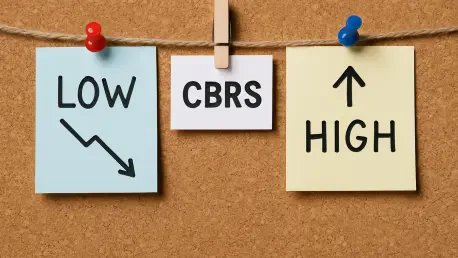
The core of the controversy lies in a proposal to introduce high-power “Category C” and “Category D” base stations into the ecosystem. Under the status quo, current limits top out at 50 watts for Category B stations, ensuring signals stay within a manageable range to prevent interference with neighbors. Major mobile carriers, however, are seeking authorization for power levels up to 15,849 watts—hundreds of times more powerful than existing infrastructure. This massive jump in power would effectively transform the localized “neighborhood” into a macro-cellular environment, where a few high-altitude towers dominate the spectral landscape.
The economic stakes of this transition are immense for companies that have already deployed thousands of sensors and access points. Groups like the “America Made 5G” coalition argue that changing these rules would jeopardize investments made by companies like John Deere and Dow Chemical, who rely on the low-power model for interference-free factory automation. With over 430,000 active base stations and 1,400 approved device types, the band is already a thriving success that advocates argue does not require a macro-cellular overhaul. Expanding the power limits would essentially force these existing users to compete with signals that are physically impossible to ignore, potentially rendering their current hardware obsolete.
Technical Realities and the Risk of Spectral Silence
Industry experts and spectrum engineers have raised alarms regarding the physics of high-power interference in a shared environment. Research from Valo Analytica suggests that if only 2% of current stations were converted to high-power units, the resulting noise would slow existing data speeds to a crawl for all other users. This throughput degradation occurs because the receivers in low-power devices cannot distinguish between a legitimate signal and the “background noise” created by a 15,000-watt tower miles away. Even the most advanced Spectrum Access System (SAS), which manages frequencies in real-time, cannot overcome the raw physical interference generated by such overwhelming signals.
Real-world case studies provide a sobering look at what a high-power model could mean for critical infrastructure. In the Miami metro area, a single high-power tower could potentially knock out one-third of Miami International Airport’s private network, impacting baggage handling, security sensors, and maintenance operations. Furthermore, rural providers in northern Ohio already face “spectral static” from high-power Canadian towers located 130 miles away across Lake Erie. These examples serve as a warning of how far-reaching the disruption of a high-power model can be, proving that once the “noise floor” is raised, the capacity for shared, localized communication is permanently diminished.
Strategies for Preserving the Shared Spectrum Ecosystem
As the FCC reviewed the recent Notice of Proposed Rulemaking, stakeholders emphasized frameworks to protect the existing “innovation band” architecture. Maintaining the 50-watt power ceiling was highlighted as an essential step for protecting the thousands of localized networks already in operation. Many experts suggested that the success of the band should be measured by the density and diversity of its users rather than the sheer geographical footprint of a few national carriers. This shift in perspective encouraged the regulatory body to look beyond traditional coverage metrics and consider the specific needs of industrial automation and rural broadband.
Industry leaders successfully pushed back against proposals to move CBRS to different frequencies, arguing that the 3.5 GHz home remained the only viable place for the shared-access experiment to continue. Providing regulatory certainty for manufacturers and rural WISPs was seen as vital for maintaining the U.S. lead in private 5G deployment. Ultimately, the commission considered a future where the preservation of the low-power ecosystem fostered a more competitive and innovative wireless landscape. These actions ensured that the spectral harmony of the CBRS band stayed intact, preventing a few high-power “megaphones” from silencing the diverse voices of the American digital economy.