
Vladislav Zaimov is a distinguished expert in enterprise telecommunications and the risk management of vulnerable networks. His career is defined by navigating the shift from legacy systems to the high-capacity, agile environments required by today’s digital giants. In this discussion, we dive into the massive infrastructure pivots being made by companies like Amazon and Meta, and how the physical layer of the internet is being rebuilt to support the insatiable appetite of artificial intelligence.
This interview explores the explosive growth of Corning within the AI sector through its strategic alliances with hyperscalers. We examine the multi-billion dollar investments securing the future of optical fiber, the technological shift toward co-packaged optics for improved efficiency, and the operational challenges of scaling manufacturing to meet global demand.
The recent multibillion-dollar investments from hyperscalers like Amazon and Meta into Corning’s infrastructure signify a massive shift in the telecommunications landscape. How do these high-stakes partnerships redefine the role of optical fiber in the age of AI?
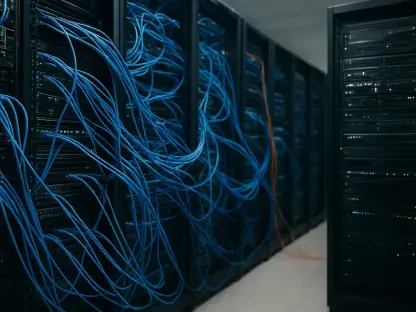
These agreements represent a fundamental realization that artificial intelligence is only as powerful as the physical networks that carry its data. When you look at Meta’s recent agreement, which is valued at up to $6 billion, or Amazon’s massive investment in U.S. data centers, you see a strategic move to secure the bedrock of their operations. This is no longer just about buying cables; it is about ensuring an adequate future supply of optical fiber and connectivity solutions that are essential for next-generation facilities. In North Carolina alone, this surging demand is fueling the creation of 1,000 new manufacturing jobs at Corning’s facilities, showing how the digital boom translates into real-world physical infrastructure. We are moving toward a reality where optical connectivity is the literal lifeblood of the cloud, and these partnerships ensure that the “arteries” of the internet do not become a bottleneck for innovation.
With the integration of AI into daily operations, the pressure on data centers is reaching unprecedented levels. In your view, how is the industry evolving its architectural strategies to handle this immense traffic load while maintaining system efficiency?
The industry is currently caught in an intense push for advancements like co-packaged optics, which are designed to deliver significantly higher speeds and greater system efficiency. As hyperscalers—those massive entities managing immense data traffic—expand their capacities, they have to rely on increasingly sophisticated technologies to keep the system from slowing down under pressure. Jimmy Yu from Dell’Oro noted that these agreements are critical reference points for the importance of optical fiber technology in securing the future. It is an intricate balance of enhancing capacity to meet the demands of AI while simultaneously controlling costs and keeping operations running smoothly. We are seeing a move away from traditional setups toward more agile and innovative networking infrastructure that can adapt to the scale of modern data needs.
Scaling infrastructure is often a double-edged sword that involves balancing growth with cost-control. What are the most significant operational hurdles that companies face when trying to build out these next-gen optical networks?
One of the primary hurdles is ensuring “long-term, sustainable growth” in a market that is notorious for its volatility and rapid shifts. Companies now have to address both their present demands and future expectations with a level of agility that was never required in the past. It is a critical task for operators to scale their networks efficiently without letting the overhead costs of specialized optical connectivity solutions spiral out of control. There is also the physical reality of production; as demand for fiber upswings, ensuring that manufacturing can keep pace is a constant pressure on the global supply chain. You have to maintain high levels of dependability because even a minor failure in the optical networking infrastructure can have massive ripple effects across the entire AI ecosystem.
What is your forecast for the future of optical networking technology as AI continues to entrench itself in our global infrastructure?
My forecast is that we will see an even deeper reliance on fiber as a fundamental element of both AI and cloud expansion in the coming years. The trust that companies like Nvidia, Meta, and Amazon are placing in these foundational technologies suggests that the era of optical dominance is only just beginning. We will likely see a wave of smart architectural strategies that prioritize speed and efficiency, making co-packaged optics a standard rather than an outlier. As these technologies become more entrenched in our daily operations, the infrastructure supporting them will have to become more sophisticated and resilient. Fiber is the only medium capable of sustaining this trajectory, and its role as the backbone of global intelligence is now firmly solidified.