
The architectural transformation of global telecommunications is currently unfolding as major carriers attempt to strip away decades of reliance on rigid, monolithic hardware stacks in favor of fluid software environments. This metamorphosis is not merely a cosmetic update to existing infrastructure but a fundamental reimagining of how data moves across national borders and into the devices of billions of users. By decoupling the software that governs network logic from the physical boxes that transmit signals, the industry is entering an era characterized by unprecedented agility and strategic autonomy. This review evaluates the efficacy of these cloud-native shifts, examining whether the promise of a “horizontal” future can truly overcome the gravity of legacy systems and the commercial interests of established vendors.
The Shift Toward Horizontal TelCo Cloud (HTC)
The telecommunications sector has long been defined by a vertical architecture where specific network functions were inextricably tied to proprietary hardware. Historically, an operator purchasing a voice gateway or a data core was essentially buying a “black box” that included the physical server, the operating system, and the management software all from a single vendor. This created inefficient IT silos where every application required its own specialized stack, leading to a fragmented environment that was notoriously difficult to scale or update. The emergence of Cloud-Native Network Architecture, exemplified by Deutsche Telekom’s Horizontal TelCo Cloud (HTC), represents a decisive break from this tradition, moving toward a unified platform that can host diverse applications on a shared foundation.
This transition is fundamentally about dismantling the proprietary walls that have allowed vendors to lock operators into long-term, inflexible contracts. By adopting a horizontal model, operators like Deutsche Telekom are attempting to create a standardized environment where various network functions can coexist on a single infrastructure “tray.” This shift allows for a more modular approach to network design, where software from different providers can be swapped or updated without needing to replace the underlying physical layer. The move to HTC is a strategic pivot that prioritizes operational flexibility and cost-efficiency, signaling a new chapter where the network is treated more like a modern data center and less like a collection of specialized telephone switches.
Core Technical Components of Cloud-Native Networks
Bare-Metal Infrastructure and Standardized Hardware
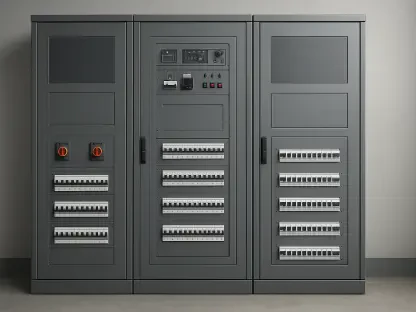
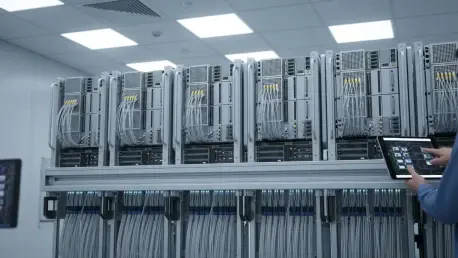
At the most foundational level of this architecture lies the physical layer, which has shifted from specialized proprietary equipment to standardized bare-metal servers. This transition to Commercial Off-The-Shelf (COTS) hardware is a critical component of the cloud-native revolution because it commoditizes the hardware layer. By utilizing bare-metal infrastructure instead of virtual machines or proprietary appliances, operators can eliminate the “hypervisor tax”—the computational overhead required to run multiple virtual operating systems on a single server. This direct access to raw computing power is essential for the high-throughput, low-latency demands of modern 5G traffic, providing the performance necessary for real-time data processing.
The use of standardized hardware also significantly reduces capital expenditure by allowing operators to source equipment from a wider range of suppliers rather than being tied to the hardware roadmap of a specific network vendor. Moreover, this approach grants greater flexibility in how physical resources are allocated; a server that handles voice traffic during the day can theoretically be repurposed for data processing or edge computing tasks at night. This versatility ensures that the physical assets of the network are utilized to their maximum potential, breaking the cycle of purchasing expensive, single-purpose hardware that sits underutilized for large portions of its lifecycle.
T-CaaS and Kubernetes Orchestration
The intelligence of the cloud-native stack resides in the management layer, often referred to as Containers-as-a-Service (CaaS). In contemporary implementations like Deutsche Telekom’s T-CaaS, this layer is built upon Kubernetes, an open-source orchestration system that has become the de facto standard for managing containerized applications. Kubernetes serves as the “orchestra conductor,” automatically deploying, scaling, and managing the various Cloud-Native Functions (CNFs) that constitute the 5G core. By treating network applications as portable containers rather than fixed software installations, operators can achieve a level of operational agility that was previously impossible in the telecommunications world.
The true value of Kubernetes orchestration lies in its ability to provide software-defined precision across the entire network. When traffic spikes occur in a specific geographic area, the orchestration layer can instantly spin up additional instances of a network function to handle the load, subsequently scaling them down when the demand subsides. This dynamic resource management ensures that the network remains performant without requiring human intervention for every adjustment. Furthermore, the use of a common CaaS layer across the entire organization allows for standardized security protocols and update cycles, ensuring that the latest patches and features are deployed uniformly across the entire network infrastructure.
Modern Innovations and Industry Trends
A defining trend in the current landscape is the aggressive decoupling of software from hardware, a move that has paved the way for specialized software firms to challenge established industry titans. Companies like Mavenir have emerged as pivotal players by focusing exclusively on cloud-native 5G cores that are designed to run on any compatible horizontal platform. This specialization allows these firms to innovate at a much faster pace than legacy vendors who are still burdened by the need to support and sell integrated hardware-software bundles. The market is increasingly rewarding this “software-first” mentality, as operators look for partners that offer the freedom to choose their own underlying infrastructure.
In response to this shifting dynamic, legacy vendors are being forced to undergo significant transformations of their own. For instance, some traditional providers have begun offloading their proprietary cloud platforms to focus on the application layer, recognizing that the battle for the infrastructure layer is increasingly being won by open-source and horizontal models. Others, however, continue to double down on a vertical “one-stop-shop” model, arguing that an integrated stack provides better reliability and a single point of accountability. This tension between openness and integration is driving a push toward specialized container networking and host-based routing, technologies that are specifically designed to handle the massive data volumes and complex routing requirements of 5G without sacrificing the benefits of virtualization.
Real-World Applications and Sector Implementations
The most impactful application of cloud-native architecture is currently found within Tier 1 mobile network operators who are deploying 5G Standalone (SA) cores. Unlike the initial “non-standalone” 5G rollouts that relied on 4G infrastructure, 5G SA is a purely cloud-native environment that unlocks the full potential of the technology. By hosting these cores on horizontal clouds, operators can support ultra-reliable low-latency communication (URLLC) and massive machine-type communications (mMTC). These technical capabilities are not just theoretical; they are the backbone of emerging services such as industrial automation, where thousands of sensors and robotic arms require instantaneous, synchronized communication that legacy architectures simply cannot provide.
Furthermore, cloud-native environments are the primary enablers of “network slicing,” a revolutionary concept where a single physical network is partitioned into multiple virtual networks, each optimized for a specific use case. For example, an operator can create a high-priority “slice” with guaranteed low latency for emergency services or autonomous vehicles, while simultaneously offering a different slice optimized for high-bandwidth video streaming for consumers. This level of customization allows operators to monetize their infrastructure in entirely new ways, transforming the network from a “dumb pipe” into a versatile platform capable of delivering tailored digital experiences for diverse industrial and consumer sectors.
Technical Hurdles and Market Obstacles
Legacy Vendor Resistance and Revenue Impacts
The transition to a horizontal cloud model is not without significant friction, particularly from traditional vendors whose business models are built on the sale of integrated, full-stack solutions. When a carrier like Deutsche Telekom decides to build its own horizontal cloud, it essentially strips away a large portion of the contract that would have previously gone to a single vendor for both the cloud layer and the applications. This reduction in scope has profound revenue implications for legacy suppliers, who find themselves competing in a fragmented market where they can no longer leverage their hardware to secure software sales.
This resistance often manifests in technical arguments regarding the stability and performance of multi-vendor environments. Some legacy providers argue that “mixing and matching” software from one vendor with a cloud platform from another introduces unnecessary complexity and potential points of failure. They suggest that for smaller operators who lack the massive engineering resources of a Tier 1 carrier, the “one-stop-shop” model remains the safer and more efficient choice. This ongoing debate has created a market where different vendors support varying levels of openness, forcing operators to carefully weigh the benefits of strategic autonomy against the potential risks of integration complexity.
Integration Complexity in the Radio Access Network (RAN)
While the core network has seen rapid virtualization, the Radio Access Network (RAN) remains a formidable technical and economic hurdle. The RAN consists of the physical towers and antennas that connect to user devices, and it accounts for the vast majority of a network operator’s total expenditure. Implementing a cloud-native approach in this area—often referred to as Cloud-RAN or Open RAN—is exponentially more difficult than in the core because the RAN is heavily dependent on high-performance physical hardware for radio signal processing. The specialized nature of these tasks means that commoditizing the RAN hardware layer is a much slower process.
Moreover, the RAN is often the stronghold of vendors who are most resistant to cloudification. Some major global equipment providers have been vocal in their skepticism of open and virtualized RAN models, citing concerns over performance parity with traditional integrated systems. This creates a bottleneck for full network modernization; an operator might have a state-of-the-art, cloud-native core, but if the radio network remains a proprietary silo, the true benefits of end-to-end automation and horizontal scaling cannot be fully realized. This “RAN gap” remains one of the most significant challenges for operators aiming to achieve a completely software-defined network ecosystem.
Future Outlook and Strategic Trajectory
The trajectory of cloud-native networking is pointing toward a future defined by total industry standardization and the migration of virtualization to the very edge of the network. Initiatives like Project Sylva are instrumental in this movement, as they represent a collective effort by European operators to create an open-source, standardized telco cloud framework. By collaborating on a common set of requirements and technical specifications, these operators are attempting to force a level of interoperability that prevents any single vendor from dominating the ecosystem. As this framework matures, it is expected to provide a blueprint for how operators worldwide can deploy cloud-native functions with minimal integration effort.
As the industry moves closer to the complete retirement of legacy 2G and 3G systems, the focus will shift toward a fully automated, self-healing network environment. In this future state, artificial intelligence and machine learning will work in tandem with Kubernetes orchestration to manage network resources in real-time, predicting traffic patterns and optimizing energy consumption without human intervention. The network functions themselves will become as portable and scalable as modern web applications, allowing operators to deploy services at the network edge—closer to the end-user—to support next-generation applications like augmented reality and real-time remote surgery. This evolution will ultimately redefine the role of the telecommunications operator, transitioning them into agile digital service providers.
Assessment of the Cloud-Native Transition
The transition toward cloud-native network architecture represented a high-stakes endeavor to modernize the foundational infrastructure of global communication. The shift prioritized strategic autonomy for operators, as evidenced by the move toward horizontal platforms that stripped away the vertical silos of traditional vendor contracts. This strategy fostered a new ecosystem where software-centric providers could compete on a level playing field with established giants, leading to a surge in innovation within the 5G core. The implementation of Kubernetes-based orchestration and bare-metal hardware successfully commoditized the infrastructure layer, providing the operational efficiency and scalability required to handle the data-heavy demands of the modern era.
While the core network achieved significant milestones in virtualization, the journey revealed persistent friction points, particularly regarding market resistance and the technical complexity of the radio access network. The economic impact on legacy vendors necessitated a reevaluation of traditional business models, while the hardware-intensive nature of the RAN served as a reminder that some physical components remained difficult to virtualize. However, the collaborative spirit of initiatives like Project Sylva provided a clear path forward, ensuring that the industry moved toward open standards rather than proprietary dead-ends. Ultimately, the move to a horizontal, cloud-native model redefined the telecommunications landscape, positioning operators as flexible, software-driven entities prepared for the next decade of digital connectivity.