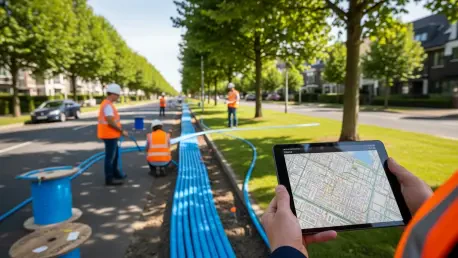

The pursuit of universal high-speed connectivity remains a cornerstone of modern urban planning, yet the ambitious promises of private-sector partnerships frequently collide with the complex realities of municipal infrastructure development. In a decisive move to address a stalled technological initiative, the City of Cleveland has officially moved to terminate its thirty-year agreement with SiFi Networks, a for-profit entity that had originally pledged to construct a five-hundred-million-dollar ultra-fast fiber-optic internet network at no direct cost to the municipality. This partnership, which began approximately twenty months ago, was envisioned as a transformative project designed to modernize the city’s digital landscape by installing state-of-the-art fiber-optic cables beneath public streets and residential tree lawns. However, despite the grand scale of the proposal, the project remained entirely stagnant throughout the duration of the agreement. The city’s decision signals a shift toward pragmatism, as leaders recognize that speculative investments often fail to produce tangible results for residents who remain caught on the wrong side of the digital divide. By ending this arrangement, Cleveland aims to refocus its administrative resources on more reliable and proven methods of expanding broadband access across its neighborhoods.
Analyzing the Failure of the Partnership
Contractual Obligations and Missing Documentation
The formal dissolution of the relationship was initiated through a detailed letter sent to SiFi Networks President Scott Bradshaw, signed by Law Director Mark Griffin and Chief of Innovation and Technology Elizabeth Crowe. Within this communication, city officials cited a significant failure to meet basic contractual requirements that were essential for the project’s advancement. Specifically, the company had not identified potential installation sites, secured the necessary construction permits, or broken ground on any physical infrastructure during the nearly two-year period following the initial approval. A particularly striking revelation emerged during the termination process when it was discovered that neither the city nor the corporation could produce a signed copy of the original 2023 agreement. This administrative oversight highlighted a lack of procedural rigor that characterized the partnership from its inception. Chief Crowe eventually confirmed that the company signed the termination letter, which officially ended the partnership and forced the firm to forfeit its exclusive rights to build the citywide network.
This breakdown underscores the critical importance of maintaining strict oversight and clear documentation when engaging with third-party vendors for large-scale utility projects. Without a physical manifestation of progress or a verifiable legal foundation, the city found itself in a vulnerable position, tied to a developer that offered more rhetoric than results. The failure to identify sites or even begin the permitting process suggested that the operational capacity of the vendor did not match the lofty goals presented during the initial negotiations. By reclaiming the exclusive rights to its streets and tree lawns, the municipality has effectively cleared a major legal hurdle that prevented other more capable entities from proposing alternative solutions. The termination serves as a cautionary tale for other major metropolitan areas considering similar “no-cost” infrastructure deals, suggesting that such proposals require deep scrutiny of a firm’s past performance and current financial standing before long-term exclusivity is granted.
Skepticism and the Reality of Unfunded Proposals
The dissolution of the agreement reflects a growing consensus of skepticism among city leaders who had originally expressed doubts about the feasibility of a five-hundred-million-dollar “free” network. Council Member Brian Kazy was a vocal critic of the deal, labeling the entire project a “pipe dream” and noting that the company had a documented history of inaction in other municipalities across the country. Kazy’s concerns were validated as the months passed without a single foot of fiber being laid in the ground, leading many to believe that the proposal was inherently flawed from the start. Furthermore, despite the initial promise that the network would be built at no cost to the public, reports emerged that the company eventually requested financial assistance from the city. This demand for public funds directly contradicted the fundamental premise of the original agreement and was promptly refused by city officials, who maintained that the municipal budget should not be used to subsidize a private entity’s unfulfilled commercial promises.
The transition from a “no-cost” model to a request for city funding often indicates a project’s lack of private capital or a misunderstanding of the local construction landscape. In Cleveland’s case, the refusal to provide these funds protected the city’s financial interests but also accelerated the inevitable end of the partnership. This scenario illustrates a common pitfall in public-private partnerships where the risks are not appropriately balanced, and the private partner relies on the city to bridge gaps in its own business model. The administration’s firm stance against providing supplementary funds demonstrated a commitment to fiscal responsibility, ensuring that taxpayers were not held liable for a project that failed to meet its developmental milestones. Moving forward, the city has prioritized the selection of partners who demonstrate a clear ability to self-fund or who operate within established, transparent financing frameworks that do not suddenly shift the burden of costs onto the municipal government or the local residents.
Shifting Strategies for Municipal Connectivity
Integrating Existing Infrastructure and Partners
With the SiFi Networks deal officially concluded, Cleveland is pivoting toward a strategy that emphasizes collaboration with established internet service providers and local nonprofit organizations. This shift is intended to leverage existing infrastructure and proven operational models to achieve the city’s connectivity goals more rapidly than a ground-up build would allow. By working with providers that already have a physical presence in the region, the city can avoid the lengthy delays associated with new market entrants who lack local knowledge or equipment. This approach naturally leads to more incremental but verifiable progress, where expansions are measured in active connections rather than speculative maps. The city’s innovation and technology department is now focusing on identifying areas where existing fiber lines can be extended or where local service providers can be incentivized to improve their current offerings in underserved neighborhoods. This strategy prioritizes immediate community needs over the pursuit of a singular, all-encompassing solution.
The city also remains committed to its twenty-million-dollar investment in DigitalC, a local nonprofit organization focused on providing low-cost broadband to residents. This project was always intended to run parallel to larger fiber initiatives, but it now takes on a more central role as a primary vehicle for closing the digital divide. DigitalC’s model of utilizing fixed wireless technology and localized fiber connections offers a more flexible and immediate alternative to the massive underground construction project that was previously planned. By integrating the efforts of multiple smaller, more agile partners, the municipality can create a diverse ecosystem of internet access that is more resilient to the failure of any single vendor. This multifaceted approach allows for a customized response to the specific geographic and economic challenges faced by different wards within the city. The goal is to move away from the “one-size-fits-all” mentality and instead foster a competitive environment where resident choice and service reliability are the primary metrics for success.
Lessons Learned and Future Infrastructure Standards
The termination of the fiber agreement provided an essential opportunity for city administrators to refine their criteria for future infrastructure partnerships. Leaders realized that long-term exclusivity agreements must be tied to strict, performance-based milestones with clear penalties for non-compliance. It was determined that any future proposal of this magnitude would require an upfront audit of the developer’s technical and financial capacity to ensure that the project is grounded in reality rather than aspiration. The city’s experience highlighted the necessity of maintaining a complete and accessible legal record of all communications and contracts to prevent the administrative confusion that occurred with the missing signed documents. These procedural improvements were adopted to protect the city’s legal standing and ensure that any future technology deployments are managed with the highest degree of professionalism. The focus shifted toward smaller, more manageable phases of development that allow for constant evaluation and adjustment as technology and market conditions evolve over time.
Future initiatives took a more conservative approach by prioritizing the enhancement of existing utility corridors and encouraging open-access models that allow multiple providers to use the same physical conduit. This strategy decreased the need for repetitive and disruptive street excavations while increasing the speed at which high-speed internet could be delivered to the home. City planners recommended that any future fiber-optic projects must be integrated with other utility upgrades, such as water or power line maintenance, to maximize efficiency and minimize the impact on local traffic and landscaping. By treating digital infrastructure as a critical public utility similar to water or electricity, the city established a new standard for service delivery that emphasized reliability and public benefit over private profit margins. This new framework ensured that any technology partner invited to operate within the city limits would be held to the same rigorous standards as traditional utilities, providing a more stable and predictable path toward achieving universal high-speed internet access for all residents.