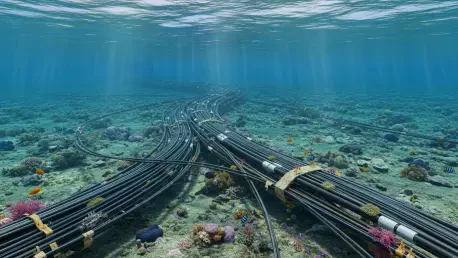

The vast network of fiber-optic cables crisscrossing the seafloor is currently being reimagined as a global sensor array capable of detecting the subtle movements of marine life without relying on vocalizations. Traditionally, marine biologists have relied on hydrophones to track whales, a method that is inherently limited by the vocal behavior of the animals. If a whale remains silent during a long migration or deep-sea foraging dive, it effectively becomes invisible to standard acoustic equipment. However, the emergence of Distributed Acoustic Sensing, or DAS, has fundamentally altered this dynamic by utilizing the physical properties of the cables themselves. By firing laser pulses through the glass fibers and measuring the light that bounces back, researchers can detect minute variations in the cable’s length caused by external pressure. This allows the infrastructure to sense the physical presence of a massive creature moving nearby, providing a persistent monitoring system that operates independently of any sound the animal might produce.
Technical Fundamentals of Distributed Acoustic Sensing
At the heart of this technological shift is the phenomenon known as Rayleigh backscattering, which occurs when imperfections within the fiber-optic strand reflect small amounts of laser light back to the source. When a large object, such as a blue whale or a fin whale, moves in proximity to the cable, the resulting changes in water pressure cause the fiber to stretch or compress by mere nanometers. These tiny physical deformations are sufficient to alter the phase of the returning light, allowing high-speed processors to pinpoint the exact location of the disturbance along the cable’s length. This effectively turns every few meters of a thousand-mile cable into an individual sensing point, creating a high-resolution map of the surrounding environment. Unlike traditional sensors that require a power source at the site of detection, DAS units are located at the cable landings on shore. This means that existing, unpowered undersea fibers can be sensed without the need for expensive underwater maintenance or specialized battery deployments.
The ability to track whales without their vocalizations represents a major leap in marine biology, as many species only sing or click during specific social or reproductive contexts. For instance, many baleen whales are notoriously quiet during long-distance migrations, making it difficult for researchers to map their routes using standard acoustic buoys. By detecting the low-frequency pressure waves—often referred to as the hydrostatic footprint—that these animals create while swimming, fiber-optic arrays provide a continuous data stream regardless of the whale’s behavior. This technique also offers insights into the swimming patterns and speeds of multiple individuals simultaneously, providing a more comprehensive view of group dynamics. Furthermore, the sensitivity of these systems allows for the detection of other environmental phenomena, such as seismic activity and internal ocean waves, which can be filtered out to isolate the specific signals generated by large mammals. This level of granular detail was previously unattainable in the deep ocean.
Strategic Integration for Marine Conservation Efforts
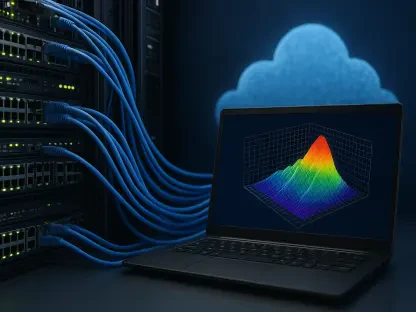
Implementing this technology on a global scale requires the seamless integration of high-performance computing and advanced machine learning algorithms to interpret the massive influx of data. Each kilometer of sensing fiber generates gigabytes of information every hour, necessitating real-time processing to distinguish between a whale’s movement and other noise sources like commercial shipping or shifting currents. By 2026, the development of specialized neural networks has enabled the automated classification of these signals, allowing systems to flag the presence of endangered species instantly. This capability is particularly valuable in busy maritime corridors where the risk of ship strikes remains a significant threat to whale populations. When a whale is detected near a shipping lane, the system can automatically transmit alerts to vessel operators, suggesting course corrections or speed reductions to avoid a collision. This proactive approach to conservation moves beyond mere observation and into the realm of active habitat management.
The international community established a framework where telecommunications providers collaborated with oceanographers to standardize data access protocols. These initiatives proved that repurposing existing hardware provided a cost-effective alternative to deploying dedicated scientific arrays across the entire ocean floor. Governments implemented zoning laws that required vessels to reduce speeds in areas where fiber-optic sensors detected active migration corridors. For cable operators, the primary recommendation involved integrating sensing capabilities during the initial design phase of new transoceanic links to ensure maximum sensitivity. Stakeholders determined that the most effective way forward was a centralized data-sharing agreement that protected commercial privacy while providing scientists with high-resolution environmental metrics. This holistic approach successfully transformed a purely industrial asset into a vital tool for planetary stewardship, ensuring that even the most elusive marine species remained protected throughout their life cycles. Such measures laid the groundwork for a era where technology and nature coexist through passive observation.