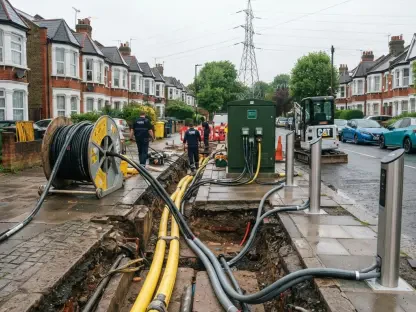

The board has allocated $20,000 for bid preparations on a new headquarters at Wren Street, a facility that could cost the utility up to $6.4 million. This significant investment in physical infrastructure serves as a strategic backdrop for a broader institutional transformation as the utility pivots toward a multi-service future. While the administrative upgrades are essential for centralizing operations, the primary engine of this change is the aggressive rollout of a county-wide fiberoptic network. This dual focus on brick-and-mortar facilities and digital connectivity represents a high-stakes gamble for the regional power provider. The transition involves navigating complex federal funding landscapes while simultaneously managing the expectations of a customer base wary of rising costs. As the utility moves away from its traditional role as a simple electricity distributor, the financial weight of these concurrent projects raises questions about long-term fiscal stability. Balancing these capital expenditures requires a precise strategy that ensures both technological progress and organizational efficiency. This initiative marks a pivot toward modernizing the local economy through digital access.
Strategic Investments: High-Speed Connectivity and Logistics
To execute this ambitious vision, the board recently awarded two construction bids totaling $11.9 million to CK Contractors & Development. Selecting a single Virginia-based firm for both the federal and local segments of the project was a calculated move designed to maximize logistical efficiency and maintain consistency across the network’s deployment. The first portion of this contract, valued at $7.4 million, is specifically earmarked for the Broadband Equity, Access & Deployment program. This initiative relies heavily on federal grant funds to bridge the digital divide in underserved areas, ensuring that the most remote sectors of the county gain access to modern internet speeds. The second bid, worth $4.5 million, covers the remaining residential and commercial zones, streamlining the construction process under a unified management structure. By leveraging a contractor with a proven track record, the utility aims to minimize delays and avoid the common pitfalls associated with fragmented, multi-vendor infrastructure projects.
Beyond the labor costs, the utility has authorized a $9.9 million expenditure for the physical components of the GEA Connect network, including fiber lines, huts, and cabinets. This hardware procurement is part of a larger $43 million financial roadmap designed to finalize the broadband rollout between 2026 and 2028. While federal and state grants will reimburse approximately $10.9 million of these costs, the utility is still left with a net obligation of $33 million. To bridge this gap, a resolution was passed to issue $53 million in bonds, providing the necessary liquidity for these massive capital improvements. This financial structure ensures that the utility can maintain its current service levels while building out the technology of the future. The scale of this investment underscores the belief that high-speed internet is no longer a luxury but a fundamental utility required for modern economic survival. However, the reliance on long-term debt to fund these advancements creates a complex fiscal environment that requires careful oversight to prevent an undue burden on operations.
Public Accountability: Managing Costs and Community Expectations
As the physical network takes shape, the conversation has increasingly shifted toward the social responsibility of the utility and the direct impact of its decisions on consumer pocketbooks. Recent public forums highlighted a growing tension between massive infrastructure spending and the immediate needs of residents struggling with utility bills. Critics have pointed to the EnergyRight Home Uplift Program, questioning whether the current contributions are yielding measurable benefits for those in need. In response to these concerns, leadership clarified that regulatory constraints prevent the implementation of tiered rates based on age or income, as the utility must legally price services based on the actual cost of delivery. This transparency is vital in dispelling misconceptions regarding seasonal billing spikes, which are often attributed to increased winter consumption rather than rate hikes. By encouraging residents to pursue energy audits, the utility seeks to empower customers to manage their own costs while it continues to navigate the rigid legal framework.
Stakeholders recognized that the path forward required a dual focus on rigorous fiscal management and proactive community education regarding energy efficiency. The utility finalized plans to integrate more robust reporting metrics into its home assistance programs, ensuring that future progress could be quantified and shared with the public. Decision-makers opted to prioritize the completion of the fiber network as a long-term solution for economic growth, while simultaneously exploring localized grants to assist with weatherization for vulnerable populations. This approach acknowledged that while the infrastructure costs were substantial, the risk of falling behind the digital curve was even greater. Moving forward, the board established a protocol for quarterly financial reviews to monitor the impact of bond debt on residential rates. These actions provided a blueprint for balancing the high costs of modern utility management with the necessity of maintaining affordable access for the entire service area. By centering transparency in the communication strategy, the organization successfully laid the groundwork for a more resilient community.