
The deterministic reliability of private 5G provides a necessary backbone for mission-critical robotics where Wi-Fi might suffer from signal interference or hand-off delays. For modern enterprises, the integration of physical AI and high-density data systems has moved from a speculative concept to an operational necessity that requires a more robust approach to connectivity. Traditional networking models often fail under the weight of real-time computer vision and autonomous machine coordination because they rely on disparate systems that do not communicate effectively. Celona Orion introduces a unified framework that attempts to solve these inefficiencies by merging various wireless technologies into a smart, single-pane management system. By focusing on an AI-native design, the platform seeks to eliminate the technical silos that have historically hampered large-scale industrial automation. This evolution represents a significant shift toward a proactive environment where the network functions as a unified nervous system.
Overcoming Fragmentation: The Rise of Converged Wireless
Historically, organizations treated Wi-Fi and private cellular as entirely different entities. This meant separate hardware, different management teams, and conflicting security protocols. In an environment where mobile robots must transition smoothly across a warehouse floor, any hand-off delay between access points or protocols can lead to safety hazards or operational downtime. Fragmented architectures struggle to maintain the consistent throughput required for modern AI applications that demand ultra-low latency and high reliability. The inability of these systems to share data and coordinate resources often forces engineers to spend more time troubleshooting basic connectivity issues than optimizing the actual production line. As a result, many facilities have found that their digital ambitions are being capped by the inherent limitations of their legacy wireless infrastructure, necessitating a more cohesive and intelligent approach.
Celona Orion addresses these challenges by creating a converged fabric that treats every wireless medium as a specific resource within a larger pool. Instead of forcing a robot or a tablet to stick to a single protocol, the platform enables a fluid environment where the network infrastructure manages the distribution of traffic based on the urgency of the task. This architectural shift ensures that mission-critical computer vision systems receive priority on private 5G while less sensitive background updates are handled by standard Wi-Fi. By converging these protocols at the software level, the platform provides a unified view of every connected asset, regardless of the underlying technology. This approach not only simplifies the daily workload for IT departments but also provides the deterministic performance levels required for advanced robotics. Consequently, the enterprise gains a more resilient foundation that can support increasingly complex AI-driven workflows without the risk of sudden signal loss.
Intelligence at Scale: The Role of the Celona Brain
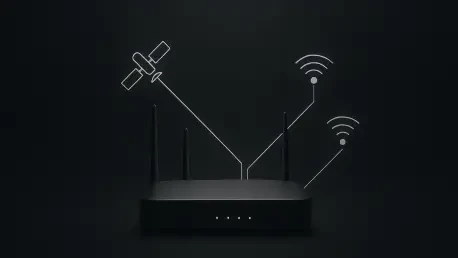
To support the diverse needs of modern facilities, the system utilized a multi-tiered connectivity model that integrated various mediums into a single ecosystem. Private 5G served as the heavy-duty backbone for mission-critical robotics and autonomous vehicles that required constant uptime and low latency. Simultaneously, Wi-Fi 7 provided the high-capacity data transfer necessary for standard business applications and dense sensor networks that operated across the facility. To ensure that remote or isolated work sites remained connected, the platform leveraged satellite technologies to provide high-speed access in locations where traditional cabling was impractical. Public cellular integration rounded out the strategy by offering seamless connectivity for guests and employees moving between private and public coverage areas. This layered approach ensured that every square foot of an enterprise was covered by the most appropriate technology, creating a high-performance environment that adapted to the site requirements.
At the core of this architecture is the Celona Brain, an AI-powered engine that drives the Orchestrator AI operating system. This central intelligence hub automates complex networking tasks that previously required extensive manual intervention by specialized engineers. By leveraging machine learning, the system can predict potential congestion points and reroute traffic before it impacts operational efficiency. Furthermore, the use of open standards allows businesses to deploy specific AI skills that can collaborate across different hardware and software platforms. This turns the network from a passive pipe for data into a self-managing nervous system that learns and optimizes itself in real-time. Organizations are now able to manage their wireless infrastructure with the same agility as cloud software, deploying updates and new capabilities across thousands of devices instantly. This level of automation is essential for scaling AI-native enterprises where the sheer volume of connected devices makes manual management impossible.
Strategic Integration: Secure and Cost-Effective Deployments
Bridging the gap between the network and industrial hardware is achieved through AerConnect, an open-source tool designed for device manufacturers. This tool allows the creators of robots, scanners, and vision systems to build intelligent connectivity logic directly into their products. Rather than being at the mercy of pre-set network priorities, the devices themselves can evaluate signal quality and switch between 5G or Wi-Fi on the fly to maintain optimal performance. This software-centric philosophy ensures that physical AI remains smart and adaptable even as it moves through complex industrial environments. Alongside this flexibility, the platform introduces a higher standard of security by utilizing SIM-based identity rather than vulnerable passwords. Every device on the network is identified and authenticated through a hardware-based credential, significantly reducing the surface area for cyberattacks. This ensures that only authorized machines can access sensitive control systems, providing a more robust defense for industrial operations.
Beyond the technical features, the transition to a unified network was driven by a fundamental shift in the financial and operational logic of enterprise infrastructure. Organizations adopted a single subscription model that simplified the management of both private cellular and Wi-Fi systems, effectively removing the budget silos that had previously slowed down digital transformation. The inclusion of modern hardware within these service agreements encouraged faster adoption of high-performance protocols like Wi-Fi 7. To prepare for future growth, enterprises focused on implementing micro-segmentation to isolate critical production lines from general office traffic, ensuring that security breaches remained contained. Decision-makers evaluated their current coverage gaps and prioritized the deployment of unified platforms to maintain a competitive edge in an increasingly automated market. This strategic alignment of connectivity and intelligence allowed businesses to scale their AI capabilities without the constant fear of infrastructure failure, setting a clear path for sustainable advancement.