
Vladislav Zaimov brings a seasoned perspective to the shifting landscape of wireless infrastructure, where traditional steel towers are rapidly evolving into high-performance compute hubs. As the industry grapples with the explosion of data-hungry applications and the looming arrival of 6G, his insights into risk management and network vulnerability provide a crucial framework for understanding how physical assets anchor our digital future. In a world where connectivity is no longer a luxury but a fundamental utility, Zaimov’s expertise helps bridge the gap between legacy hardware and the sophisticated demands of artificial intelligence.
Our discussion delves into the intersection of artificial intelligence and localized processing, highlighting how tower companies are pivoting toward edge data center conversions to satisfy latency requirements. We explore the technical pressures exerted by fixed wireless access on existing site footprints and the strategic rollout of higher frequency spectrum bands following the upcoming FCC auctions. Finally, we examine the immediate role of tower sites in alleviating data center capacity shortages and the symbiotic relationship between terrestrial infrastructure and the growing satellite ecosystem.
AI applications require significantly lower latency and localized processing. How do you decide which tower locations are suitable for edge data center conversion, and what specific power or backhaul upgrades are necessary to handle these distributed compute demands?
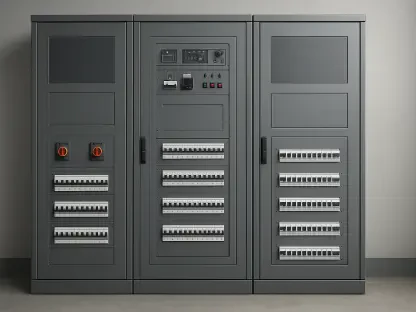
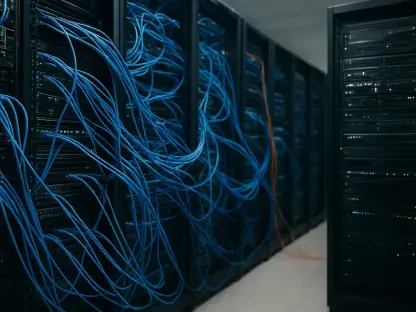
The selection process for edge data center conversion centers on the “small bulk” real estate strategy, where we identify sites that sit directly on fiber routes and are close to dense user populations. We have already seen this in action with deployments like the one in Raleigh, North Carolina, where the focus is on bringing processing power as close to the user as possible to eliminate the lag that kills AI responsiveness. To make these sites viable, we have to look beyond the antenna and focus on the ground-level infrastructure, ensuring we have the power capacity to run intensive compute racks and the robust backhaul to move massive data loads. It is a transition from maintaining simple masts to managing sophisticated, distributed compute facilities. The physical reality of these sites is changing; you can feel the shift from the static nature of old-fashioned towers to the active, humming energy of a localized data hub.
Fixed wireless access is pushing data consumption far beyond traditional mobile usage levels. What specific equipment densification strategies are most effective for fill-in locations, and how are you managing the resulting strain on existing power and site space?
Fixed wireless access is fundamentally altering the physics of our networks because it drives average data usage to heights that traditional mobile services simply never reached. This surge in consumption forces us to adopt aggressive densification strategies, which involve placing more equipment on existing sites and scouting for fill-in locations that bridge the gaps in current coverage maps. The resulting strain on our infrastructure is significant, as we are packing more hardware into limited footprints, which requires creative engineering to manage both the weight on the tower and the power draw on the ground. We are no longer just relying on fallow spectrum to carry the load; we are actively building out sites specifically designed to handle the heavy, sustained throughput required for home and business broadband. It is a constant balancing act of reinforcing steel and upgrading electrical systems to keep up with the insatiable appetite for data.
With the upcoming auction of upper C-band spectrum and the push toward 800MHz for 6G, densification is becoming critical. How does the shift to these higher frequency bands change your site acquisition process, and what timeline should the industry expect for large-scale physical rollouts?
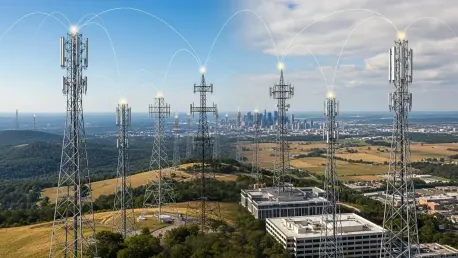
The shift toward the upper C-band, starting with the planned auction of at least 100MHz of spectrum, means we have to prepare for a much denser grid because higher frequencies have shorter propagation ranges. As we look further ahead toward the 800MHz of spectrum earmarked for 6G, the site acquisition process becomes much more granular and intensive, focusing on hyper-local placements to ensure signal continuity. We anticipate that these new spectrum bands will be a massive driver for the industry, potentially leading to a significant increase in the total number of sites across our national portfolios. Carriers are looking for the next “killer app,” and they know that AI-driven services will require every bit of that bandwidth to function properly. We expect the timeline for large-scale physical rollouts to ramp up quickly following the conclusion of these auctions, as the pressure to deploy 6G capabilities becomes a competitive necessity.
There is currently a shortage of traditional data center capacity to meet immediate demand. Since tower sites offer a faster deployment path for compute needs, what are the primary technical hurdles in these trials, and how do you scale these facilities beyond the initial stages?
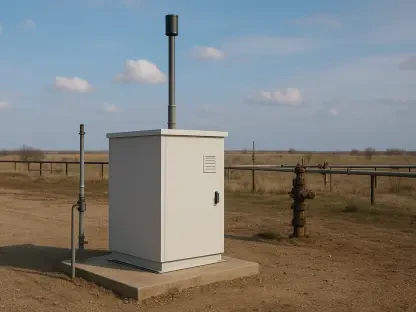
Tower companies are currently in a unique position to act as a fast-track solution for compute deployment because we already possess the land, power, and backhaul that traditional data center builds take years to secure. One of the primary hurdles we face in our active trials is adapting traditional tower shelters to handle the heat and power density of modern server racks, which requires a rethink of our cooling and environmental controls. We are scaling these facilities in stages, starting with smaller pilot projects to refine the interplay between the compute hardware and the existing wireless equipment. There is a palpable sense of urgency in these conversations with clients who are hitting capacity walls in traditional data centers. By leveraging our national footprint, including companies with over 18,000 towers, we can provide a distributed compute network that a single massive data center facility simply cannot match.
Satellite services and direct-to-device connectivity are increasingly integrated into terrestrial networks. In what ways does this hybrid model change the long-term value of physical tower assets, and how can providers ensure seamless handoffs between satellite and ground-based infrastructure?
Satellite technology, particularly through investments in firms like AST SpaceMobile, has proven to be a powerful complement to terrestrial networks rather than a replacement. This hybrid model actually increases the long-term value of physical tower assets because it allows for a “look under the hood” at how we can provide 100% geographic coverage without sacrificing the high-speed, low-latency performance that only towers can provide. The handoff between a satellite and a ground-based station must be invisible to the user, requiring deep integration at the network core to manage the transition between different orbital and terrestrial layers. We see this as a way to enhance the overall reliability of the network, ensuring that even in the most remote areas, there is a connection that eventually feeds back into the heavy-duty infrastructure of our tower sites. The tower remains the anchor of the digital economy, while the satellite acts as the ultimate safety net for connectivity.
What is your forecast for the US tower market?
Despite temporary setbacks or payment defaults that might occasionally cloud the headlines, my forecast for the US tower market is exceptionally bullish. We are moving into an era where the convergence of 6G spectrum auctions and the demand for edge-based AI processing will create a sustained period of infrastructure investment. The industry is evolving from being a passive landlord of steel masts to being an active participant in the distributed compute economy. With more than 800MHz of spectrum on the horizon and the push for localized data processing, the physical tower site will become more valuable and more technically complex than ever before. This is a transformative moment where the wireless grid effectively becomes the backbone of the global computer.