
Vladislav Zaimov stands at the intersection of infrastructure and security, having spent years hardening vulnerable networks and navigating the labyrinth of enterprise telecommunications. As we sit here in 2026, the industry is no longer just dreaming of 6G; we are actively carving out the spectral real estate required to make it a reality. Zaimov’s background in risk management makes him uniquely qualified to discuss the friction between legacy federal systems and the cutting-edge requirements of next-generation wireless. In this conversation, he breaks down the complexities of the current spectrum pipeline, the shift toward a shared-access model, and the technical hurdles that arise when trying to marry 5G systems with more efficient, flexible 6G waveforms.
With the current pursuit of a spectrum pipeline for future broadband involving such heavy coordination with federal agencies, how would you characterize the scale and urgency of these efforts?
The scope of what we are seeing today is truly unprecedented and, frankly, it has to be. It’s no longer a matter of finding a few spare megahertz here and there; the NTIA is currently managing a massive, coordinated effort to study bands that can sustain both 5G and 6G growth simultaneously. This isn’t just a domestic push either, as international harmonization through the International Telecommunication Union is critical to ensure that the devices we build here can function across the globe. We are moving away from the siloed approach of previous decades because the demand for high-speed wireless is simply outstripping the available “clean” airwaves. It feels like a high-stakes puzzle where every piece involves a federal user or a legacy system that must be protected, making the coordination feel more like a diplomatic negotiation than a technical rollout.
We are hearing more about how 6G might fundamentally change our approach to exclusivity, with spectrum sharing becoming a core pillar rather than an afterthought. Why is this shift happening now?
The reality is that we’ve run out of “easy” spectrum. It is becoming increasingly difficult, if not impossible, to find exclusive bands that aren’t already occupied by someone—be it the military, satellite services, or existing weather systems. Sharing is no longer a “nice to have” luxury; it’s a necessity that must be baked into the 6G concept from its very inception to ensure the network doesn’t starve for bandwidth. We are seeing a move toward localized 6G deployments and application-specific use cases where different technologies coexist in the same frequency blocks. In the past, the industry fought for clear, empty lanes, but now we have to learn how to drive in heavy traffic without causing collisions. This shift requires a level of trust in automated sharing mechanisms that we simply didn’t have five or ten years ago.
In terms of the actual technology enabling this sharing, how does Multi-RAT Spectrum Sharing (MRSS) improve upon the previous dynamic spectrum sharing methods we used for the 4G to 5G transition?
The jump from the old 4G/5G dynamic spectrum sharing to the 5G/6G MRSS model is all about cutting the administrative “tax” on the network. The older DSS model was bogged down by significant overhead from control channels and fixed LTE common reference signals that essentially wasted capacity just to keep the two generations talking to each other. With MRSS, the industry has achieved a significant breakthrough: the 3GPP recently agreed that the overhead of the downlink control channel for shared resources will be limited to less than 3.5%. That 3.5% figure is a game-changer because it means the transition is much more efficient, giving operators the migration flexibility they need without ruining the experience for users who are still on 5G. It allows the network to breathe, making the shared environment feel as responsive as a dedicated one.
There is a lot of talk about whether we can simply upgrade existing 5G infrastructure to 6G via software. From a risk and implementation standpoint, what determines if a radio is actually “6G-ready”?
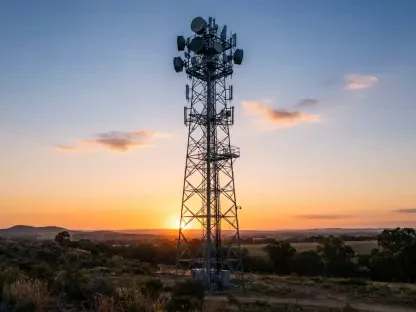
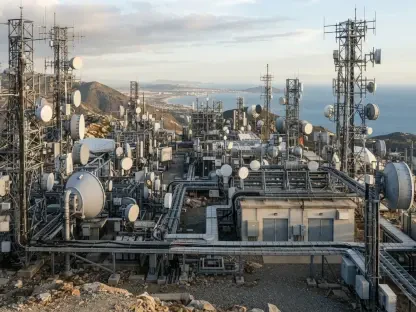
It all comes down to the underlying “brain” of the radio—its hardware compute capability. We are currently examining whether 5G radios that were built with sufficient baseline hardware can support a 6G interface or a new waveform through a software push, which would be a massive win for reducing capital expenditure. I’ve seen cases where a simple software upgrade can breathe new life into a tower, but it’s not a magic wand for every site. If the original 5G hardware doesn’t have the “compute” muscle to handle 6G’s complex processing, it won’t matter how good the software is. For the more “fancy” features—those high-precision, low-latency 6G capabilities—the business case will likely drive a full hardware upgrade because the old silicon just won’t be able to keep up with the heat and processing demands.
As we introduce these new sharing mechanisms and modulation schemes, the complexity of verifying these devices seems to be skyrocketing. How is the industry handling the “multiplying” test matrix?
Historically, when you added a new band or a new modulation scheme, your testing requirements grew linearly—you just added a few more rows to your spreadsheet and spent a few more hours in the lab. But with 6G, we are moving toward a reality where we are testing “combinations of combinations,” and that matrix is expanding exponentially rather than linearly. We are dealing with new bands, intricate sharing mechanisms, and the dynamic interaction between 5G and 6G signals all hitting the device at once. This significantly increases development time and forces manufacturers to be much more selective. They can’t realistically test every single theoretical combination; they have to use data to pick the most practical, high-impact scenarios to ensure the device is stable before it ever hits a consumer’s hand.
Given that many of these bands will remain federal assets for the foreseeable future, what does the long-term reality of “indefinite sharing” look like for commercial operators?
The long-term reality is a landscape where commercial and federal users are permanent roommates. We know that many of these bands are going to remain federal assets for a significant amount of time, so we have to move past the idea of “clearing” them. Instead, we are looking at indefinite sharing or the use of more traditional, static exclusion zones where commercial signals are geofenced out to protect sensitive federal operations. The NTIA’s ongoing spectrum studies and transition plans are the blueprints for this coexistence. It’s a delicate, ongoing dance of maintaining national security and federal mission capabilities while still providing the raw, high-speed bandwidth that the next generation of industrial and consumer applications demands.
What is your forecast for 6G?
I forecast that 6G will be the first generation of wireless where the network is truly “aware” of its spectral environment, shifting from a rigid pipe to a cognitive, self-adjusting ecosystem. By late 2026 and heading into 2027, the success of MRSS will lead to a much smoother transition than we saw with 5G, but the real victory will be in the background—the invisible coordination between federal and commercial users. We will see the 3.5% overhead limit become the gold standard for efficiency, allowing us to deploy 6G in places we once thought were too congested. If we manage the testing complexity and hardware limitations correctly, 6G won’t just be faster; it will be the most reliable and ubiquitous fabric of connectivity we have ever built.