
Vladislav Zaimov is a distinguished telecommunications expert specializing in enterprise systems and the high-stakes risk management of vulnerable networks. His work is central to the modern convergence of 5G and satellite technology, particularly within the defense and tactical sectors where communication is a lifeline. Vladislav brings a wealth of experience in navigating the transition from experimental pilots to hardened, operational infrastructures that can withstand the rigors of the field.
The discussion explores the official integration of non-terrestrial networks into the 5G ecosystem and the shift toward global standardization under frameworks like 3GPP and NATO’s STANAG 5665. We examine the evolution from Release 17 toward 6G, the technical hurdles of maintaining troop maneuverability with fixed infrastructure, and the strategic use of network slicing to mitigate security risks. Additionally, the conversation touches on the necessity of GNSS-resilient architectures and the shared communication needs of both military and civilian sectors during disaster response.
Now that non-terrestrial networks are officially integrated into the 5G ecosystem through standardization, what does this transition from theoretical models to actual deployment look like on the ground?
This shift means satellite providers are finally a core part of the 3GPP framework rather than functioning as a separate, niche service. Tom Stroup from the SIA has noted that this integration allows for essential coverage in remote areas where terrestrial infrastructure simply cannot reach. At the recent Defense Communications Forum, it became clear that we are moving into a phase of operational readiness where dynamic routing and seamless interoperability are the primary focus. It’s an intense time where theoretical integration is being replaced by the practical, rugged demands of field deployment, ensuring that no user is left in a digital dead zone.
As we progress from 3GPP Release 17 toward the anticipated 6G, how is standardization changing the role of satellite industry players?
Standardization is the engine driving the market scale and interoperability needed for these systems to be effective on a global level. Amina Boubendir from Airbus Defense and Space has emphasized that moving toward 6G requires satellite players to align their dynamics with these international benchmarks to stay relevant. This evolution moves the entire industry away from proprietary, isolated silos and toward a unified, versatile ecosystem that serves diverse needs. It allows us to build a more robust network fabric that can adapt to both civilian emergencies and complex military operations with unprecedented speed.
With NATO adopting protocols like STANAG 5665, what are the practical benefits for multinational military readiness and interoperability?
Adopting STANAG 5665 ensures that multinational forces can communicate on a shared cellular level during complex joint operations, which is a massive leap for readiness. John Stephenson of NATO HQ has pointed out that this standard allows the military to adopt modern 5G technology while still maintaining a vital link to their legacy systems. This creates a shared situational awareness that is absolutely critical for making split-second decisions in high-pressure environments. It ensures that regardless of which nation a unit belongs to, every soldier is seeing the same synchronized digital picture on the battlefield.
What are the main technical challenges in balancing high-speed 5G connectivity with the need for military maneuverability in the field?
A major challenge is that traditional fixed 5G nodes can act as anchors, potentially limiting the rapid, fluid movement required by modern troop formations. Colonel Jeffrey Couillard has highlighted that being tied to a static node is a significant risk, which is driving the need for more flexible, mobile network architectures. We are also focusing heavily on building GNSS-resilient architectures to counter vulnerabilities in traditional GPS tracking that adversaries might exploit. These advancements are essential for ensuring that high-speed communication remains a tactical asset rather than a liability that compromises troop safety.
In terms of risk management, how are you addressing the threat of rogue devices and signal tracing within these open-standard 5G networks?
The open-standard nature of 5G is a great strength for innovation, but it does introduce tactical concerns like rogue devices being used to trace military movements. We address this by utilizing advanced spectrum sharing and network slicing to create isolated environments for critical data, effectively masking our digital footprint. This approach allows us to protect the integrity of military operations while still benefiting from the massive bandwidth that 5G offers. The continuous scrutiny of the 5G community means we can identify and patch these vulnerabilities much faster than we ever could with the closed systems of the past.
What is your forecast for the convergence of satellite and 5G networks?
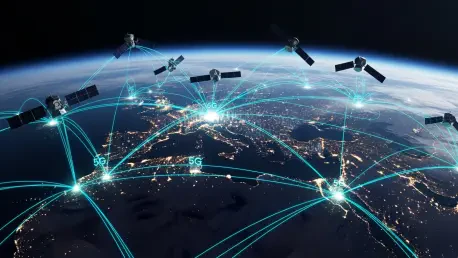
I forecast a future where a “network of networks” provides a resilient communication fabric across multiple orbits, including LEO, MEO, and GEO. This will create a truly global system where high-speed connectivity is a guaranteed utility, whether for complex maritime operations or urgent disaster response. We will see real-time situational awareness redefine how both military and civilian sectors respond to global challenges, making our infrastructure nearly impossible to sever. Ultimately, this convergence will bridge the gap between the most isolated regions of the world and the global digital economy, strengthening our collective security.