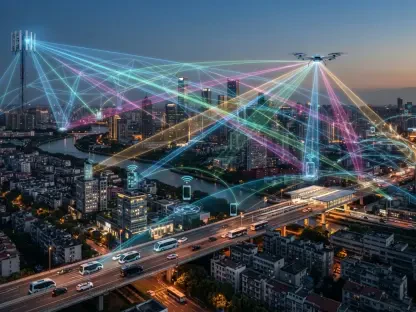

Legal experts are questioning whether the European Union’s Digital Services Act permits national governments to order localized social media blackouts without rigorous judicial review, especially as the intersection of national security and digital rights reaches a fever pitch in contemporary Paris. In the fall of this year, a complex narrative surfaced regarding the French government’s power over digital infrastructure, revealing a profound tension between maintaining public order and preserving the integrity of open communication networks. Reports began to circulate that the Prime Minister’s office had approached the nation’s leading telecommunications providers to discuss a localized suspension of social media access as a preemptive measure to manage civil unrest. This potential move was framed as a necessary tool to prevent the real-time coordination of protests, specifically targeting platforms known for rapid information dissemination. The specific target date was October 24, coinciding with planned demonstrations by the Yellow Vest movement, a group that has historically utilized digital tools to mobilize large crowds with minimal notice. While the event sparked intense debate across the European continent, no official confirmation was ever released, and there is no record of an actual service disruption occurring on that day, leaving many to wonder if the proposal was a genuine strategy or a form of high-level political posturing.
Analyzing the Allegations from Investigative Media
The controversy originated from a report by an investigative outlet that claimed formal instructions were sent to Orange, SFR, Free, and Bouygues Telecom, requesting a framework for a selective, geographically targeted blackout. According to the report, the executive branch sought a mechanism to disable access to TikTok, Instagram, Snapchat, and X within specific urban zones. This information quickly spread across international news cycles, creating a reporting loop that amplified the story despite a lack of secondary verification or leaked government documents. Because the claims relied heavily on a single primary source, the situation remains a case study in how unconfirmed reports can shape public perception in a high-stakes political environment. The narrative highlighted a specific list of platforms and a mobile-only scope, suggesting a highly calculated approach to digital suppression that would theoretically leave home and office Wi-Fi untouched while disabling the primary tools of field organizers.
The reaction to these reports was swift and polarized, reflecting deeper anxieties about the erosion of digital liberties in Western democracies. International observers noted that the alleged request for preparation did not necessarily equate to an intent to implement, yet the mere suggestion of such a capability sent shockwaves through the tech industry. Analysts pointed out that the lack of official denial from the Ministry of the Interior only added fuel to the fire, as the government has previously expressed interest in “dampening” digital signals during periods of extreme volatility. However, without a transparent paper trail, the true extent of these discussions remains in the realm of political speculation, serving as a reminder that the boundary between state security and digital surveillance is increasingly blurred. The incident underscores the power of investigative journalism to force public discourse on secretive government initiatives, even when the details of those initiatives are shielded by claims of national security.
Social Media as the Engine of the Yellow Vest Movement
To understand the motivation behind such a drastic consideration, one must look at the history of the Yellow Vest movement and its evolution into a decentralized political force. Since its inception, the group has relied on social media as its central engine for logistics, mobilization, and the real-time broadcasting of events. For French authorities, these platforms represent a dual-edged sword that facilitates both legitimate democratic organization and the rapid spread of calls for violence or unverified rumors. The planned protests in late October were expected to be a significant test of public order, as organizers used encrypted messaging and public feeds to coordinate movements across the capital. By exploring a digital contingency plan, the government sought to remove the digital oxygen required for a situation to escalate from a peaceful assembly into a chaotic riot.
Interestingly, the actual protests saw a lower-than-expected turnout and a generally calm atmosphere, which may explain why any potential “kill switch” was never activated, even if the technical preparations had been discussed. Some political analysts suggest that the mere threat of a blackout might have acted as a deterrent, discouraging organizers who feared they would lose contact with their followers in the field. This psychological aspect of digital control is often overlooked; the possibility of being cut off can be as effective as the blackout itself in disrupting the momentum of a movement. However, this strategy also risks backfiring by radicalizing participants who view such measures as an admission of state fragility. The legacy of the movement continues to challenge the French executive branch to find a balance between security and the fundamental right to communicate, a struggle that is increasingly played out in the code of mobile applications rather than just on the streets.
Technical Barriers and the Logic of Network Operators
The reported request was not for a simple nationwide shutdown but for a surgical intervention that would be unprecedented in its precision. The government allegedly demanded a block that was platform-specific, device-specific, and region-specific, a level of granularity that presents immense engineering challenges that go far beyond standard network management. This complexity led to significant pushback from the four major telecom operators, who argued that their infrastructure was not designed to act as a precision instrument for social engineering. The “Big Four” operators expressed skepticism regarding the narrow 48-hour window they were reportedly given to implement such a filter, noting that the risk of systemic instability was too high for such a rushed deployment. Their resistance was rooted in both the technical difficulty of the task and the lack of a clear legal mandate that would protect them from subsequent litigation.
This friction highlighted a growing divide between political desires for control and the physical realities of modern telecommunications architecture. Engineers pointed out that modern networks are built for resilience and high-speed data delivery, not for the granular filtering of specific application traffic based on moving geographic coordinates. The operators were concerned that attempting to “throttle” specific apps could inadvertently trigger failover mechanisms in other services, leading to a cascade of errors across the broader network. Furthermore, the commercial implications of being seen as an arm of the state’s policing apparatus were not lost on these companies, as they compete on the promise of reliability and privacy. The technical pushback essentially served as a practical check on executive power, demonstrating that even the most determined government must contend with the physical and logical constraints of the networks that power modern life.
Limitations of Filtering Methodologies
Operators have several tools for blocking content, but each has significant flaws that make a “surgical” blackout nearly impossible to achieve. DNS filtering is the most common method, where the operator’s servers refuse to resolve the names of the blocked apps, yet it is easily bypassed by users who switch to public servers like those provided by Google or Cloudflare. Another option is IP address blocking, which involves dropping traffic to the server ranges of specific platforms. However, this often causes massive collateral damage because major platforms use global content delivery networks that host thousands of other, unrelated services. A block aimed at a single social media site could inadvertently shut down banking portals, government sites, or essential cloud services used by local businesses, creating a localized economic shutdown that far outweighs the benefits of protest suppression.
More advanced methods like Deep Packet Inspection can identify specific app traffic by looking at the “handshake” of data packets, but this technology is expensive to scale and can significantly slow down the entire network. Furthermore, cell-level throttling, which involves slowing all data traffic at specific towers, is a blunt instrument that would disable essential services like emergency navigation and mobile payments. These technical hurdles mean that any attempt at a localized blackout would likely be either too “leaky” to be effective or too “blunt” to be surgical. For the French government, these limitations likely served as a deterrent against moving forward with the plan, as the potential for widespread public frustration and technical failure was high. The incident highlights the reality that modern internet architecture is inherently resistant to centralized control, much to the chagrin of authorities seeking to manage public discourse through technical means.
Geographic Imprecision in Cellular Network Management
A major component of the reported plan was the requirement for regional blocks, yet cellular signals do not follow precise municipal or administrative boundaries. Radio waves from a tower located inside a “blocked zone” can travel several miles, reaching users who are standing in adjacent neighborhoods where no protests are occurring. This creates a “leaky” perimeter that fails to achieve the government’s strategic goal while simultaneously frustrating thousands of innocent bystanders who have nothing to do with the demonstrations. The spatial complexity of urban telecommunications means that a user could regain access simply by moving a few hundred yards or connecting to a different tower that happens to be outside the targeted area. This inherent unreliability diminishes the value of a localized blackout as a tool for riot control.
For the French government, this technical limitation presented a significant PR risk; a blackout that is easily bypassed by the very people it aims to stop, while only affecting the less tech-savvy general public, would be viewed as a humiliating failure. Moreover, the density of Paris makes geographic filtering particularly difficult, as signals bounce off buildings and overlap in ways that are difficult to predict with total accuracy. This lack of precision is why most state-led blackouts in other parts of the world are usually nationwide or city-wide, as the “scalpel” approach often ends up cutting more than intended. The reported discussions in 2026 suggest that while politicians may dream of a digital wall, the physics of radio transmission and the design of cellular networks make such a wall difficult to build and even harder to maintain during a crisis.
Impact on Software Development and Digital Architecture
For those building digital products, the threat of a regional blackout introduces a new layer of risk known as “dependency failure,” which can paralyze an application even if the app itself is not the target of the block. Many modern applications are interconnected ecosystems where a single third-party service failure can lead to a complete user lockout. For instance, if a government blocks X or Instagram, any app that uses those platforms for social login or embedded content may stop functioning correctly, as the software waits indefinitely for a response that never comes. This cascading effect means that a “surgical” strike on four social media giants could inadvertently break hundreds of local delivery apps, public transit maps, and business communication tools. Developers are now realizing that their reliance on global social platforms is a significant point of failure that can be exploited by state actors.
To mitigate these risks, architects are starting to implement “partial reachability” strategies as a standard part of their risk assessment and disaster recovery planning. This involves auditing every third-party call made by an application and ensuring that a failure in one non-essential widget does not cause the entire user interface to hang. Implementing fallbacks, such as traditional email logins or local caching of content, is becoming a necessity for maintaining business continuity during periods of digital instability. The events of this fall have served as a wake-up call for the European tech sector, prompting a shift away from centralized dependencies and toward a more resilient, modular design philosophy. This move toward digital self-sufficiency is not just a technical trend but a defensive response to the increasing unpredictability of state-level internet governance, as companies seek to insulate their operations from political volatility.
Historical Precedents for State-Led Connectivity Restrictions
The incident in 2026 did not happen in a vacuum, as France has a documented history of exploring digital restrictions during times of civil unrest. In May 2024, the French government successfully blocked TikTok in the overseas territory of New Caledonia during a period of violent rioting, a move that was eventually lifted but set a significant legal and operational precedent. While the territory is geographically isolated, making a block much easier to implement, the action signaled a willingness to use social media suspensions as a standard tool for public order. Furthermore, the President of the Republic has previously floated the idea of “cutting off” platforms if urban unrest reaches a breaking point. These recurring discussions indicate a clear trend where the executive branch increasingly views digital connectivity as a lever that can be adjusted based on the prevailing security climate.
This trend is not unique to France but reflects a broader global shift toward state-managed internet access, even within democratic nations. Governments are increasingly leaning on private infrastructure providers to perform regulatory or policing functions that were previously handled through traditional law enforcement. In France, the recurring nature of these discussions suggests that the state is testing the limits of public and legal tolerance for such measures. Each time the idea is floated, it becomes slightly more normalized in the public discourse, paving the way for eventual implementation if a sufficiently severe crisis occurs. The 2026 incident may be remembered as the moment when the theoretical possibility of a mainland blackout moved into the realm of active contingency planning, fundamentally changing the relationship between the citizen, the state, and the smartphone.
Legal Contradictions Within the European Digital Services Act
The legal basis for a regional blackout in a European democracy is highly contentious and rests in a grey area of the Digital Services Act. While the act gives platforms responsibilities regarding the spread of illegal content, it does not explicitly grant national governments the right to order arbitrary regional blackouts via telecom operators without a rigorous and transparent legal process. Such a move raises serious questions about the principle of proportionality, which is a cornerstone of European law. Blocking access for millions of innocent bystanders to stop the coordination of a few hundred individuals is viewed by many legal scholars as an overreach that violates the fundamental right to receive and impart information. The lack of a clear statutory mandate for such an order means that any operator complying with a government request could face massive liability.
Furthermore, the secrecy surrounding the reported request undermines the principle of judicial oversight, which is supposed to act as a check on executive power. In a healthy democracy, an order to suspend a major communication channel would typically require a court order and a clear demonstration of an immediate, existential threat. The fact that this was reportedly handled through a letter from the Prime Minister’s office suggests a desire to bypass these safeguards in favor of speed and executive discretion. This tension between fast-acting security measures and slow-moving judicial processes is one of the defining legal battles of the decade. As the legal community continues to debate the implications of the 2026 incident, there is a growing consensus that the European Union needs to provide clearer guidelines on the limits of state power in the digital realm to prevent a patchwork of national “kill switches” from undermining the single market.
Economic Consequences and Telecommunications Market Stability
The French telecommunications market is one of the most competitive in the world, and operators differentiate themselves primarily through the reliability and speed of their networks. If one company were to comply with a government request to throttle services while others resisted or were slower to act, it would create an uneven playing field and lead to significant market distortions. Consumers who find their favorite apps blocked on one network might quickly switch to a competitor that offers uninterrupted service, leading to massive subscriber churn and financial loss for the complying operator. Moreover, any disruption to service can lead to significant revenue loss for the platforms themselves, who may seek damages from the operators for breach of contract. The commercial risks of being seen as an “on/off switch” for the state are a major deterrent to cooperation for these multi-billion-dollar enterprises.
Beyond the immediate financial impact, there is the broader issue of investor confidence in the French digital economy. If international businesses believe that their communication tools could be cut off at any moment due to localized unrest, they may be less likely to invest in the region. This perceived instability can lead to a “digital risk premium” that makes France less attractive than its neighbors for tech startups and data-driven enterprises. The primary victims of a blackout are often the less tech-savvy members of the public and small business owners who rely on social media for marketing and customer service, rather than the organizers of protests who often have the tools to bypass such blocks. This creates a situation where the government’s actions appear both heavy-handed and economically self-destructive, a combination that rarely wins favor with the electorate or the business community.
Telecommunications Providers as Mediators of Executive Power
The reported pushback from the major telecom operators highlights their evolving role as an unintentional buffer between the state and the citizen. By raising technical, legal, and commercial objections, these private companies provided a critical cooling-off period that prevented a potentially hasty political decision from becoming a technical reality. This dynamic suggests that in the digital age, infrastructure providers are increasingly finding themselves in the middle of battles over civil liberties, acting as a secondary layer of “checks and balances” that traditional political institutions may fail to provide. Their refusal to implement a complex, unverified request without a clear legal framework demonstrates that technical constraints and corporate autonomy can sometimes serve as a vital check on executive overreach.
This position is uncomfortable for the operators, who would prefer to remain neutral utility providers rather than political arbiters. However, as the internet becomes the primary arena for political struggle, remaining neutral is no longer an option. The companies must decide whether they are extensions of the state or independent service providers committed to their users. The 2026 incident has shown that for now, the “Big Four” in France are willing to prioritize their operational integrity and legal safety over the immediate demands of the executive branch. This independence is a key pillar of a free society, ensuring that the power to “turn off” the internet is not held by a single person or office but is subject to the friction of technical reality and corporate interest.
Enhancing Resilience and Public Responses to Throttling
Even though the reported blackout was never implemented, the mere rumor of it has fundamentally changed how the French public views their digital connectivity. There has been a noticeable shift toward digital resilience, with a surge in the adoption of tools that bypass state-level filtering, such as encrypted DNS and Virtual Private Networks. The assumption that the internet is a permanent, unchanging utility is being replaced by a more cautious mindset, where citizens take active steps to ensure their own access remains uninterrupted. This “digital insurance” is becoming a standard part of modern civic life, as users realize that they cannot solely rely on the government or their service providers to maintain the open nature of the web. This grassroots movement toward technical literacy is a direct consequence of the perceived threat of state intervention.
Furthermore, this incident has driven a permanent increase in the use of decentralized and peer-to-peer communication tools that do not rely on central servers that are easy for governments to block. These technologies, once the domain of activists and tech enthusiasts, are entering the mainstream as ordinary citizens look for ways to stay connected during potential crises. The irony of the government’s reported plan is that it has likely made the public more difficult to control in the long run. By signaling an interest in “localized throttling,” the authorities have incentivized the very behaviors—such as the use of encryption and decentralized networks—that make digital surveillance and control more difficult for the state. The public has learned that in the 2020s, digital freedom is not just a right but a technical capability that must be actively maintained.
Legislative Reform: Establishing a Framework for Digital Safety
In the wake of these reports, there is a growing consensus that the French parliament must intervene to define the conditions under which any social media restriction can be used. Moving this power away from the secretive discussions of the Prime Minister’s office and toward a transparent judicial framework would provide much-needed clarity for both the public and the telecom operators. A defined legal path would ensure that any future measures are proportionate, temporary, and subject to public scrutiny, preventing the “kill switch” from becoming a tool of political convenience. This legislative battle is expected to be a key area of focus for civil liberties advocates, who argue that the current ambiguity is a threat to the democratic process.
Establishing clear rules would also benefit the tech industry by providing a predictable environment for investment and development. If the conditions for a blackout are strictly defined and rarely met, the “digital risk premium” associated with the French market would decrease. Looking forward, the conversation will likely shift from whether blackouts are possible to how they can be strictly regulated to protect the rights of the majority while addressing legitimate security concerns. The events of October 2026 served as a catalyst for this debate, proving that the infrastructure of the internet is now a central pillar of national security. As the country moved past the scheduled protest date without incident, the focus turned toward ensuring that the digital architecture remains a space for free expression, regardless of the political climate on the streets. France has the opportunity to lead the way in creating a balanced model of digital governance that respects both safety and liberty.