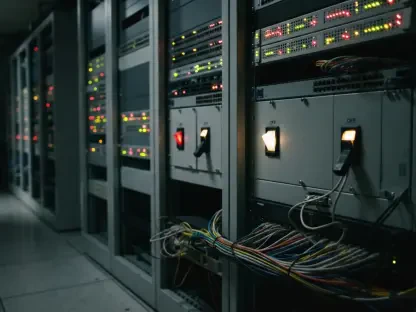

The quiet corner of a home or office network often houses a piece of technology that many users have long since forgotten, yet these aging routers are currently the frontline of a sophisticated cyber espionage campaign known as AryStinger. While modern security efforts frequently focus on securing cloud environments and mobile endpoints, a massive wave of infections targeting legacy hardware has demonstrated that outdated infrastructure remains a potent weapon in the hands of resourceful threat actors. In early 2026, cybersecurity analysts observed a significant spike in activity involving devices powered by the RTL819X series chips, which reached their market peak over a decade ago. These devices, which many consumers assume are too old to be of interest to hackers, are being systematically compromised through vulnerabilities first disclosed in 2013 and 2016. Rather than simply using these routers for blunt-force attacks like Distributed Denial of Service (DDoS), the AryStinger campaign transforms them into a global network of stealthy proxies and reconnaissance nodes. This transition represents a shift in strategy, where hackers prioritize long-term persistence and anonymity over immediate disruption, effectively turning the average consumer’s internet gateway into a silent participant in high-stakes international intrusion operations. By leveraging the low visibility and lack of modern security updates on these legacy systems, the attackers have created a robust, decentralized platform for mapping internal networks and bypassing sophisticated perimeter defenses. This strategy highlights the critical importance of hardware lifecycle management, as the sheer number of these unpatched devices provides a massive, nearly invisible surface for orchestrating complex, multi-stage attacks against high-value targets globally.
1. The Historical Context: Why Outdated Hardware Persists
The persistence of legacy hardware in modern digital environments presents a unique and growing challenge for cybersecurity professionals as they navigate the landscape of 2026. Many of the devices currently being targeted by the AryStinger campaign, specifically those utilizing the Realtek RTL819X series chipsets, were manufactured and widely distributed during their market prime between 2012 and 2015. Despite their age, these routers remain in active service across millions of homes and small businesses, often operating as invisible infrastructure that is rarely updated or monitored for suspicious activity. The longevity of these devices is a testament to their build quality, but it also creates a significant security vacuum, as manufacturers have long since ceased providing firmware updates or security patches. This leaves a vast number of gateways exposed to vulnerabilities that are well-documented and easily exploitable by automated scripts. The AryStinger campaign capitalizes on this stagnation, recognizing that while enterprise networks are hardening their defenses, the “low-hanging fruit” of the internet’s periphery remains ripe for the picking. By focusing on these forgotten devices, threat actors can build a massive, decentralized infrastructure that is significantly harder to track than traditional server-based botnets. This approach exploits the human tendency to ignore technology that is still functioning correctly, regardless of how insecure the underlying software has become over time.
Beyond the mere existence of these devices, the specific vulnerabilities they harbor, such as CVE-2013-3307 and CVE-2016-5681, have become classic entry points for modern malware. These flaws allow for remote code execution on devices that have not seen a security update in years, providing a reliable and stable platform for the deployment of malicious payloads. In the current era of high-speed fiber and advanced wireless standards, many users keep their older routers as secondary access points or range extenders, inadvertently expanding the attack surface of their entire network. The AryStinger malware developers have specifically tailored their code to be compatible with the limited processing power and memory of these older chips, ensuring that the infection does not cause the device to crash or slow down significantly. This level of optimization allows the malware to remain resident for months or even years without the user ever suspecting that their hardware has been compromised. The ability to maintain such a long-term presence on a network is invaluable for espionage-focused actors, as it provides them with a consistent vantage point from which they can observe traffic and launch further internal penetrations. This tactical focus on “forgotten” hardware underscores a broader trend in cyberwarfare, where the most dangerous threats are often those that hide in the shadows of legacy systems that everyone has stopped watching.
2. Global Infection Scale: Regional Impact and Targeted Models
The sheer scale of the AryStinger campaign has surprised even seasoned security researchers, with confirmed infections exceeding 4,300 devices globally and the numbers continuing to climb. Asset detection data reveals that the malware has a particularly strong foothold in specific geographic regions where legacy hardware recycling or extended use is common. South Korea currently leads the list of affected nations, accounting for approximately 48% of all identified infections, followed closely by China at 31%. Other significant clusters have been detected in Sweden, Malaysia, and Singapore, indicating that the campaign is not limited to a single political or economic sphere but is instead a broad-reaching effort to establish a worldwide proxy network. The concentration of infections in East Asia is particularly notable, likely due to the historical market dominance of specific router brands and models in those regions during the mid-2010s. By infecting thousands of disparate nodes across the globe, the attackers can rotate their operational traffic through different countries, making it nearly impossible for defenders to block their activity based on geographic location alone. This global distribution is a key feature of the AryStinger botnet, providing the operators with a diverse array of exit points for their malicious activities.
Analysis of the compromised hardware shows a targeted focus on popular legacy models that were once staples of the consumer market. D-Link routers represent a massive majority of the infected assets, with the DIR-850L and DIR-818LW models being the primary targets, collectively making up a significant portion of the total botnet. Other models, such as the DIR-816L and DWR-118, have also been confirmed as vulnerable and exploited in this campaign. These devices are particularly attractive to attackers because their firmware often lacks modern hardening features, and their web interfaces frequently contain unpatched management vulnerabilities. While the RTL819X chipset is the common denominator for many of these routers, the campaign has also expanded to include various Network Attached Storage (NAS) systems, which offer even greater processing power and storage capacity for the attackers to exploit. The inclusion of NAS devices suggests that the actors behind AryStinger are looking to diversify their infrastructure beyond simple routers, potentially seeking more stable platforms for hosting malicious tools or caching stolen data. The ability of the malware to adapt to different hardware architectures while maintaining a consistent command-and-control structure demonstrates a high level of technical sophistication and long-term planning on the part of the threat group.
3. Technical Workflow: Initial Compromise and Authentication
The infection process for AryStinger begins with the automated exploitation of legacy vulnerabilities, such as those found in Linksys and D-Link devices from over a decade ago. Attackers utilize specialized scripts to scan the internet for vulnerable IP addresses, subsequently pushing a zero-detection ELF sample implemented in the C language to the target hardware. Unlike modern malware that might use complex multi-stage loaders, AryStinger’s initial payload is designed to be lean and efficient, specifically crafted for the MIPS architecture common in older routers. Once the malware is successfully executed, its first priority is to establish a secure and authenticated connection with its primary command-and-control (C2) server. This is achieved through an identity authentication process where the bot gathers a wide array of device fingerprinting data. This information includes the device’s MAC address, the operating system version, the internal and external IP addresses, and the specific CPU architecture. By collecting this data, the C2 server can verify that the connection is coming from a real, exploitable device rather than a security researcher’s sandbox or a honeypot, thereby preserving the botnet’s operational security.
Communication between the newly infected device and the C2 server is handled with a focus on stealth, utilizing the Protobuf format for data encoding and a custom XOR encryption layer. The encryption uses a hardcoded secret key, which researchers have noted contains a reference to the year 2024, suggesting that the campaign may have been in development or early deployment for at least two years. After the initial fingerprinting data is sent to the /auth interface of the server, the C2 assigns a unique Executor ID to the bot. This ID serves as the primary credential for all future communications, ensuring that tasks are tracked and managed on an individual basis. Once authenticated, the bot enters a persistent state where it regularly checks in with the server for configuration updates and new instructions. This heartbeat mechanism is designed to look like legitimate network traffic, further reducing the chances of detection by simple traffic monitoring tools. By establishing this formal handshake and identification process, the AryStinger operators maintain a high degree of control over their distributed fleet, allowing them to manage thousands of nodes with surgical precision and minimal overhead.
The management of these nodes is further enhanced by a robust update and maintenance system that ensures the botnet remains functional despite changes in the network environment. If the malware detects that its connection to the C2 is being blocked or if the server address changes, it can trigger a self-upgrade or a reconfiguration sequence to re-establish contact. This resilience is a critical component of the AryStinger architecture, as it allows the botnet to survive attempts at remediation and maintain long-term persistence on the compromised hardware. The malware also includes watchdog services that monitor the health of the malicious processes, automatically restarting them if they are terminated or if the router reboots. This level of automation means that once a device is infected, it typically remains a part of the botnet until the hardware is physically replaced or the firmware is entirely wiped and updated. The combination of targeted exploitation, secure authentication, and persistent maintenance makes AryStinger a formidable threat that is specifically engineered to survive in the hostile and often unstable environment of legacy consumer electronics.
4. Operational Lifecycle: Persistence and Task Execution
Once an AryStinger node is fully authenticated and integrated into the botnet, it transitions into its primary operational phase, which involves establishing backdoors and executing distributed tasks. One of the most critical actions the malware takes is the deployment of a persistent remote management channel using lightweight SSH tools like Dropbear. The bot downloads these tools from a remote server and installs them in the temporary file system of the router, typically under the /tmp/bin directory. It then configures the device’s internal firewall, or iptables, to allow incoming traffic on a specific, non-standard port, such as 2332. This creates a permanent, hidden entry point that the attackers can use to log into the device at any time without going through the standard web interface. By establishing this backdoor, the operators ensure that they have a “Plan B” for access should the main malware process be discovered or disabled. This remote access capability is a cornerstone of the campaign, as it allows the attackers to use the compromised router as a jump box for further internal network exploration or as a relay for more complex malicious operations.
The actual tasks performed by the botnet are varied and highly sophisticated, reflecting a move toward intelligence gathering rather than simple destruction. The C2 server distributes tasks to individual “Executors” by splitting large-scale operations into small, manageable chunks that can be processed in parallel across the entire botnet. These tasks often include massive DNS scanning, subdomain enumeration, and port probing. For example, a single bot might be assigned to scan a specific range of subdomains for a high-value target, reporting its findings back to the central server. This distributed approach allows the attackers to conduct intense reconnaissance with incredible speed while spreading the traffic across thousands of different IP addresses, effectively bypassing the rate-limiting and IP-based blocking systems that many modern security tools rely on. The data collected by these scans provides the attackers with a detailed map of their targets’ infrastructure, identifying potential entry points and vulnerabilities that can be exploited in the next stage of an intrusion.
In addition to reconnaissance, newer versions of AryStinger have introduced advanced tunneling and proxying capabilities, which further hide the origin of malicious traffic. By setting up tunnels on the compromised routers, the attackers can route their traffic through multiple layers of infected devices, creating a complex and shifting chain of proxies. When an attack is finally launched against a target, the source IP address seen by the victim is that of an innocent home user’s legacy router, rather than the attacker’s true location. This “springboarding” technique is exceptionally effective at misdirecting forensic investigations and law enforcement efforts, as it places the blame for the illegal activity on the victims of the initial router infection. The ability to use these routers as high-speed, reliable proxies makes the AryStinger botnet a valuable asset for a wide range of cybercriminal and state-sponsored activities, from credential stuffing and data exfiltration to the delivery of other malware strains. The combination of persistent backdoors, distributed scanning, and sophisticated proxying creates a comprehensive toolkit for modern cyber operations.
5. The Standard Version: High-Performance Malware for NAS Devices
While the RTL819X version of AryStinger is optimized for the limited resources of legacy routers, a more robust “Standard” version has been identified targeting more powerful hardware, such as Network Attached Storage (NAS) devices. This version is implemented in the Go programming language, which allows for greater flexibility, easier cross-compilation, and the inclusion of a much broader set of functional libraries. NAS devices, by their nature, often have more significant processing power, more RAM, and much larger storage capacities than consumer-grade routers, making them ideal platforms for hosting the Standard version’s expanded feature set. The attackers exploit newer vulnerabilities, such as CVE-2025-11837, to gain access to these systems, demonstrating that their campaign is continuously evolving to include contemporary hardware alongside their legacy targets. The use of Go also makes the malware harder to analyze through traditional reverse engineering, as the compiled binaries are often large and complex, containing numerous integrated tools and dependencies that obfuscate the core malicious logic.
The Standard version of AryStinger serves as a high-performance hub for the botnet’s most intensive operations, integrating a suite of powerful penetration testing and reconnaissance tools. Unlike the C-based version, which is primarily focused on DNS scanning and simple tunneling, the Standard version includes built-in modules for comprehensive network discovery and vulnerability assessment. Tools like fscan, ksubdomain, and httpx are integrated directly into the malware, allowing it to perform deep inspections of the networks it is connected to. This includes identifying active web services, scanning for open ports, and even probing for specific web application vulnerabilities. For an attacker, an infected NAS device is a goldmine, as it often resides in a central position within a local network, providing a perfect vantage point for lateral movement. The Standard version can act as a command center for other bots in the vicinity, coordinating local scans and aggregating data before sending it back to the primary C2 server. This hierarchical structure within the botnet enhances its efficiency and makes the overall infrastructure more resilient to localized disruptions.
One of the most dangerous aspects of the Standard version is its support for source-level payloads in multiple programming languages, including Go, Java, and Python. This capability gives the attackers nearly unlimited flexibility to customize their attacks on the fly based on the specific environment they find themselves in. If the bot identifies a particular type of server or application on the local network, the operators can push a specialized script to the NAS device to exploit that specific target. This turns every infected NAS into a dynamic attack platform capable of executing complex logic and sophisticated exploits that would be impossible on a simple router. The malware’s ability to download and execute these payloads in memory further enhances its stealth, as it avoids leaving a trace on the device’s permanent storage. By combining the massive reach of the legacy router botnet with the high-performance capabilities of the NAS-based Standard version, the AryStinger operators have created a multi-tiered attack infrastructure that is both wide-reaching and deeply capable, posing a significant threat to networks of all sizes.
6. Advanced Reconnaissance and Multi-Language Payloads
The technical sophistication of AryStinger is perhaps most evident in its ability to execute a wide variety of advanced reconnaissance tasks that go far beyond the capabilities of traditional botnets. The integration of specialized tools such as Tlsx and ksubdomain allows the botnet to conduct highly targeted probes of modern security protocols and domain structures. For instance, Tlsx enables the malware to analyze the SSL/TLS configurations of target servers, identifying weak ciphers or expired certificates that could be exploited to intercept traffic. This level of detail is usually associated with manual penetration testing or high-end security auditing, yet AryStinger automates these processes across thousands of nodes. By distributing these probes, the attackers can gather a massive database of intelligence on potential targets without triggering the “noisy” alerts that typically accompany large-scale vulnerability scans. This stealthy, intelligence-first approach is a hallmark of the campaign, suggesting that the ultimate goals of the operators are likely related to targeted intrusions rather than random acts of cybercrime.
The inclusion of multi-language payload support is a significant force multiplier for the attackers, allowing them to adapt to the technical realities of any compromised network. By being able to execute Python, Java, or Go code directly from the malware, the operators can leverage an enormous ecosystem of existing exploit code and security tools. This means that if a new vulnerability is discovered in a common enterprise application, the AryStinger team can quickly develop a script and deploy it across their entire botnet within hours. This agility is a key advantage in the fast-paced world of cybersecurity, where the window between the disclosure of a flaw and its widespread exploitation is constantly shrinking. The malware essentially acts as a universal interpreter for malicious code, providing a stable and stealthy environment for running whatever tools the situation requires. This modularity not only makes the botnet more dangerous but also makes it significantly harder for security researchers to predict its next move, as its capabilities can be changed and expanded at any time without needing to replace the core malware binary.
Furthermore, the reconnaissance capabilities of AryStinger are designed to support long-term strategic goals, such as mapping the internal structures of large organizations or government agencies. By conducting subdomain enumeration and IP mapping from thousands of different residential and small-business connections, the attackers can slowly build a comprehensive picture of a target’s internal network layout, including hidden servers and development environments that are not meant to be public-facing. This information is critical for planning the later stages of an attack, such as lateral movement and data exfiltration. The botnet serves as a massive, distributed intelligence-gathering machine, providing a steady stream of data that can be used to refine and focus future intrusion efforts. The sheer volume and variety of the data collected by AryStinger make it one of the most effective reconnaissance platforms ever observed in the wild, highlighting the extreme danger posed by even the most basic legacy hardware when it is successfully repurposed by expert threat actors.
7. Strategic Network Risks: Information Theft and Springboarding
The deployment of AryStinger across thousands of legacy routers introduces a set of severe strategic risks that extend far beyond the immediate compromise of a single device. One of the most pressing concerns is the potential for large-scale information theft, as an infected router sits at the critical junction where all of a user’s or small business’s data enters and exits the local network. By monitoring this traffic, the malware can intercept unencrypted data, capture login credentials for various services, and even perform man-in-the-middle attacks to downgrade encrypted connections. This level of access provides the attackers with a constant stream of sensitive information, ranging from personal financial details to proprietary corporate communications. In a world where remote work has become the norm, a compromised home router can serve as a backdoor into a corporate network, as the malware can observe VPN connections and potentially exploit vulnerabilities in the tunnel itself. The quiet, persistent nature of the infection means that this theft can continue for extended periods, resulting in a catastrophic loss of privacy and security for the victims.
Another major risk associated with the AryStinger campaign is the phenomenon of “covert springboarding,” where compromised devices are used to launch attacks against third parties. When an attacker uses an infected router as a proxy, the malicious traffic appears to originate from the router owner’s IP address, effectively turning an innocent victim into a digital accomplice. This creates significant legal and reputational risks for the hardware owner, as their internet service provider or law enforcement agencies may flag their connection for involvement in illegal activities such as hacking, harassment, or the distribution of illicit content. For businesses, this can lead to being blacklisted by security services, resulting in the loss of email connectivity and the inability to access critical online resources. More importantly, the use of these springboards makes it incredibly difficult for security teams to identify the true source of an attack, as the trail often goes cold at the doorstep of a regular consumer who has no idea their router has been turned into a weapon. This obfuscation is a primary goal of the AryStinger operators, allowing them to carry out their missions with a high degree of plausible deniability.
Finally, the cumulative effect of thousands of these attack proxies poses a significant threat to national and international cybersecurity. As government agencies have warned, the widespread compromise of basic internet infrastructure can be used to facilitate large-scale espionage campaigns, disrupt essential services, or even conduct psychological operations. The AryStinger botnet represents a massive pool of ready-to-use infrastructure that can be pivoted toward any target at a moment’s notice. The low detection rate of the malware and its focus on “invisible” legacy hardware make it an ideal tool for actors who wish to operate beneath the radar of traditional security monitoring. The fact that these routers are so widespread and so poorly defended means that they provide a reliable, long-term foundation for a variety of malicious activities that can undermine the stability and security of the global internet. Addressing this risk requires a fundamental shift in how both consumers and organizations view the lifecycle of their network hardware, moving away from a “set it and forget it” mentality toward a more proactive and security-conscious approach.
8. Remediation and Defense: Identifying Compromised Hardware
Remediating the threat posed by AryStinger required a proactive stance from both individual users and network administrators, starting with a thorough audit of all hardware currently connected to the network. The most direct method of detection involved inspecting the local file systems of suspected devices for the presence of unauthorized binary files, particularly within the /tmp/bin directory where the malware typically resided. Security protocols also emphasized the importance of monitoring active system tasks for processes with names like syswapd0h or syswapd0w, which indicated an active infection. In many cases, users were advised to look for unusual network behavior, such as high volumes of outbound DNS requests or attempts to connect to unfamiliar IP addresses associated with the known command-and-control infrastructure. These indicators of compromise provided a starting point for identifying which devices had been integrated into the botnet, although the stealthy nature of the malware often made these signs difficult to spot without specialized monitoring tools.
Beyond mere detection, the analysis confirmed that legacy devices lacking manufacturer support could not be adequately secured against modern exploitation techniques. While temporary measures like rebooting the device or clearing the temporary file system could remove the current malware instance, they did not address the underlying vulnerabilities that allowed the infection to occur in the first place. Therefore, the primary recommendation for mitigating the risk involved the immediate decommissioning and replacement of any hardware that had reached its end-of-life status. By transitioning to modern routers with active security lifecycles and automated patching capabilities, organizations and individuals effectively removed the primary entry points used by the AryStinger operators. This proactive hardware retirement strategy proved essential in dismantling the botnet’s infrastructure and preventing future recurrences of similar campaigns.
Ultimately, the AryStinger campaign served as a stark reminder that the security of a network is only as strong as its weakest, often most overlooked link. The success of the attackers in recruiting over 4,300 devices into their proxy network demonstrated that legacy hardware remains a significant liability in the modern threat landscape. Moving forward, it was determined that the only long-term solution involved a combination of better asset management, more frequent hardware refreshes, and an increased awareness of the dangers posed by unpatched infrastructure. By treating the internet gateway as a critical security component rather than a simple utility, users and businesses alike significantly reduced their exposure to the types of sophisticated, distributed threats represented by AryStinger. The lessons learned from this campaign highlighted the necessity of maintaining an active defense that evolves as quickly as the tactics of those who seek to exploit the digital world’s aging foundations.