
The physical landscape of American defense infrastructure is undergoing a radical transformation as the Department of Defense, led by the Army and Air Force, begins hosting commercial hyperscale artificial intelligence data centers directly on military installations. This shift represents a fundamental change in how federal land is managed and how the military acquires cutting-edge technology in an environment where processing speed is as critical as physical firepower. The mechanism driving this change is the Enhanced Use Lease program, a policy that allows the military to lease out land that is currently underutilized to private developers and investment firms. In exchange for the land, the military receives in-kind benefits, specifically the massive amounts of computing power required to run modern defense artificial intelligence. This initiative is born out of a reality where AI is no longer a luxury but a requirement for modern warfare, logistics, and predictive maintenance. By bringing these massive facilities inside the wire, the Pentagon hopes to secure its digital supply chain and reduce the time it takes for data to travel across global networks. Moving these operations on-base also helps solve the problem of data sovereignty, ensuring that critical military computations are performed on domestic soil under the watchful eye of military security protocols. Ultimately, this strategy allows the government to modernize federal land using private capital, representing a creative way to stay ahead of technological curves without relying solely on traditional taxpayer funding or the slow pace of congressional appropriations. The result is a hybrid environment where high-finance, tech-sector innovation, and national security intersect to create a new breed of military installation designed for the digital age.
The Financial Engine: Private Equity and the Rise of Computing as Currency
The financial backing for these massive infrastructure projects comes from some of the most influential investment firms in the world, marking a new era of cooperation between Wall Street and the Pentagon. Companies like KKR, BlackRock, and Carlyle are treating these data centers as stable, long-term infrastructure assets rather than high-risk technology bets. This involvement signals that the private sector sees military-hosted data centers as a safe and profitable venture, backed by the stability of a long-term government partnership. For these firms, the attraction lies in the predictable nature of military land use and the high demand for AI processing power. These investors are providing the billions of dollars necessary to build the physical shells, install the cooling systems, and populate the racks with the latest high-performance GPUs. By positioning these centers on military land, private equity firms gain access to secure locations with pre-existing security perimeters, which reduces their own operational risk. This partnership allows the military to leverage private market efficiency to build out its digital backbone, ensuring that the United States maintains a technological edge over global competitors who are also racing to integrate artificial intelligence into their command structures.
The military’s computing as currency model is a radical departure from traditional procurement methods that have defined defense spending for decades. Instead of waiting years for Congress to approve funds for new servers through the standard budgetary process, the military trades land access for immediate processing power. This allows the Pentagon to bypass the slow and often frustrating federal budget cycle, which frequently lags behind the rapid pace of hardware innovation in the commercial sector. Under these agreements, the private developer builds and maintains the facility, while a portion of the server capacity is dedicated exclusively to military use. This ensures the Army and Air Force have access to the latest hardware, such as advanced chips designed for large language models and autonomous system management, without the burden of long-term ownership and maintenance. The private sector handles the technological heavy lifting, including the eventual decommissioning and recycling of hardware when it becomes obsolete. This model ensures that the military is not stuck with outdated technology, as the lease agreements often include clauses for regular hardware refreshes. It creates a dynamic system where the military is always at the cutting edge of what is commercially available, funded by private capital that seeks a return on investment through the sale of the remaining capacity to commercial clients.
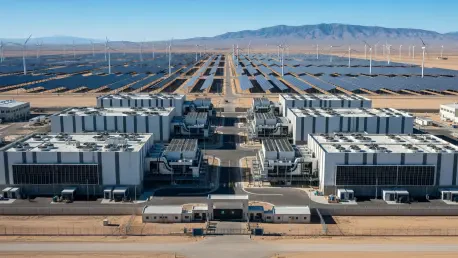
Each of these data centers is a massive industrial undertaking, often carrying a price tag of approximately $2 billion per site. Private developers take on the substantial risk of building and operating these facilities, which are some of the most energy-intensive buildings in the world. This risk includes everything from the initial construction in remote desert environments to the complex logistics of securing global supply chains for specialized cooling equipment and electrical components. By shifting this risk to the private sector, the military can focus its limited resources on its core mission of defense and readiness. The developers are responsible for the entire lifecycle of the facility, including the highly technical task of managing thermal loads and ensuring 99.999% uptime for the servers. This arrangement provides a way for the Army and Air Force to generate significant value from non-excess land, which is land the military still owns and intends to keep but isn’t currently using for tactical training or housing. Instead of letting thousands of acres of land sit dormant, the military turns it into a strategic asset that supports the broader defense mission through digital infrastructure. This monetization of federal land represents a shift toward more entrepreneurial management of government resources, where every square foot of an installation is evaluated for its potential to contribute to national security goals.
Strategic Installations: From the Deserts of Utah to the Frontiers of Texas
The initial phase of this digital rollout is focused on two primary locations with distinct geographic and tactical advantages, starting with Dugway Proving Ground in Utah. Dugway has been chosen largely due to its remote and secure nature, offering an environment where high-security data operations can be conducted far from prying eyes. Historically used for testing sensitive defense systems, including chemical and biological defense programs, the site provides the physical isolation needed for high-security AI computations. The developer for the Utah project is CyrusOne, a major player in the global data center industry with extensive experience in building hyperscale facilities. With the financial power of KKR and BlackRock behind it, the project aims to turn previously disturbed grazing land into a high-tech digital hub. The existing security infrastructure at Dugway, including its restricted airspace and gated access, makes it an ideal spot for sensitive military computations that require an extra layer of physical protection. This project serves as a blueprint for how remote military installations can be repurposed for the digital age, providing the necessary space and security that commercial sites often lack.
Fort Bliss in Texas represents the other major early award in this program, and its scale is indicative of the military’s massive appetite for AI infrastructure. Spanning the border of Texas and New Mexico, this base has offered nearly 1,400 acres for development, making it one of the largest parcels in the entire program. The global investment giant Carlyle has been selected for exclusive negotiations at the Fort Bliss site, highlighting the high stakes involved in these projects. This particular location is unique because it sits relatively close to the civilian population of El Paso, creating a different set of challenges compared to the remote Dugway site. Developers must find a way to build a massive industrial campus without negatively impacting the surrounding community’s resources or creating friction with local infrastructure. The proximity to a major metropolitan area provides advantages, such as access to a larger workforce for construction and operation, but it also requires a more sophisticated approach to community relations. The Fort Bliss project is expected to be a cornerstone of the military’s digital strategy, providing the compute power necessary for tactical commands located in the southern United States.
Beyond these early projects, the military is actively evaluating several other high-profile bases for inclusion in the data center program. Fort Cavazos and Fort Liberty are currently being studied because of their proximity to major tactical commands and the specialized units that will be the primary users of AI-driven insights. Having data centers located near these command centers ensures that tactical decisions are backed by the fastest possible data processing, minimizing the latency that can occur when data must travel through distant civilian networks. The Air Force is also looking toward the Arctic, seeking bidders for facilities in Alaska to support northern frontier security. Bases like Joint Base Elmendorf-Richardson and Eielson Air Force Base are being considered for their strategic location and the natural advantages of the cold climate. The sub-arctic temperatures in Alaska offer a significant benefit for cooling the massive heat-generating server banks, potentially reducing the energy requirements and operational costs of the facilities. By diversifying the locations of these data centers across different climates and strategic zones, the military creates a resilient and distributed network that can survive localized disruptions and provide consistent support to forces worldwide.
Resource Sovereignty: Building Power and Water Independence
One of the most significant hurdles to building hyperscale data centers is their massive and constant demand for electricity, which can strain even the most robust civilian grids. To address this, the Pentagon has imposed strict mandates for energy independence on all developers participating in the program. Bidders are required to create a power plan that does not rely on the local civilian utility grid, ensuring that the data center remains operational even if the surrounding community experiences a blackout. This requirement is designed to protect local populations from rising energy costs and grid instability caused by the sudden addition of a massive industrial consumer. By generating their own power on-site, these data centers avoid the public backlash that has affected civilian tech hubs in Northern Virginia and other regions. This often involves building dedicated power plants using a mix of renewable energy, such as large-scale solar arrays, and advanced gas turbines that can provide baseload power when the sun isn’t shining. The military views this self-sufficiency as a critical component of installation resilience, turning the data center into a power island that can support the base during emergencies.
Some developers are pushing the boundaries of energy technology by exploring the use of small modular reactors to provide constant, carbon-free energy for their facilities. These self-contained nuclear units could provide the high level of power needed for intensive AI training and inference without the intermittency associated with wind or solar power. Small modular reactors are particularly attractive for military installations because they have a small physical footprint and can operate for years without refueling. This makes the military base a true island of power stability, capable of maintaining high-stakes digital operations regardless of external energy market fluctuations or physical attacks on the civilian power grid. The integration of nuclear technology into the data center model aligns with the military’s broader goal of reducing its carbon footprint while increasing its operational independence. While the regulatory hurdles for on-site nuclear power remain significant, the partnership between the Department of Defense and private developers provides a unique environment for the deployment and testing of these advanced energy systems. This synergy between clean energy and high-speed computing is a key pillar of the modernized military base.
Water consumption is another major environmental hurdle, as hyperscale data centers require millions of gallons daily to cool the racks of high-performance servers. In response to this challenge, the Army has mandated a net-zero or even net-positive water usage strategy for all projects on its land. This forces developers to innovate in ways that are rarely seen in the civilian data center market, where water use is often a point of contention with local environmental groups. At Fort Bliss, developers are looking into drilling deep-water wells to supply a local desalination plant, which would treat brackish groundwater that is currently unsuitable for human consumption. This would create a scenario where the data center actually increases the amount of drinkable water available to the local city by sharing the output of the desalination facility. It turns a potential environmental drain into a substantial community benefit, helping to secure the water future of the El Paso region. The Army Corps of Engineers plays a vital role in overseeing these environmental requirements, conducting rigorous assessments to ensure that construction and operation do not interfere with local ecosystems or deplete critical aquifers. This level of oversight ensures that the rush for technological dominance does not come at the cost of long-term environmental stewardship.
Security Mandates: Navigating the Legislative and Technical Roadblocks
As these data center projects move from the planning phase to construction, they have become a major topic of debate within the halls of Congress and the defense community. The primary concern among lawmakers is the security of the hardware and software components used within these on-base facilities. Given the sensitive nature of the work being performed, there is a strong push to ensure that no critical components originate from countries considered to be strategic adversaries. Representative Cory Mills has been a vocal proponent of this approach, proposing amendments that would ban components from China, Russia, Iran, and North Korea. This includes everything from the advanced chips that power the AI models to the circuit boards, power supplies, and even the cooling fans. The goal is to prevent any potential for digital sabotage, backdoors, or espionage from within the physical confines of the military base. This “clean supply chain” requirement adds a layer of complexity for developers, who must now vet every sub-component of their hardware to ensure compliance with strict national security standards.
However, the Army and Air Force have expressed concerns about the potential unintended consequences of these specific legislative restrictions. Service officials worry that if the rules are too rigid or the administrative burden too high, private developers will simply choose to build their data centers off-base on private land where they face fewer restrictions. This is referred to within the Pentagon as the “federal land penalty,” a scenario where the military misses out on the tactical and financial benefits of on-base data centers because of excessive red tape. The military prefers a more flexible model where Congress provides financial incentives for using secure, domestic hardware rather than just implementing blanket bans. This approach would encourage developers to stay on military land while still meeting the high security standards required for defense work. Finding a balance between the speed of deployment, the cost of hardware, and the absolute necessity of security remains a major challenge for policymakers. The outcome of this debate will determine whether the military can truly integrate commercial innovation into its daily operations or if the digital backbone remains siloed and slower than the private sector.
Beyond the hardware supply chain, there is the ongoing issue of physical security and administrative access to these sensitive sites. These data centers must be integrated into the base’s security perimeter while still allowing hundreds of civilian technicians, engineers, and maintenance workers to enter and exit the facility daily. It creates a complex environment where civilian and military security protocols must work in perfect harmony to prevent unauthorized access while maintaining operational efficiency. The cyber-physical intersection is another area of intense concern for military intelligence agencies. Having a massive commercial data hub on-base creates a new, high-value target for hackers and foreign intelligence services who may attempt to bridge the gap between civilian and military networks. To mitigate this, the facilities are designed with “air-gapped” sections and rigorous logical separation between military and commercial data streams. The military must ensure that the civilian side of the center cannot be used as a gateway to attack sensitive military networks, requiring a level of cybersecurity sophistication that far exceeds standard industry practices.
Operational Harmony: Balancing Mission Readiness with Industrial Scale
A key part of the military’s long-term strategy is maintaining a good neighbor policy with the local towns and cities that surround these installations. In the civilian world, large data center projects are often met with organized protests over noise pollution, visual impact, and the perceived drain on local resources. The military hopes to avoid this friction by being more transparent about the projects and emphasizing the self-sufficiency of the sites. Developers are required to submit detailed plans for community engagement, addressing concerns from residents who live near the base boundaries. By ensuring these sites are entirely independent in terms of power and water, the military can argue that the centers are a benefit rather than a burden to the local infrastructure. In many cases, these projects bring high-paying technical jobs and significant investment to regions that might otherwise be economically stagnant. The military also differentiates itself by its long-term commitment to these areas; unlike a tech company that might move its operations to another state for a better tax break, a military base is a permanent and central part of the local economy and culture.
Another significant operational hurdle is ensuring that these massive industrial campuses do not interfere with the primary training missions of the base. Military installations are active, high-tempo environments with low-level flight paths, live-fire ranges, and sensitive electronic testing equipment. A 1,000-acre data center must be placed carefully to avoid disrupting these missions or creating hazards for personnel. At sites like Dugway, the data centers must coexist with the testing of chemical and biological defense systems, requiring specialized safety protocols for the civilian workforce. This coexistence requires a high degree of coordination between the base commander and the facility operators to ensure that neither party interferes with the other’s objectives. Furthermore, the data center’s electromagnetic footprint must be managed so that it does not interfere with base communications or the sensitive sensors used in military exercises. This requires advanced shielding and careful frequency management, adding another layer of technical complexity to the construction process. The successful integration of these facilities proves that industrial-scale computing can coexist with the traditional functions of a combat-ready force.
The success of this entire initiative depends on the military’s ability to balance these competing needs for security, efficiency, and community support. If the projects can thrive without hurting the environment, the local community, or the core military mission, they will likely become a permanent and expanding fixture of American defense infrastructure. The image of the traditional fortress base, defined by barracks and motor pools, is evolving into something much more digital and interconnected. This transition marks a new era where the cloud is physically anchored to the ground of American military power, providing a physical foundation for the digital battles of the future. If private firms can continue to meet the military’s high standards for resilience and security, the United States will gain a massive edge in the digital age. The ultimate goal is a modernized, AI-ready force that is both technologically superior and environmentally responsible, ensuring that the American military remains the most capable force in an increasingly automated world.
Strategic Evolution: Redefining the Military Installation for the AI Age
The integration of private AI data centers onto military bases represented a pivotal moment in the evolution of national defense infrastructure. By leveraging the Enhanced Use Lease program, the Department of Defense successfully bridged the gap between the rapid innovation cycles of the private sector and the stringent security requirements of the military. This partnership allowed for the construction of resilient, self-sufficient digital hubs that provided the necessary compute power for advanced AI applications without placing a burden on local civilian resources. The initiative proved that federal land could be managed as a strategic technological asset, providing a sustainable model for modernization that bypassed traditional budgetary constraints. As these facilities became operational, they provided the military with unprecedented data processing capabilities, enabling real-time analysis and faster decision-making in complex operational environments. The collaboration between the Pentagon, private equity firms, and global technology leaders created a robust ecosystem that prioritized both national security and environmental stewardship.
The long-term implications of this shift extended beyond mere technical capabilities, fostering a new culture of cooperation between the military and the private sector. The successful deployment of independent power and water systems at these sites set a new standard for industrial resilience, proving that large-scale technology projects could be good neighbors to the surrounding communities. Policymakers and military leaders now have a proven framework for scaling this model to other installations, ensuring that the digital backbone of the armed forces remains domestic, secure, and cutting-edge. Future considerations must focus on maintaining the integrity of the hardware supply chain and continuing to innovate in the realm of sustainable energy to power the next generation of AI. By maintaining high standards for security and environmental impact, the military ensured that its digital transformation was both effective and enduring. The transition to a more digitally integrated base structure was a necessary step in maintaining global competitiveness, providing the foundation for a force that is as agile in the digital realm as it is on the physical battlefield. This strategic evolution ensured that the American military remained prepared for the complexities of modern conflict, grounded in a physical infrastructure that reflected the priorities of a new technological era.