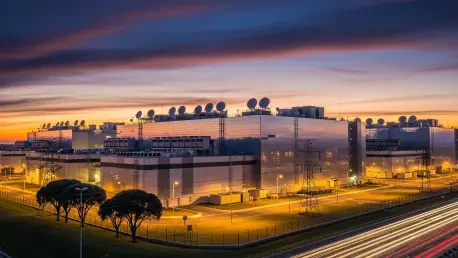

Minnesota’s landscape is currently undergoing a radical transformation as traditional farmlands and industrial zones are being targeted for massive hyperscale data centers that dwarf anything previously seen in the Midwest region. The sheer physical footprint of these facilities, often exceeding one million square feet, signals a departure from the modest server farms of the previous decade toward high-density hubs specifically engineered for the intensive computational demands of generative artificial intelligence and large-scale data processing. This transition sparked a complex debate involving state legislators, environmental advocates, and local residents who are grappling with the potential strain on public infrastructure. While these projects are frequently marketed as pillars of the modern economy, the reality involves significant trade-offs regarding energy consumption and water rights. Organizations like the Minnesota Center for Environmental Advocacy have pointed out that the scale of these proposals is unprecedented, requiring a rethink of how the state manages its natural resources.
The Hidden Cost: Water Scarcity and Cooling Demands
Water consumption remains one of the most pressing concerns for local officials, as a single hyperscale facility can utilize up to five million gallons of groundwater every day to maintain optimal temperatures for its server arrays. This massive volume is roughly equivalent to the daily needs of approximately 50,000 households, effectively doubling the water demand of some rapidly growing Minnesota suburbs overnight. Because groundwater recharges at a notoriously slow pace, the state’s current lack of a comprehensive replenishment strategy means these projects could pose a long-term risk to the health of local aquifers. Residents in areas surrounding proposed sites have expressed anxiety that such heavy industrial usage will eventually lead to lowered water tables, affecting private wells and municipal supplies. Without mandatory requirements for closed-loop cooling systems or reclaimed water usage, the burden of maintaining these tech giants falls squarely on the local environment and its inhabitants.
Beyond direct on-site water use, the staggering energy requirements of these facilities create an indirect but equally heavy strain on regional resources. Even when modern data centers adopt air-cooling systems to mitigate local water consumption, they still require immense amounts of electricity, with some projects projected to draw up to 1,000 megawatts from the grid. This massive power draw necessitates the continuous operation of large-scale power plants, which themselves consume vast amounts of water for steam generation and cooling during the electricity production process. This creates a cycle of resource depletion that is frequently omitted from developer narratives and initial environmental assessments presented to city councils. The interconnection between the energy grid and water usage means that a facility’s true environmental footprint extends far beyond its physical fence line, impacting ecosystems and communities located hundreds of miles away from the primary data center site.
Governance and Transparency: The Role of Secrecy
The planning process for these massive infrastructure developments is frequently shrouded in secrecy through the extensive use of non-disclosure agreements between corporate developers and local government entities. This lack of transparency has created numerous situations where residents are entirely unaware of a project’s true scope until after major environmental reviews have already been approved by city planners. Critics argue that public municipal business should never be conducted behind closed doors, especially when the projects involve such high stakes for the long-term sustainability of the community. In several Minnesota towns, the sudden revelation of a billion-dollar data center project has led to a breakdown in trust between elected officials and their constituents. Legal experts suggest that the power imbalance between global tech corporations and small-town administrations often results in lopsided agreements that prioritize corporate expediency over the democratic right of the public to participate in land-use decisions.
While proponents of hyperscale centers often highlight a temporary surge in construction jobs and a potential boost to the local tax base, the long-term economic benefits are typically much more nuanced than advertised. Once the initial construction phase is complete, these massive facilities require a surprisingly small number of permanent employees to operate, often fewer than fifty people for a site covering hundreds of acres. Meanwhile, local residents may be left dealing with persistent negative externalities such as constant mechanical noise from cooling fans, light pollution from high-security perimeters, and potentially rising energy costs as utilities upgrade the grid to accommodate the new load. This disparity has fueled growing opposition in municipalities like Farmington and Hermantown, where legal challenges reflect a deep skepticism of the economic boon narrative. Communities are increasingly asking whether the trade-off of permanent environmental changes is worth a handful of tech jobs and a one-time spending injection.
Regulatory Solutions: Bridging the Oversight Gap
Developers sometimes frame the rapid build-out of artificial intelligence infrastructure as a national security necessity, suggesting that the United States is in a desperate race with global competitors to secure digital dominance. However, industry data indicates that the U.S. already holds a massive lead in data center capacity, suggesting that Minnesota possesses significant leverage to demand better environmental standards without losing its competitive edge in the tech sector. The real challenge for state regulators involves ensuring that these billion-dollar projects do not overwhelm the existing electrical grid or drive up utility rates for everyday citizens and small businesses. If a utility company must build new transmission lines or peaking plants to serve a single hyperscale client, those costs could be passed on to the broader ratepayer base. Establishing a framework where the developer bears the full cost of infrastructure upgrades is essential to protecting the financial interests of Minnesota residents.
Currently, Minnesota faces significant regulatory gaps, as most water management protocols and sustainability goals for these facilities remain voluntary rather than mandatory under state law. Small towns are often left to navigate complex legal and technical negotiations with some of the world’s largest tech companies on their own, often without adequate state-level oversight or technical support. Establishing clear, mandatory rules for environmental review and facility operations is the only way to ensure that the pursuit of technological advancement does not come at the cost of Minnesota’s natural heritage and social stability. Lawmakers have begun discussing the implementation of statewide standards that would require data centers to prove a net-zero impact on local aquifers before receiving building permits. Such a move would provide a level playing field for developers while ensuring that the state’s precious water resources are not sacrificed for short-term gains.
Future Considerations: Transitioning to Sustainable Infrastructure
Developing a sustainable path forward also necessitated the integration of advanced heat-recovery technologies that repurpose the thermal energy generated by these massive server arrays. Instead of venting heat into the atmosphere or using massive quantities of water for evaporation, modern designs began channeling this waste energy into local district heating systems or industrial greenhouses. This approach transformed data centers from passive resource consumers into active contributors to the local circular economy, providing a tangible benefit to the communities that hosted them. Furthermore, the push for transparency led to the creation of public-facing dashboards that allowed residents to monitor real-time water and energy usage, ensuring that corporate promises regarding efficiency were actually being met. These technological and social innovations demonstrated that while the scale of hyperscale facilities presented significant challenges, they also provided opportunities to pilot infrastructure.
The dialogue surrounding the integration of hyperscale data centers into Minnesota’s economy shifted significantly as the long-term implications of these projects became clearer to the public. Stakeholders recognized that the path forward required a more balanced approach that prioritized environmental stewardship alongside digital innovation. To achieve true sustainability, the state moved toward implementing rigorous, mandatory cooling standards that favored air-cooling or recycled water systems over the extraction of pristine groundwater. It became evident that transparency was the most effective tool for building community support, leading to a decline in the use of restrictive non-disclosure agreements. Moving forward, the adoption of onsite renewable energy generation and battery storage became a standard requirement for any new million-square-foot development to ensure the electrical grid remained stable. These steps ensured that Minnesota could host the backbone of the artificial intelligence era without compromising the natural resources.