
Vladislav Zaimov is a seasoned telecommunications expert with a deep background in managing high-risk enterprise networks and ensuring their stability under extreme pressure. With years of experience overseeing infrastructure that must stay resilient during massive usage surges, he has a front-row seat to the technological evolution of network management. In this discussion, we explore the transition from static, hardware-heavy solutions to the fluid, AI-driven architectures currently being pioneered to handle massive global events. By looking at how predictive analytics can revolutionize the user experience, Vladislav provides a clear picture of a future where connectivity is both proactive and seamless.
Traditional network management for massive events often relies on expensive, temporary hardware installations. How does shifting toward an AI-driven predictive model change the economic and logistical landscape for operators?
Moving toward a system like Dynamic CX allows us to finally step away from the logistical nightmare of temporary tower deployments and physical infrastructure hauls that have historically defined event preparation. Instead of spending millions on hardware that often sits idle for most of the year, we are leveraging the existing Self-Organizing Network and adding a sophisticated predictive layer to handle the load. This shift means we can use software to analyze event schedules and crowd movements to prepare the network before the first fan even enters the stadium. It is an elegant solution that focuses on directing bandwidth to anticipated hotspots proactively, rather than desperately reacting to a network crash after it happens. By the time the 2026 FIFA World Cup arrives, this strategy will have completely redefined how we calculate the cost of capacity.
With the massive data spikes expected during global competitions, what specific mechanisms allow the network to prepare in advance rather than just reacting to the crowd’s needs in real time?
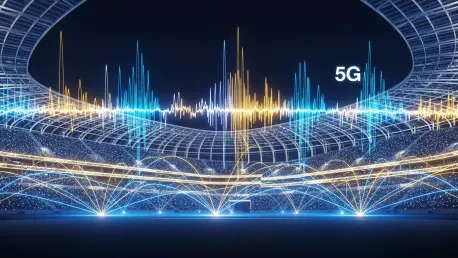
The core of this innovation lies in the ability to foresee potential data bottlenecks by analyzing communication patterns and crowd flow long before the surge actually peaks. Rather than waiting for a cell site to hit its limit, the AI proactively reallocates resources and optimizes different 5G spectrum layers to stay well ahead of the curve. You can think of it as a digital traffic controller that sees a traffic jam forming miles away and clears the lanes before the cars even arrive at the bottleneck. This foresight ensures that critical applications, such as emergency messaging or high-definition live streaming, remain uninterrupted even when the physical density of devices is at its absolute highest. It is a real-time adaptation where the network effectively breathes with the movement of the people.
How do these advancements in dynamic resource allocation influence the way content creators and everyday users experience connectivity during high-density gatherings?
For the average user or a professional content creator, this technology removes the invisible wall of frustration that usually comes with being in a crowd of eighty thousand people. You will see significantly fewer disruptions when trying to upload to social media or call for a ride-sharing service immediately after a big game. The system ensures a resilient experience by dynamically shifting bandwidth to where it is needed most, keeping the connection feeling fast and responsive. It effectively turns a chaotic environment into a managed ecosystem where the technology stays out of the way of the human experience. When you can live stream a goal from a packed arena without a single frame drop, you are seeing the tangible result of this AI-driven efficiency.
What is your forecast for the future of AI-driven network optimization?
My forecast is that reactive network management will soon be seen as an obsolete relic of a past era. Once the 2026 FIFA World Cup serves as a successful proving ground, we will see a massive wave of adoption across all major carriers who want to remain competitive in a data-hungry market. We are moving toward a world where networks are fully autonomous, capable of self-healing and reconfiguring themselves for any scenario without manual intervention. This level of predictive optimization will eventually extend far beyond stadiums, managing the complex data needs of entire smart cities and autonomous transport systems. It is about creating a global infrastructure that is as dynamic and adaptable as the people it serves every day.